

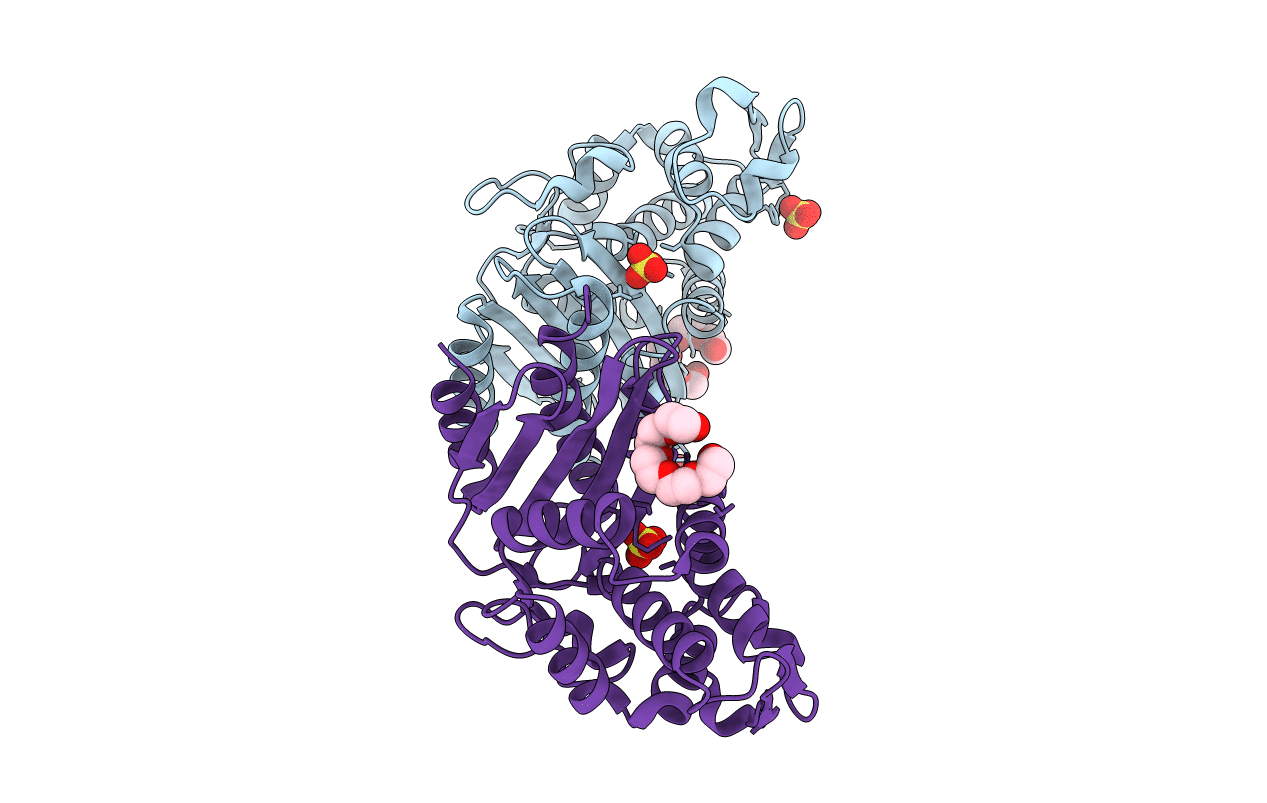
6IZC image
Deposition Date 2018-12-19
Release Date 2019-12-25
Last Version Date 2024-11-13
Entry Detail
PDB ID:
6IZC
Keywords:
Title:
Crystal structure of the chromosome-encoded beta-lactamase of Vibrio parahaemolyticus
Biological Source:
Source Organism(s):
Expression System(s):
Method Details:
Experimental Method:
Resolution:
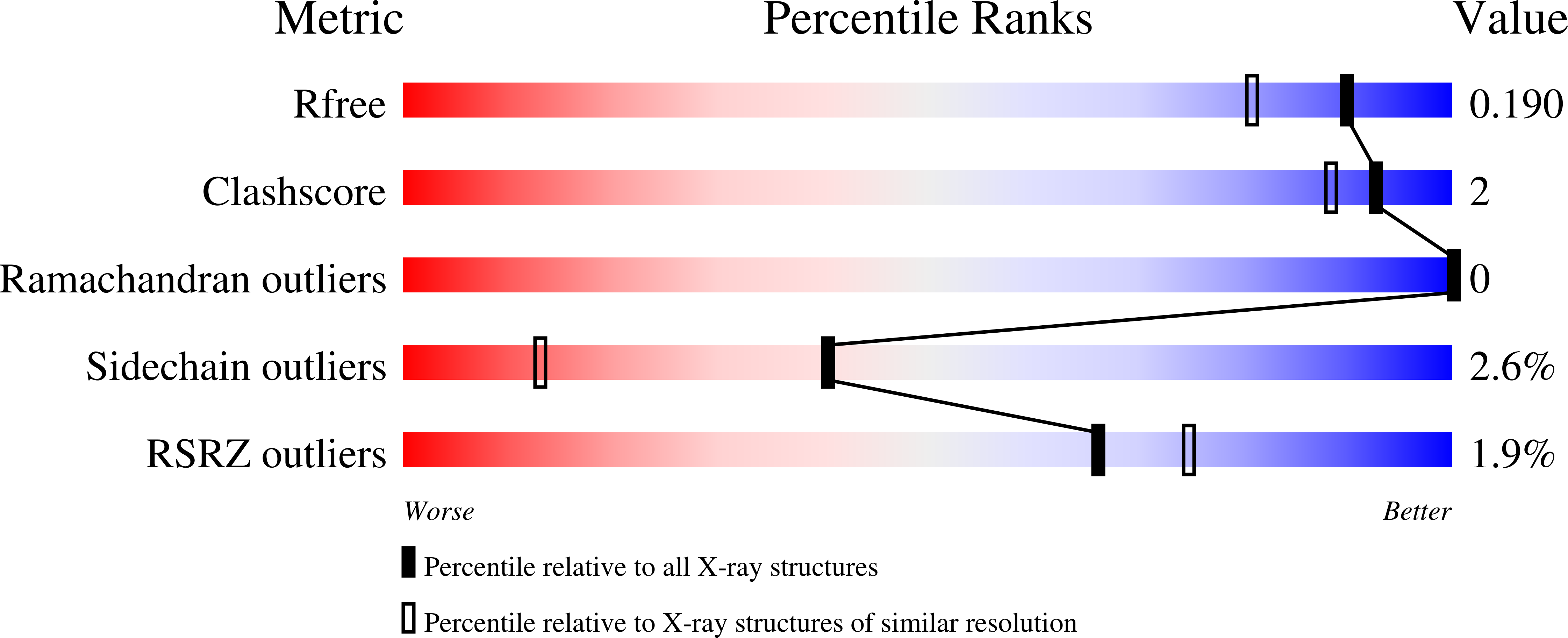
1.55 Å
R-Value Free:
0.18
R-Value Work:
0.16
R-Value Observed:
0.16
Space Group:
P 1 21 1
Macromolecular Entities
Structural Superimposition
Polymer Type:polypeptide(L)
Molecule:Beta-lactamase
Chain IDs:A, B
Chain Length:269
Number of Molecules:2
Biological Source:Vibrio parahaemolyticus
Primary Citation
Structural analysis of the CARB beta-lactamase from Vibrio parahaemolyticus facilitates application of the beta-lactam/ beta-lactamase inhibitor therapy.
Biochimie 171-172 213 222 (2020)
PMID: 32179166 DOI: 10.1016/j.biochi.2020.03.011

Abstact

β-Lactams are the most widely used antibiotics in treating bacterial infections. However, they are rarely applied in infections caused by Vibrio parahaemolyticus, as the bacterium is intrinsically resistant to penicillins by expressing β-lactamase. Here we report structural characterization of the CARB β-lactamase from V. parahaemolyticus (CARB-20). CARB-20 is a class A β-lactamase, belonging to subclass A1 (containing 70STFKAL75, 130SDNTAANL137, 164RXEXXLN170, 231VGDKTG236, etc.), group LSBL2 (with the disulfide bridge C77-C123, motif 231IADRSGAG238 and R244). CARB-20 adopts a typical subclass A1 β-lactamase fold consisting of two domains. Its active site is constituted by four conserved motifs, similar to that of known subclass A1 β-lactamases. Analysis of the active site structure reveals its substrate preference for penicillin, ampicillin and carbenicillin but not for latterly developed cephalosporins. Meanwhile, β-lactamase inhibitors such as clavulanate and sulbactam can well fit into the active site, supporting β-lactams combined with β-lactamase inhibitors as a potential approach for treating infection of V. parahaemolyticus. The residues around the active site show certain variations, which can be useful for specific inhibitor design. In the directed evolution experiment, CARB-20 exhibited plasticity in developing significant resistance to inhibitors by accumulated residue substitutions. Therefore, careful monitoring of enzyme mutations is necessary for successfully applying β-lactam/β-lactamase inhibitor combination therapy. Taken together, our results open up an avenue of inhibitor design targeting vibrio β-lactamases, facilitating the application of β-lactams in treating vibrio infections.

Legend

Protein

Chemical

Disease

Primary Citation of related structures
Feedback Form
Name
Email
Institute
Feedback