

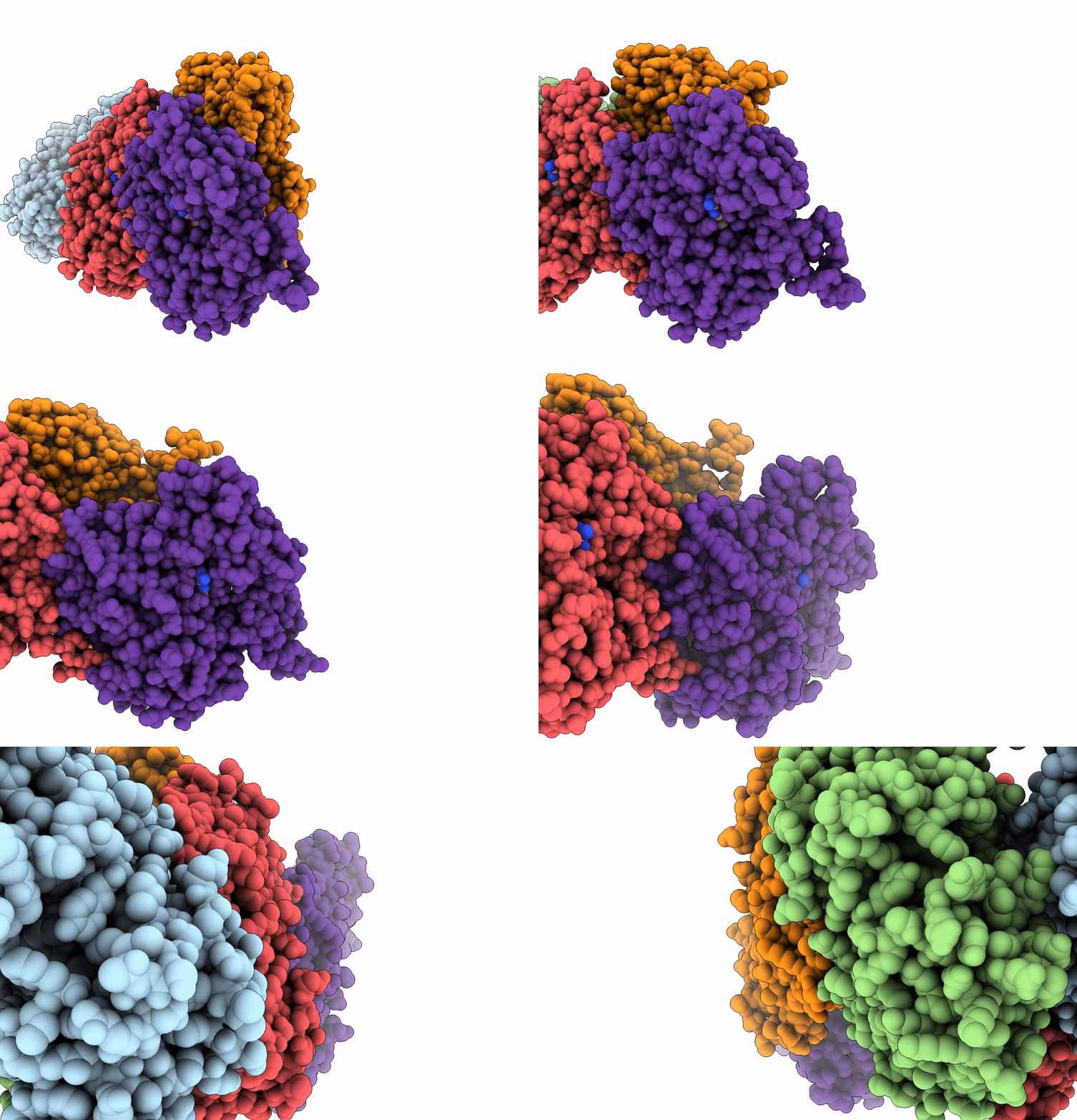
6IUG image
Deposition Date 2018-11-28
Release Date 2019-11-06
Last Version Date 2024-03-27
Entry Detail
PDB ID:
6IUG
Keywords:
Title:
Cryo-EM structure of the plant actin filaments from Zea mays pollen
Biological Source:
Source Organism(s):
Zea mays (Taxon ID: 4577)
Method Details:
Experimental Method:
Resolution:
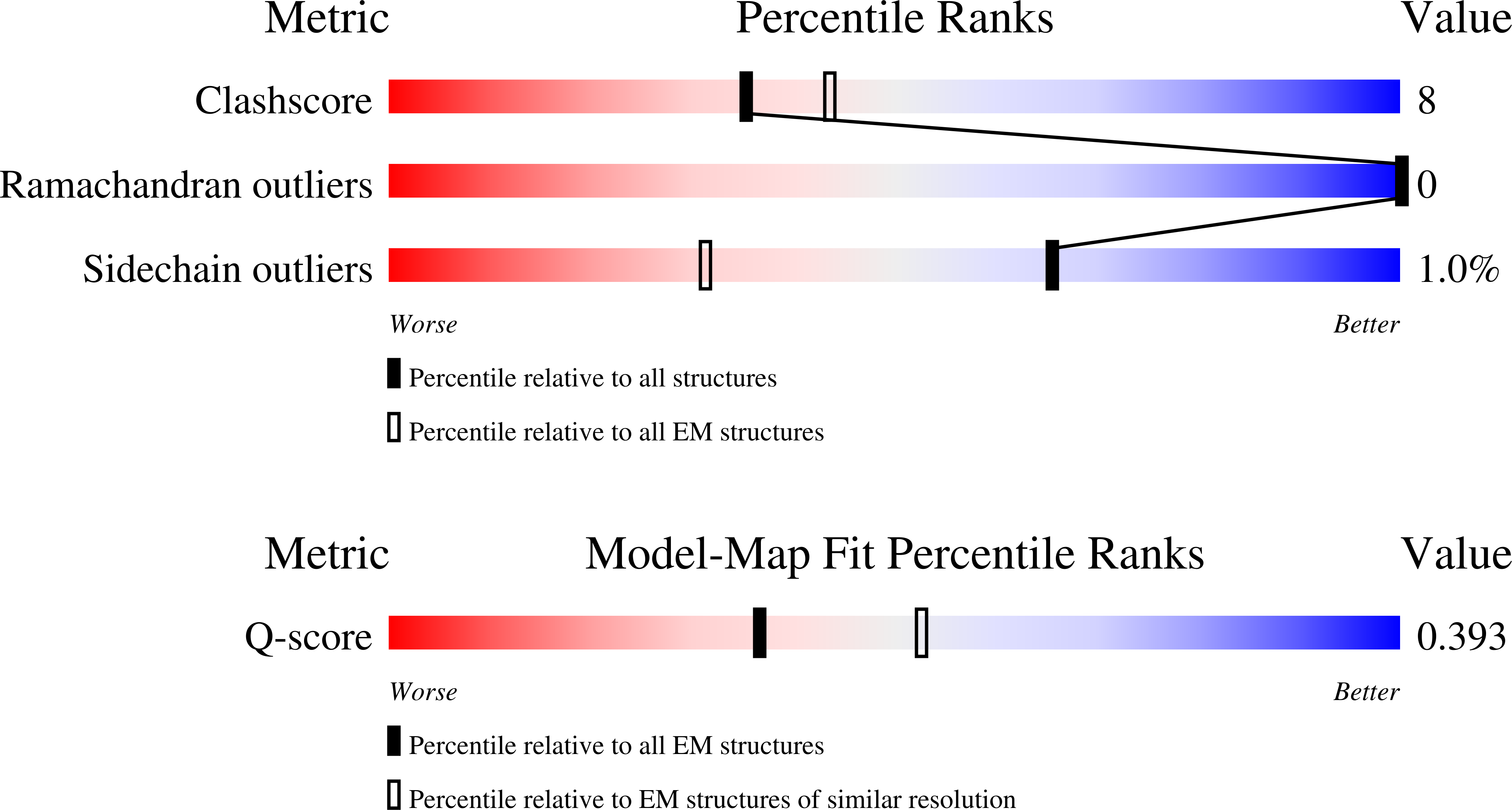
3.90 Å
Aggregation State:
FILAMENT
Reconstruction Method:
HELICAL
Macromolecular Entities
Polymer Type:polypeptide(L)
Molecule:pollen F-actin
Gene (Uniprot):LOC100284092
Chain IDs:A, B, C, D, E
Chain Length:371
Number of Molecules:5
Biological Source:Zea mays
Primary Citation
Cryo-EM Structure of Actin Filaments fromZea maysPollen.
Plant Cell 31 2855 2867 (2019)
PMID: 31628168 DOI: 10.1105/tpc.18.00973

Abstact

Actins are among the most abundant and conserved proteins in eukaryotic cells, where they form filamentous structures that perform vital roles in key cellular processes. Although large amounts of data on the biochemical activities, dynamic behaviors, and important cellular functions of plant actin filaments have accumulated, their structural basis remains elusive. Here, we report a 3.9 Å structure of the plant actin filament from Zea mays pollen (ZMPA) using cryo-electron microscopy. The structure shows a right-handed, double-stranded (two parallel strands) and staggered architecture that is stabilized by intra- and interstrand interactions. While the overall structure resembles that of other actin filaments, its DNase I binding loop bends farther outward, adopting an open conformation similar to that of the jasplakinolide- or beryllium fluoride (BeFx)-stabilized rabbit skeletal muscle actin (RSMA) filament. Single-molecule magnetic tweezers analysis revealed that the ZMPA filament can resist a greater stretching force than the RSMA filament. Overall, these data provide evidence that plant actin filaments have greater stability than animal actin filaments, which might be important to their role as tracks for long-distance vesicle and organelle transportation.plantcell;31/12/2855/FX1F1fx1.

Legend

Protein

Chemical

Disease

Primary Citation of related structures
Feedback Form
Name
Email
Institute
Feedback