

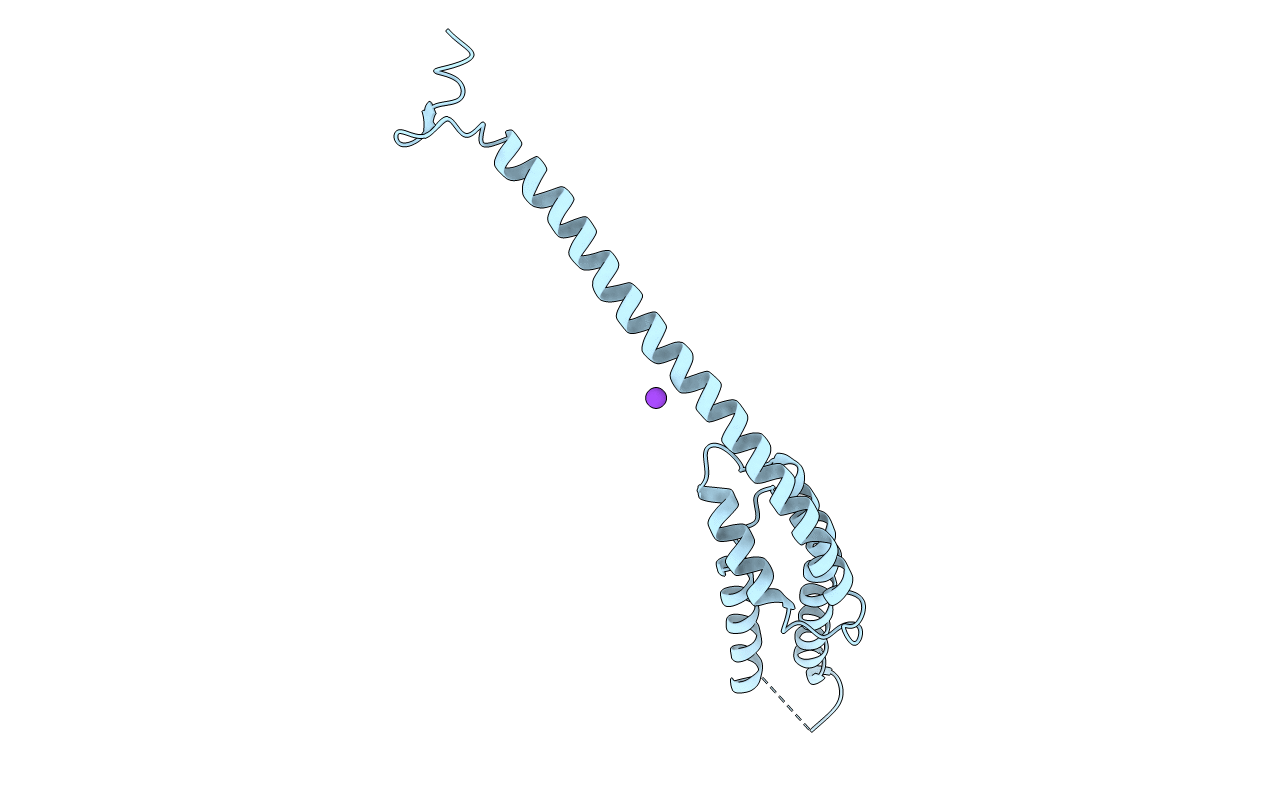
6A68 image
Deposition Date 2018-06-26
Release Date 2019-03-13
Last Version Date 2024-10-23
Entry Detail
PDB ID:
6A68
Keywords:
Title:
the crystal structure of rat calcium-dependent activator protein for secretion (CAPS) DAMH domain
Biological Source:
Source Organism(s):
Expression System(s):
Method Details:
Experimental Method:
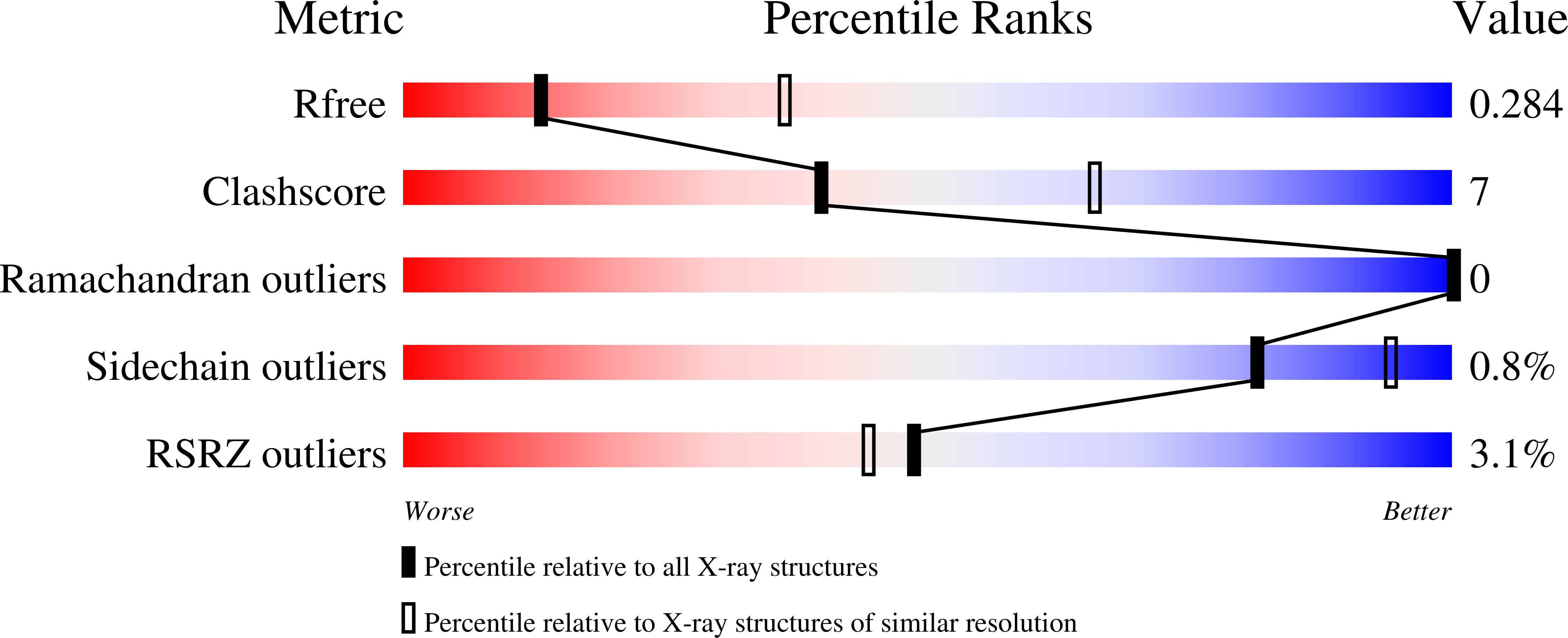
Resolution:
2.90 Å
R-Value Free:
0.28
R-Value Work:
0.25
R-Value Observed:
0.25
Space Group:
P 6 2 2
Macromolecular Entities
Structures with similar UniProt ID
Protein Blast
Polymer Type:polypeptide(L)
Molecule:Calcium-dependent secretion a
Gene (Uniprot):Cadps
Chain IDs:A
Chain Length:184
Number of Molecules:1
Biological Source:Rattus norvegicus
Modified Residue
Compound ID Chain ID Parent Comp ID Details 2D Image
MSE A MET modified residue
Ligand Molecules
Primary Citation
Structural and Functional Analysis of the CAPS SNARE-Binding Domain Required for SNARE Complex Formation and Exocytosis.
Cell Rep 26 3347 3359.e6 (2019)
PMID: 30893606 DOI: 10.1016/j.celrep.2019.02.064

Abstact

Exocytosis of synaptic vesicles and dense-core vesicles requires both the Munc13 and CAPS (Ca2+-dependent activator proteins for secretion) proteins. CAPS contains a soluble N-ethylmaleimide-sensitive factor attachment protein receptor (SNARE)-binding region (called the DAMH domain), which has been found to be essential for SNARE-mediated exocytosis. Here we report a crystal structure of the CAPS-1 DAMH domain at 2.9-Å resolution and reveal a dual role of CAPS-1 in SNARE complex formation. CAPS-1 plays an inhibitory role dependent on binding of the DAMH domain to the MUN domain of Munc13-1, which hinders the ability of Munc13 to catalyze opening of syntaxin-1, inhibiting SNARE complex formation, and a chaperone role dependent on interaction of the DAMH domain with the syntaxin-1/SNAP-25 complex, which stabilizes the open conformation of Syx1, facilitating SNARE complex formation. Our results suggest that CAPS-1 facilitates SNARE complex formation via the DAMH domain in a manner dependent on sequential and cooperative interaction with Munc13-1 and SNARE proteins.

Legend

Protein

Chemical

Disease

Primary Citation of related structures
Feedback Form
Name
Email
Institute
Feedback