

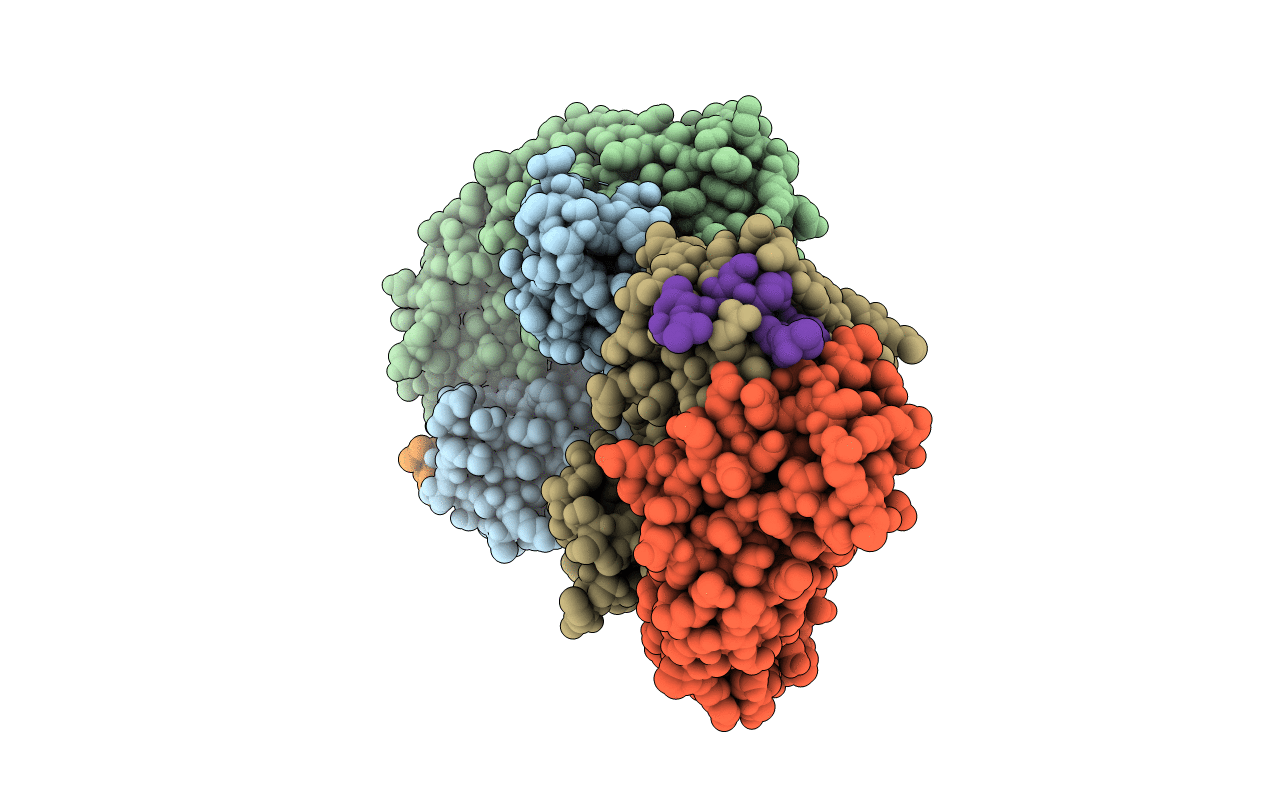
4YO0 image
Deposition Date 2015-03-11
Release Date 2016-03-02
Last Version Date 2024-11-20
Entry Detail
PDB ID:
4YO0
Keywords:
Title:
Crystal structure of monoclonal anti-human podoplanin antibody NZ-1 with bound PA peptide
Biological Source:
Source Organism(s):
Rattus norvegicus (Taxon ID: 10116)
Homo sapiens (Taxon ID: 9606)
Expression System(s):
Method Details:
Experimental Method:
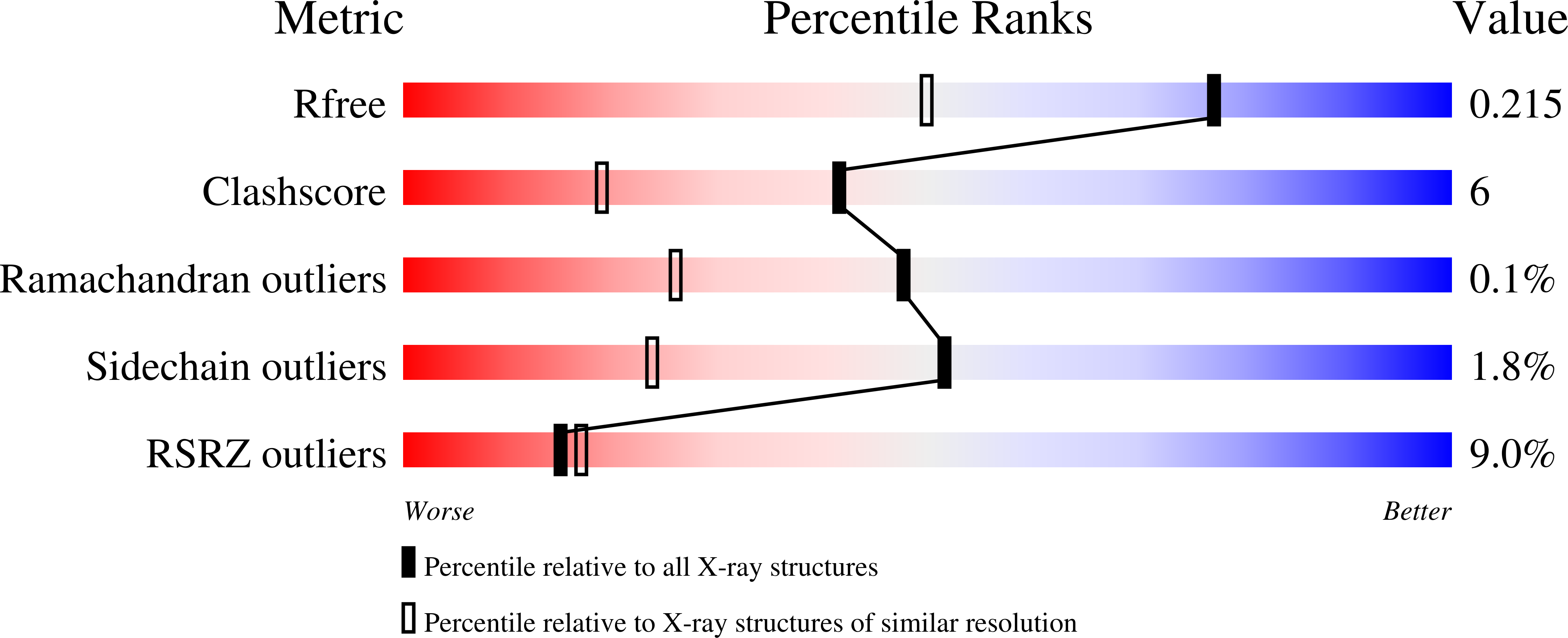
Resolution:
1.56 Å
R-Value Free:
0.21
R-Value Work:
0.17
R-Value Observed:
0.18
Space Group:
P 1 21 1
Macromolecular Entities
Polymer Type:polypeptide(L)
Molecule:Heavy chain of antigen bindin
Chain IDs:A, C
Chain Length:238
Number of Molecules:2
Biological Source:Rattus norvegicus
Polymer Type:polypeptide(L)
Molecule:Light chain of antigen bindin
Chain IDs:B, D
Chain Length:233
Number of Molecules:2
Biological Source:Rattus norvegicus
Polymer Type:polypeptide(L)
Molecule:PA14 peptide
Chain IDs:E, F
Chain Length:14
Number of Molecules:2
Biological Source:Homo sapiens
Ligand Molecules
Primary Citation
Tailored placement of a turn-forming PA tag into the structured domain of a protein to probe its conformational state
J. Cell. Sci. 129 1512 1522 (2016)
PMID: 26872787 DOI: 10.1242/jcs.176685

Abstact

Placement of a tag sequence is usually limited to either terminal end of the target protein, reducing the potential of epitope tags for various labeling applications. The PA tag is a dodecapeptide (GVAMPGAEDDVV) that is recognized by a high-affinity antibody NZ-1. We determined the crystal structure of the PA-tag-NZ-1 complex and found that NZ-1 recognizes a central segment of the PA tag peptide in a tight β-turn configuration, suggesting that it is compatible with the insertion into a loop. This possibility was tested and confirmed using multiple integrin subunits and semaphorin. More specifically, the PA tag can be inserted at multiple locations within the integrin αIIb subunit (encoded by ITGA2B) of the fibrinogen receptor αIIbβ3 integrin (of which the β3 subunit is encoded by ITGB3) without affecting the structural and functional integrity, while maintaining its high affinity for NZ-1. The large choice of the sites for 'epitope grafting' enabled the placement of the PA tag at a location whose accessibility is modulated during the biological action of the receptor. Thus, we succeeded in converting a general anti-tag antibody into a special anti-integrin antibody that can be classified as a ligand-induced binding site antibody.

Legend

Protein

Chemical

Disease

Primary Citation of related structures
Feedback Form
Name
Email
Institute
Feedback