

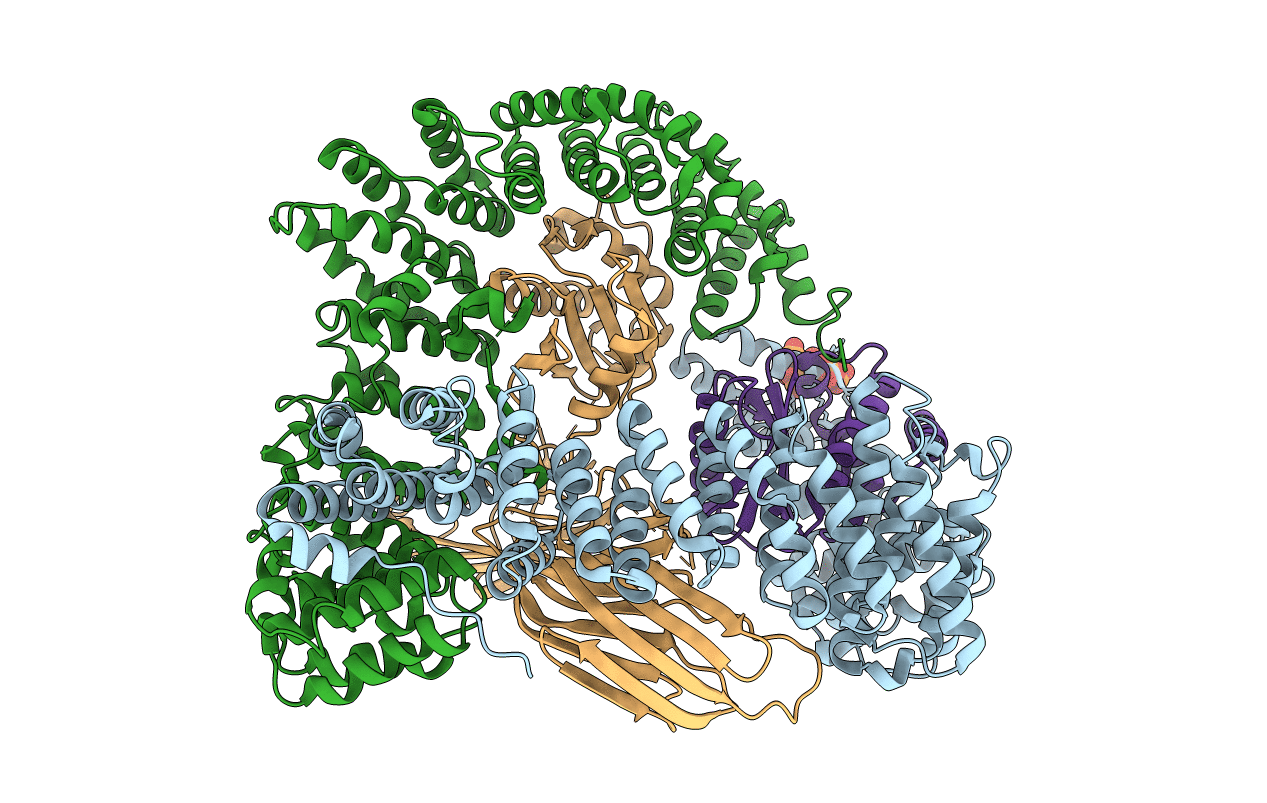
4UQI image
Deposition Date 2014-06-23
Release Date 2014-07-30
Last Version Date 2024-01-10
Entry Detail
PDB ID:
4UQI
Keywords:
Title:
AP2 controls clathrin polymerization with a membrane-activated switch
Biological Source:
Source Organism(s):
RATTUS NORVEGICUS (Taxon ID: 10116)
HOMO SAPIENS (Taxon ID: 9606)
MUS MUSCULUS (Taxon ID: 10090)
Expression System(s):
Method Details:
Experimental Method:
Resolution:
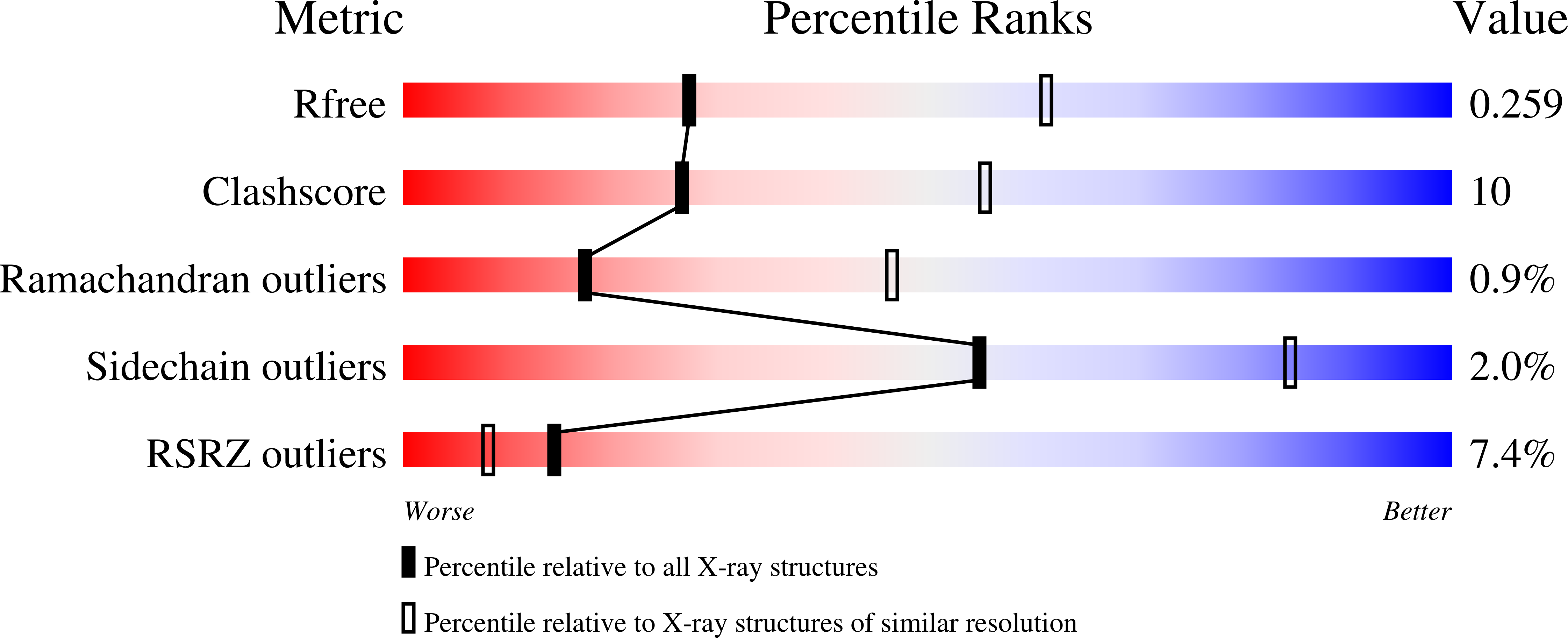
2.79 Å
R-Value Free:
0.25
R-Value Work:
0.20
R-Value Observed:
0.20
Space Group:
P 31 2 1
Macromolecular Entities
Structures with similar UniProt ID
Protein Blast
Polymer Type:polypeptide(L)
Molecule:AP-2 COMPLEX SUBUNIT ALPHA-2
Gene (Uniprot):Ap2a2
Chain IDs:A
Chain Length:628
Number of Molecules:1
Biological Source:RATTUS NORVEGICUS
Structures with similar UniProt ID
Protein Blast
Polymer Type:polypeptide(L)
Molecule:AP-2 COMPLEX SUBUNIT BETA
Gene (Uniprot):AP2B1
Chain IDs:B
Chain Length:657
Number of Molecules:1
Biological Source:HOMO SAPIENS
Structures with similar UniProt ID
Protein Blast
Polymer Type:polypeptide(L)
Molecule:AP-2 COMPLEX SUBUNIT MU
Gene (Uniprot):Ap2m1
Chain IDs:C (auth: M)
Chain Length:446
Number of Molecules:1
Biological Source:RATTUS NORVEGICUS
Structures with similar UniProt ID
Protein Blast
Polymer Type:polypeptide(L)
Molecule:AP-2 COMPLEX SUBUNIT SIGMA
Gene (Uniprot):Ap2s1
Chain IDs:D (auth: S)
Chain Length:142
Number of Molecules:1
Biological Source:MUS MUSCULUS
Primary Citation
Clathrin Adaptors. Ap2 Controls Clathrin Polymerization with a Membrane-Activated Switch.
Science 345 459 ? (2014)
PMID: 25061211 DOI: 10.1126/SCIENCE.1254836

Abstact

Clathrin-mediated endocytosis (CME) is vital for the internalization of most cell-surface proteins. In CME, plasma membrane-binding clathrin adaptors recruit and polymerize clathrin to form clathrin-coated pits into which cargo is sorted. Assembly polypeptide 2 (AP2) is the most abundant adaptor and is pivotal to CME. Here, we determined a structure of AP2 that includes the clathrin-binding β2 hinge and developed an AP2-dependent budding assay. Our findings suggest that an autoinhibitory mechanism prevents clathrin recruitment by cytosolic AP2. A large-scale conformational change driven by the plasma membrane phosphoinositide phosphatidylinositol 4,5-bisphosphate and cargo relieves this autoinhibition, triggering clathrin recruitment and hence clathrin-coated bud formation. This molecular switching mechanism can couple AP2's membrane recruitment to its key functions of cargo and clathrin binding.

Legend

Protein

Chemical

Disease

Primary Citation of related structures
Feedback Form
Name
Email
Institute
Feedback