

43EF image
Deposition Date 2026-06-28
Release Date 2026-10-28
Last Version Date 2026-11-04
Entry Detail
PDB ID:
43EF
Title:
Cryo-EM structure of Anopheles stephensi IR8a-IR75k receptor
Biological Source:
Source Organism(s):
Expression System(s):
Method Details:
Experimental Method:
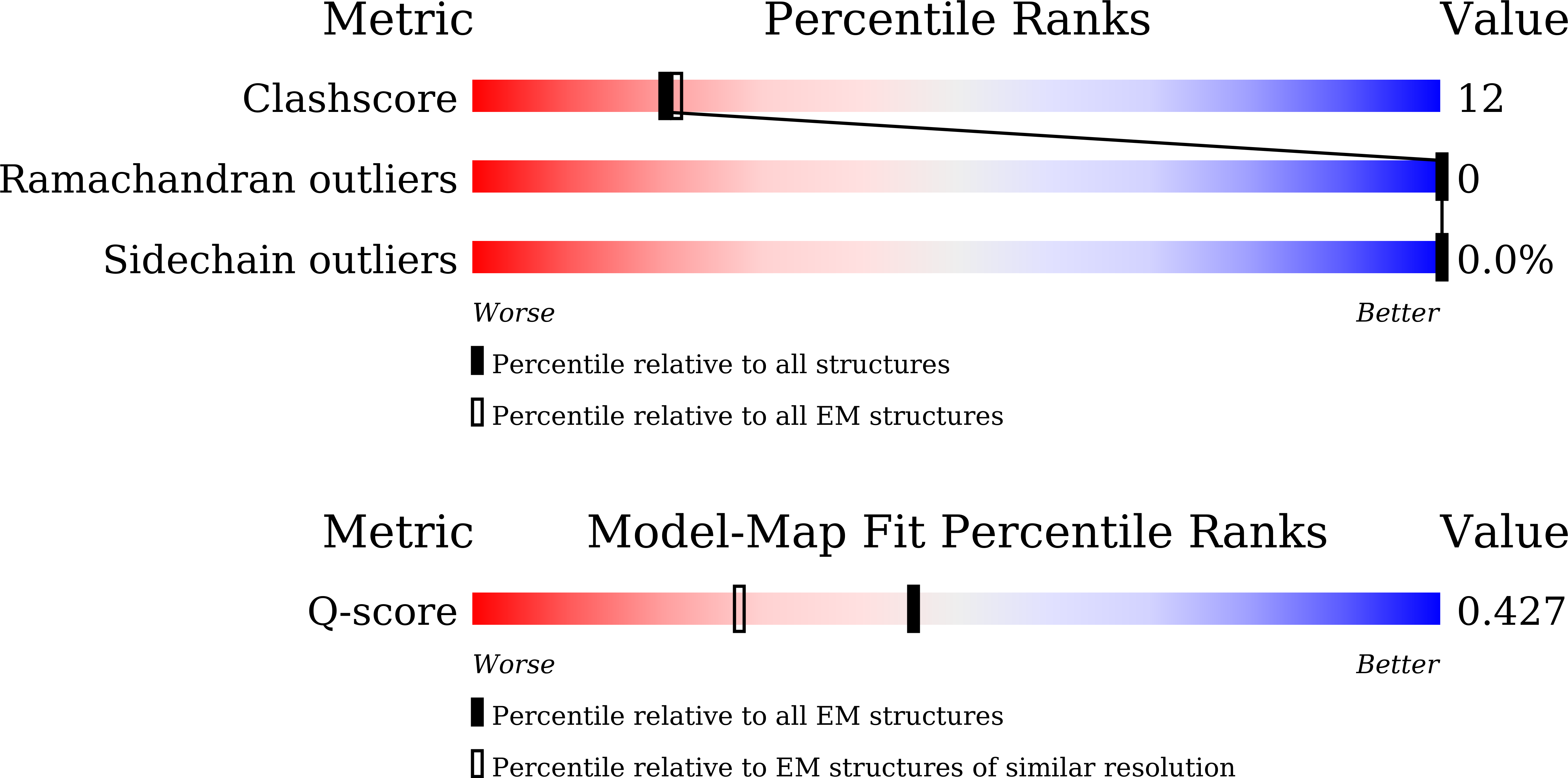
Resolution:
3.16 Å
Aggregation State:
PARTICLE
Reconstruction Method:
SINGLE PARTICLE
Macromolecular Entities
Polymer Type:polypeptide(L)
Molecule:Ionotropic receptor corecepto
Chain IDs:C (auth: A), D (auth: B)
Chain Length:927
Number of Molecules:2
Biological Source:Anopheles stephensi
Polymer Type:polypeptide(L)
Molecule:Ionotropic glutamate receptor
Chain IDs:A (auth: C), B (auth: D)
Chain Length:657
Number of Molecules:2
Biological Source:Anopheles stephensi
Ligand Molecules
Primary Citation
Structural basis of ligand recognition and gating in mosquito IRs.
Nature ? ? ? (2026)
PMID: 42875027 DOI: 10.1038/s41586-026-11239-3

Abstact

Ionotropic receptors (IRs) are essential for insect olfaction, enabling the detection of carboxylic acids, amines, moisture, and temperature cues that mediate critical behaviors, including mosquito host-seeking (1,2). However, the structural mechanisms underlying ligand specificity and channel activation in these receptors remain unclear. Here, we report cryo-electron microscopy (cryo-EM) structures and functional validation of the IR8a-IR75k complex from the malaria mosquito Anopheles stephensi, a carboxylic acid detector, captured in four states: the ligand-free full-length closed form (apo state), the ligand induced full-length open state, and the nonanoic acid (NA)- and octanoic acid (OA)-bound extracellular domains. These structures reveal a dynamic ligand-binding pocket in IR75k, in which specificity is determined by alkyl chain length and carboxylate geometry. Ligand binding triggers closure of IR75k's bilobed ligand binding domain (LBD), and this conformational change propagates through conserved mechanical linkers to the transmembrane domain (TMD), functioning as a molecular lever that dilates the pore via outward displacement of transmembrane helices. This gating mechanism was further corroborated by molecular dynamics simulations and electrophysiology. These insights provide an atomic resolution view of IR mediated host detection in mosquitoes and establish a foundation for the rational design of next generation mosquito control strategies targeting host-seeking behavior.

Legend

Protein

Chemical

Disease

Primary Citation of related structures
Feedback Form
Name
Email
Institute
Feedback