

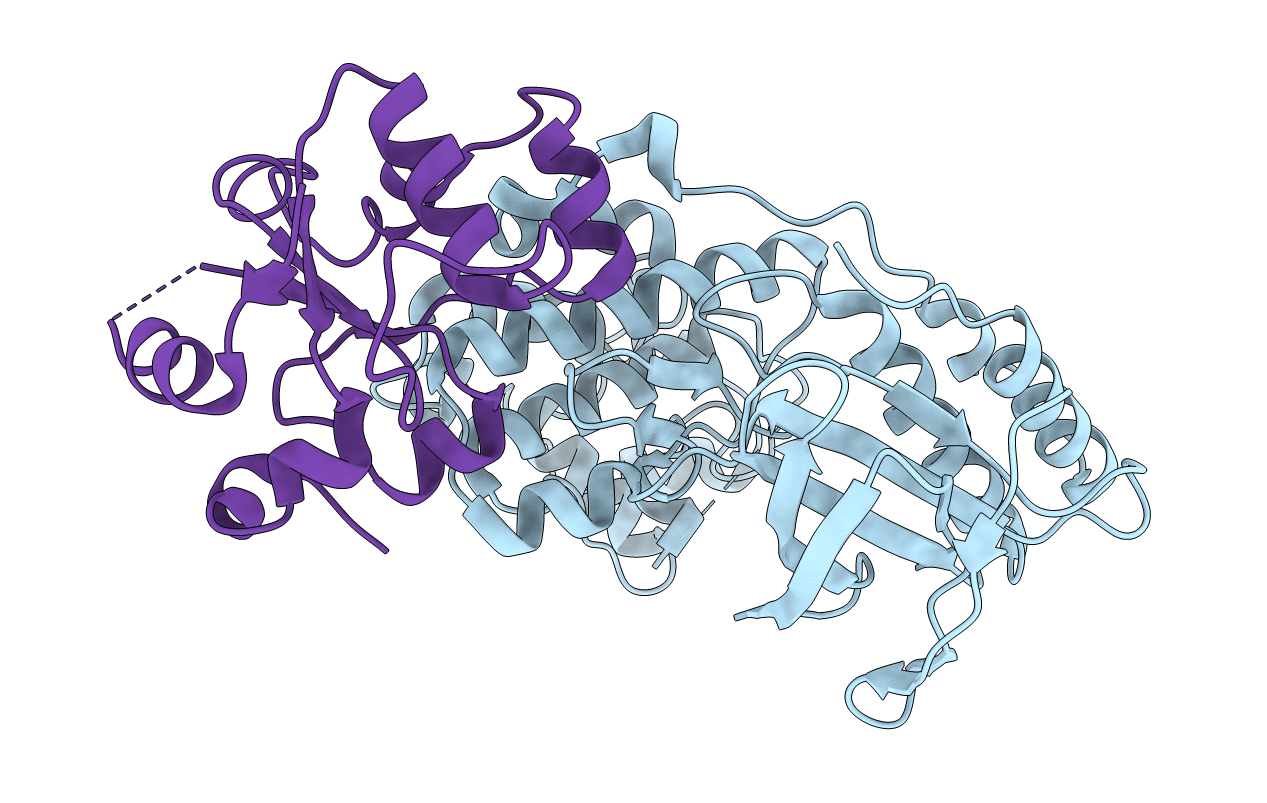
3TG1 image
Deposition Date 2011-08-17
Release Date 2012-03-14
Last Version Date 2023-11-01
Entry Detail
PDB ID:
3TG1
Title:
Crystal structure of p38alpha in complex with a MAPK docking partner
Biological Source:
Source Organism(s):
Mus musculus (Taxon ID: 10090)
Homo sapiens (Taxon ID: 9606)
Expression System(s):
Method Details:
Experimental Method:
Resolution:
2.71 Å
R-Value Free:
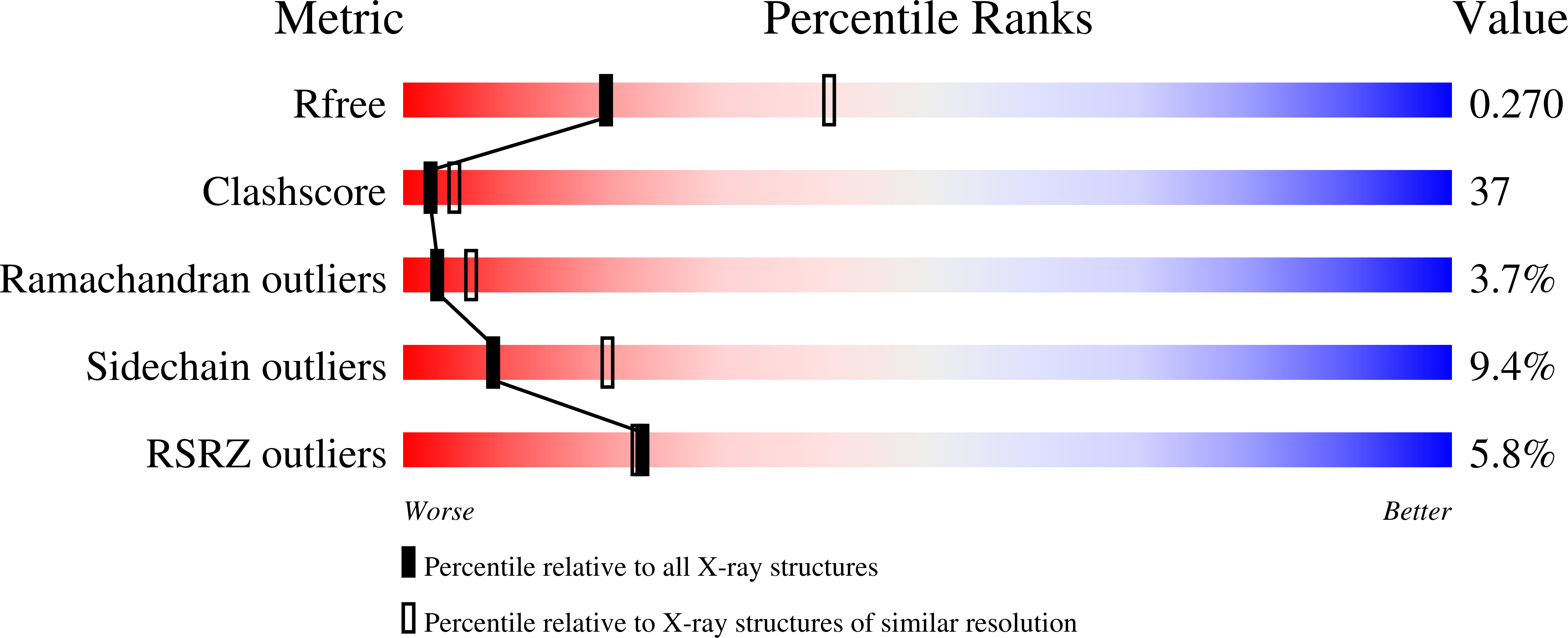
0.25
R-Value Work:
0.21
R-Value Observed:
0.21
Space Group:
P 41 21 2
Macromolecular Entities
Polymer Type:polypeptide(L)
Molecule:Mitogen-activated protein kin
Gene (Uniprot):Mapk14
Chain IDs:A
Chain Length:380
Number of Molecules:1
Biological Source:Mus musculus
Polymer Type:polypeptide(L)
Molecule:Dual specificity protein phos
Gene (Uniprot):DUSP10
Chain IDs:B
Chain Length:158
Number of Molecules:1
Biological Source:Homo sapiens
Primary Citation
A Distinct Interaction Mode Revealed by the Crystal Structure of the Kinase p38alpha with the MAPK Binding Domain of the Phosphatase MKP5.
Sci.Signal. 4 ra88 ra88 (2011)
PMID: 22375048 DOI: 10.1126/scisignal.2002241

Abstact

The mitogen-activated protein kinase (MAPK) cascades play a pivotal role in a myriad of cellular functions. The specificity and efficiency of MAPK signaling are controlled by docking interactions between MAPKs and their cognate proteins. Many MAPK-interacting partners, including substrates, MAPK kinases, phosphatases, and scaffolding proteins, have linear sequence motifs that mediate the interaction with the common docking site on MAPKs. We report the crystal structure of p38α in complex with the MAPK binding domain (KBD) from MAPK phosphatase 5 (MKP5) at 2.7 Å resolution. In contrast to the well-known docking mode, the KBD binds p38α in a bipartite manner, in which two distinct helical regions of KBD engage the p38α docking site, which is situated on the back of the p38α active site. We also determined the crystal structure of the KBD of MKP7, which closely resembles the MKP5 KBD, suggesting that the mechanism of molecular recognition by the KBD of MKP5 is conserved in the cytoplasmic p38- and c-Jun N-terminal kinase-specific MKP subgroup. This previously unknown binding mode provides new insights into how MAPKs interact with their binding partners to achieve functional specificity.

Legend

Protein

Chemical

Disease

Primary Citation of related structures
Feedback Form
Name
Email
Institute
Feedback