

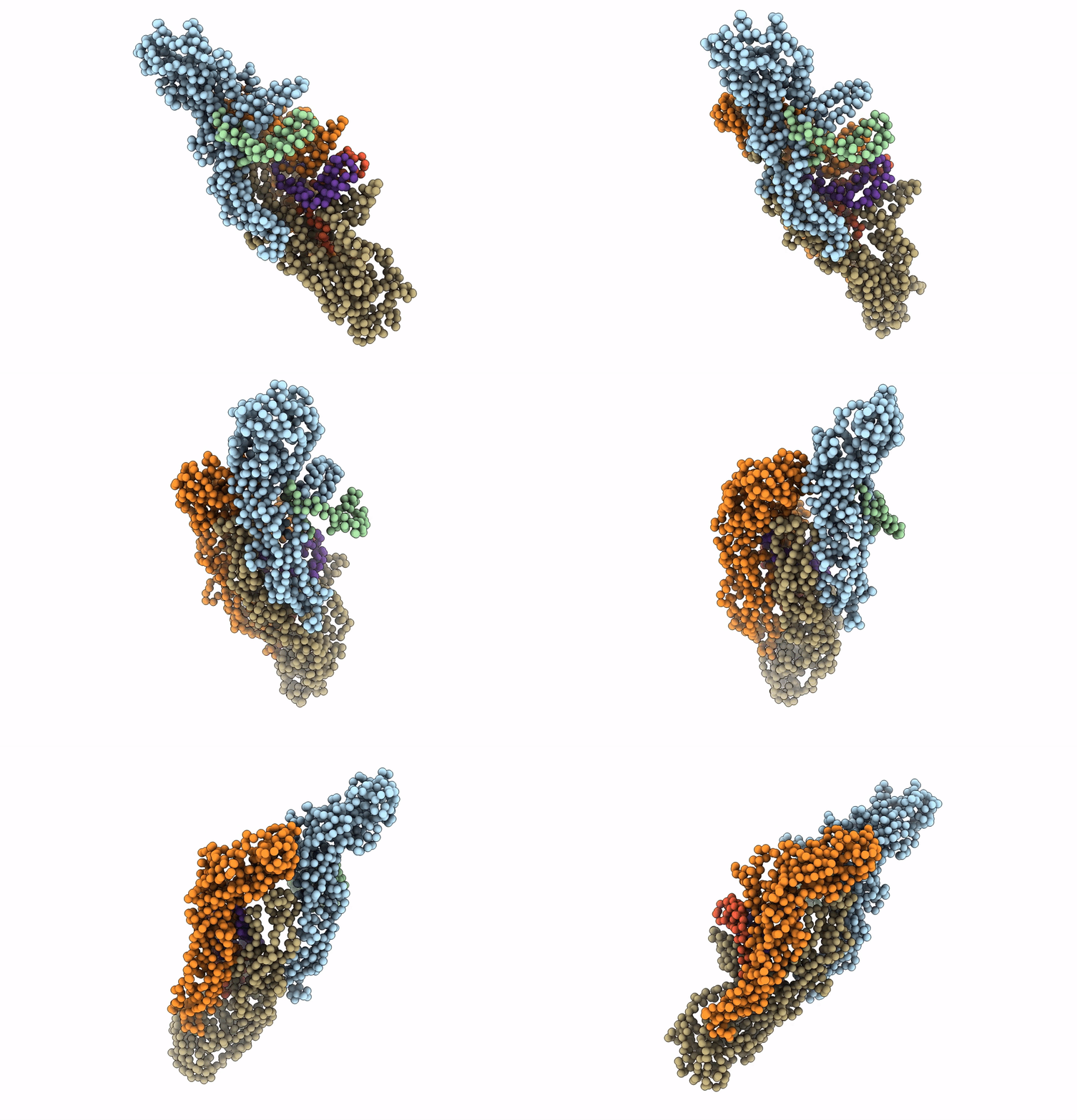
3J6S image
Deposition Date 2014-03-24
Release Date 2015-03-04
Last Version Date 2024-02-21
Entry Detail
PDB ID:
3J6S
Keywords:
Title:
Cryo-EM structure of Dengue virus serotype 3 at 28 degrees C
Biological Source:
Source Organism(s):
Dengue virus 3 (Taxon ID: 11069)
Expression System(s):
Method Details:
Experimental Method:
Resolution:
6.00 Å
Aggregation State:
PARTICLE
Reconstruction Method:
SINGLE PARTICLE

Macromolecular Entities
Structures with similar UniProt ID
Protein Blast
Polymer Type:polypeptide(L)
Molecule:envelope protein
Chain IDs:A, C, E
Chain Length:493
Number of Molecules:3
Biological Source:Dengue virus 3
Structures with similar UniProt ID
Protein Blast
Polymer Type:polypeptide(L)
Molecule:membrane protein
Chain IDs:B, D, F
Chain Length:75
Number of Molecules:3
Biological Source:Dengue virus 3
Ligand Molecules
Primary Citation
A highly potent human antibody neutralizes dengue virus serotype 3 by binding across three surface proteins.
Nat Commun 6 6341 6341 (2015)
PMID: 25698059 DOI: 10.1038/ncomms7341

Abstact

Dengue virus (DENV) infects ~400 million people annually. There is no licensed vaccine or therapeutic drug. Only a small fraction of the total DENV-specific antibodies in a naturally occurring dengue infection consists of highly neutralizing antibodies. Here we show that the DENV-specific human monoclonal antibody 5J7 is exceptionally potent, neutralizing 50% of virus at nanogram-range antibody concentration. The 9 Å resolution cryo-electron microscopy structure of the Fab 5J7-DENV complex shows that a single Fab molecule binds across three envelope proteins and engages three functionally important domains, each from a different envelope protein. These domains are critical for receptor binding and fusion to the endosomal membrane. The ability to bind to multiple domains allows the antibody to fully coat the virus surface with only 60 copies of Fab, that is, half the amount compared with other potent antibodies. Our study reveals a highly efficient and unusual mechanism of molecular recognition by an antibody.

Legend

Protein

Chemical

Disease

Primary Citation of related structures
Feedback Form
Name
Email
Institute
Feedback