

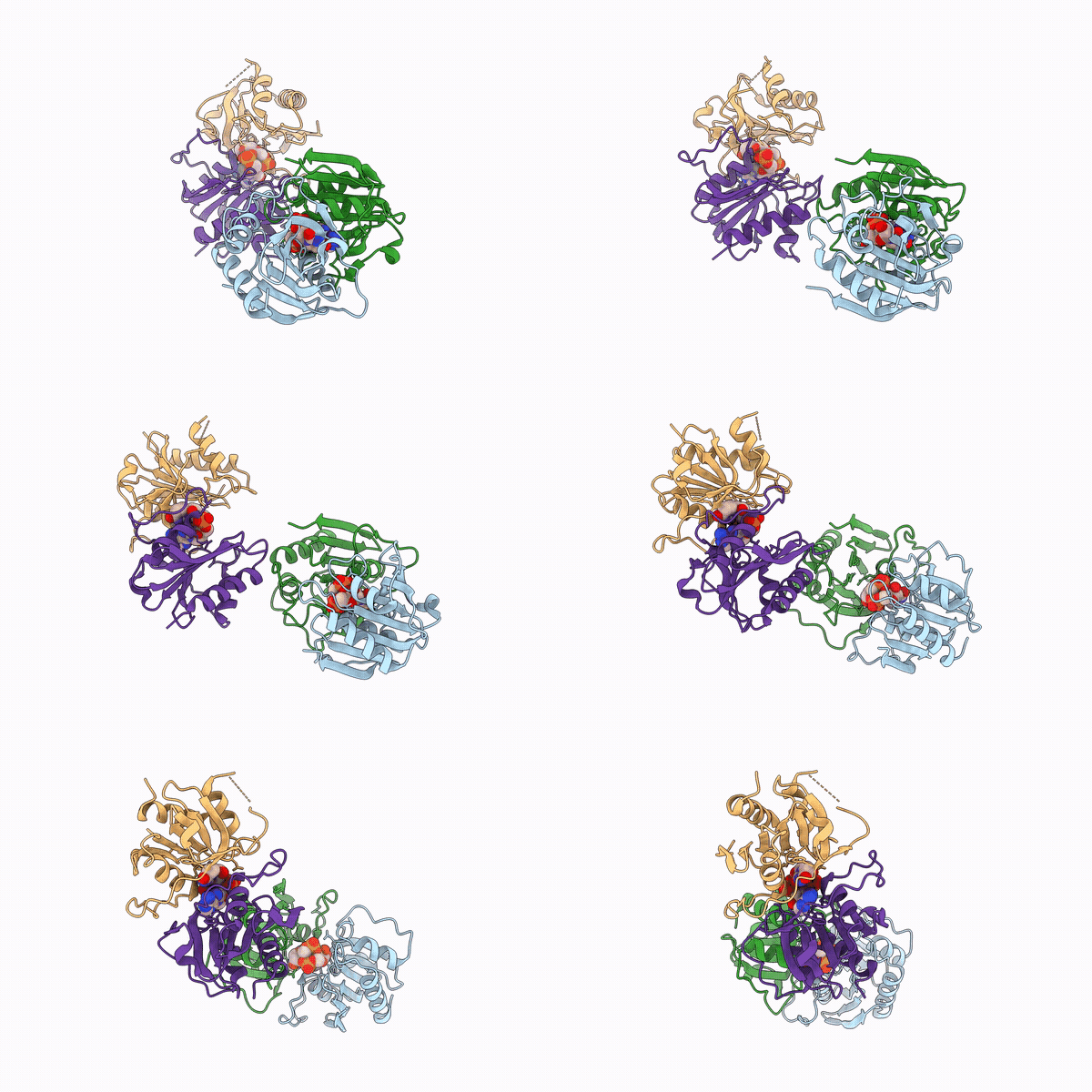
37TH image
Deposition Date 2026-08-04
Release Date 2026-11-04
Last Version Date 2026-11-04
Entry Detail
PDB ID:
37TH
Keywords:
Title:
Minimal diadenylate cyclase from E. coli PanDA immune system - NO IEX
Biological Source:
Source Organism(s):
Escherichia coli (Taxon ID: 562)
Expression System(s):
Method Details:
Experimental Method:
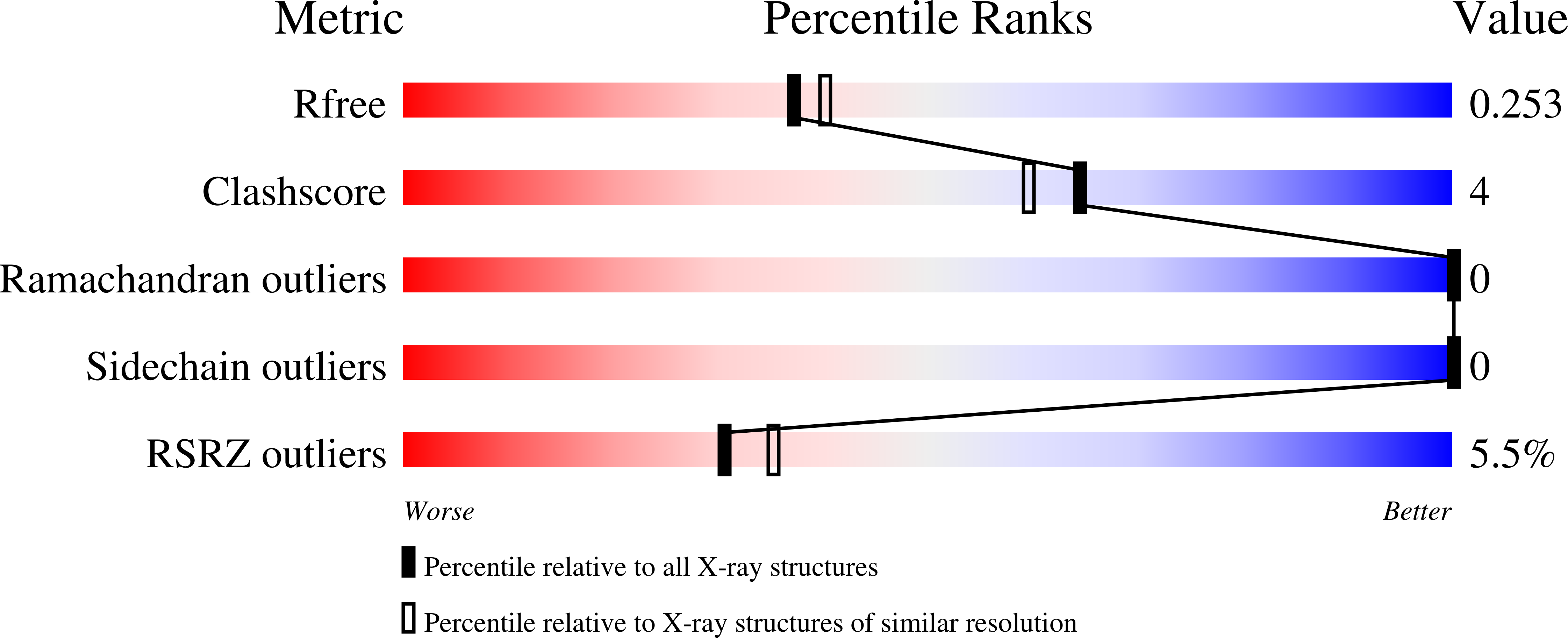
Resolution:
2.14 Å
R-Value Free:
0.25
R-Value Work:
0.22
R-Value Observed:
0.22
Space Group:
P 21 21 21
Macromolecular Entities
Structural Superimposition
Polymer Type:polypeptide(L)
Molecule:Diadenylate cyclase PanS
Chain IDs:A, B, C, D
Chain Length:146
Number of Molecules:4
Biological Source:Escherichia coli
Ligand Molecules
Primary Citation
Minimal diadenylate cyclases have been co-opted to detect phage immune evasion.
Biorxiv ? ? ? (2026)
PMID: 42845471 DOI: 10.64898/2026.08.10.743972

Abstact

Many bacterial immune defenses transmit recognition of phage infection via the generation of diverse cyclic nucleotide second messengers. Phage have evolved to subvert this kind of immunity by sequestering, degrading, or inhibiting synthesis of these signaling molecules. Consequently, bacteria have evolved counter-mechanisms to detect disruption of cyclic nucleotide signaling and induce another layer of immune protection. Here we detail our discovery of the PanDA defense system (Panoptes-like DisA), an antiphage defense which detects sequestration of 3'3'-c-di-AMP by phage sponge proteins. PanDA consists of two proteins, PanS and PanE, which are both necessary for defense. PanS contains a minimal diadenylate cyclase (DAC) domain that constitutively generates the cyclic dinucleotide 3'3'-c-di-AMP which binds to and represses a toxic effector, the 2TM-beta family protein PanE. When a cell is infected by a phage encoding the sponge protein Acb4 (anti-CBASS protein 4), PanE is activated and induces membrane permeability. This work represents the first confirmed use of 3'3'-c-di-AMP as an immune second messenger in bacteria, facilitated by the exaptation of a DAC domain which has thus far only been best understood for its non-immune signaling roles.

Legend

Protein

Chemical

Disease

Primary Citation of related structures
Feedback Form
Name
Email
Institute
Feedback