

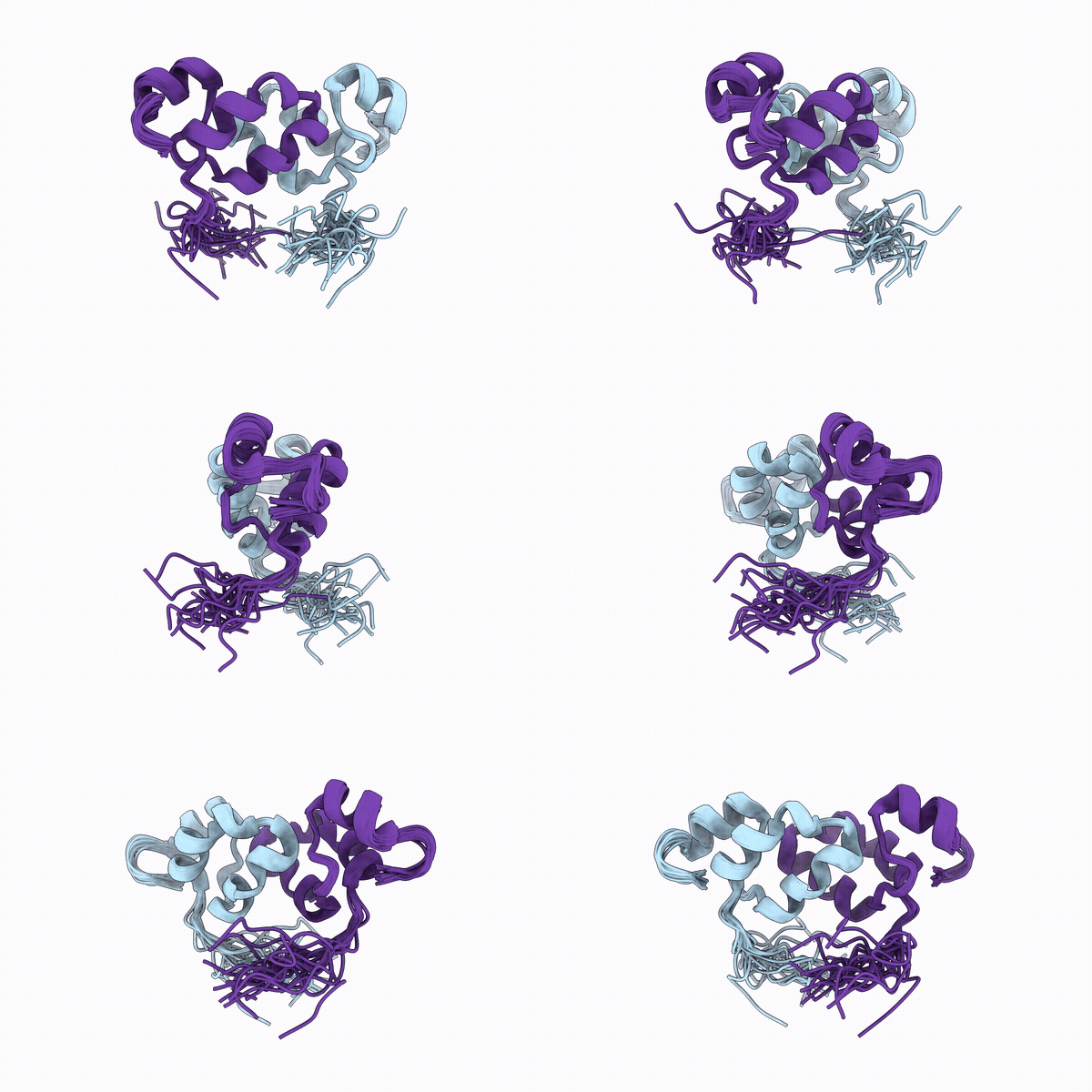
37EI image
Deposition Date 2026-07-16
Release Date 2026-10-28
Last Version Date 2026-10-28
Entry Detail
PDB ID:
37EI
Keywords:
Title:
Solution structure of the Cys-rich domain of the 15 kDa selenoprotein
Biological Source:
Source Organism(s):
Homo sapiens (Taxon ID: 9606)
Expression System(s):
Method Details:
Experimental Method:
Conformers Calculated:
50
Conformers Submitted:
20
Selection Criteria:
structures with the lowest energy
Macromolecular Entities
Polymer Type:polypeptide(L)
Molecule:Selenoprotein F
Gene (Uniprot):SELENOF
Chain IDs:A, B
Chain Length:52
Number of Molecules:2
Biological Source:Homo sapiens
Ligand Molecules
Primary Citation
The cysteine-rich domain of SEP15, a selenoprotein co-chaperone of the ER chaperone, UDP-glucose:glycoprotein glucosyltransferase, adopts a novel fold.
J.Biol.Chem. ? 113629 113629 (2026)
PMID: 42854909 DOI: 10.1016/j.jbc.2026.113629

Abstact

Proteins targeted to the secretory pathway are involved in a myriad of biological processes but can only do so when properly folded. Within the endoplasmic reticulum, glycoprotein folding is regulated by the enzyme UDP-glucose:glycoprotein glucosyltransferase (UGGT) and its oxidoreductase partner, the 15-kDa selenoprotein (SEP15 aka SELENOF). The interaction between these two chaperones is poorly understood, limiting understanding of their function. SEP15 is comprised of two domains, a C-terminal thioredoxin-like domain, the structure of which has been reported (PDB 2A4H), and an approximately 50-residue long N-terminal cysteine-rich domain (CRD), of unknown structure. Here, we report the NMR solution structure of SEP15 CRD, which mediates the interaction with UGGT. These data reveal that this domain adopts a dimer in solution and forms a previously undescribed helical fold, stabilized by three disulfide bonds between residues C10-C42, C21-C43, and C24-C39. Furthermore, our results validate a model of the UGGT/SEP15 complex and lay the foundation for future studies of its interaction with glycoprotein substrates.

Legend

Protein

Chemical

Disease

Primary Citation of related structures
Feedback Form
Name
Email
Institute
Feedback