

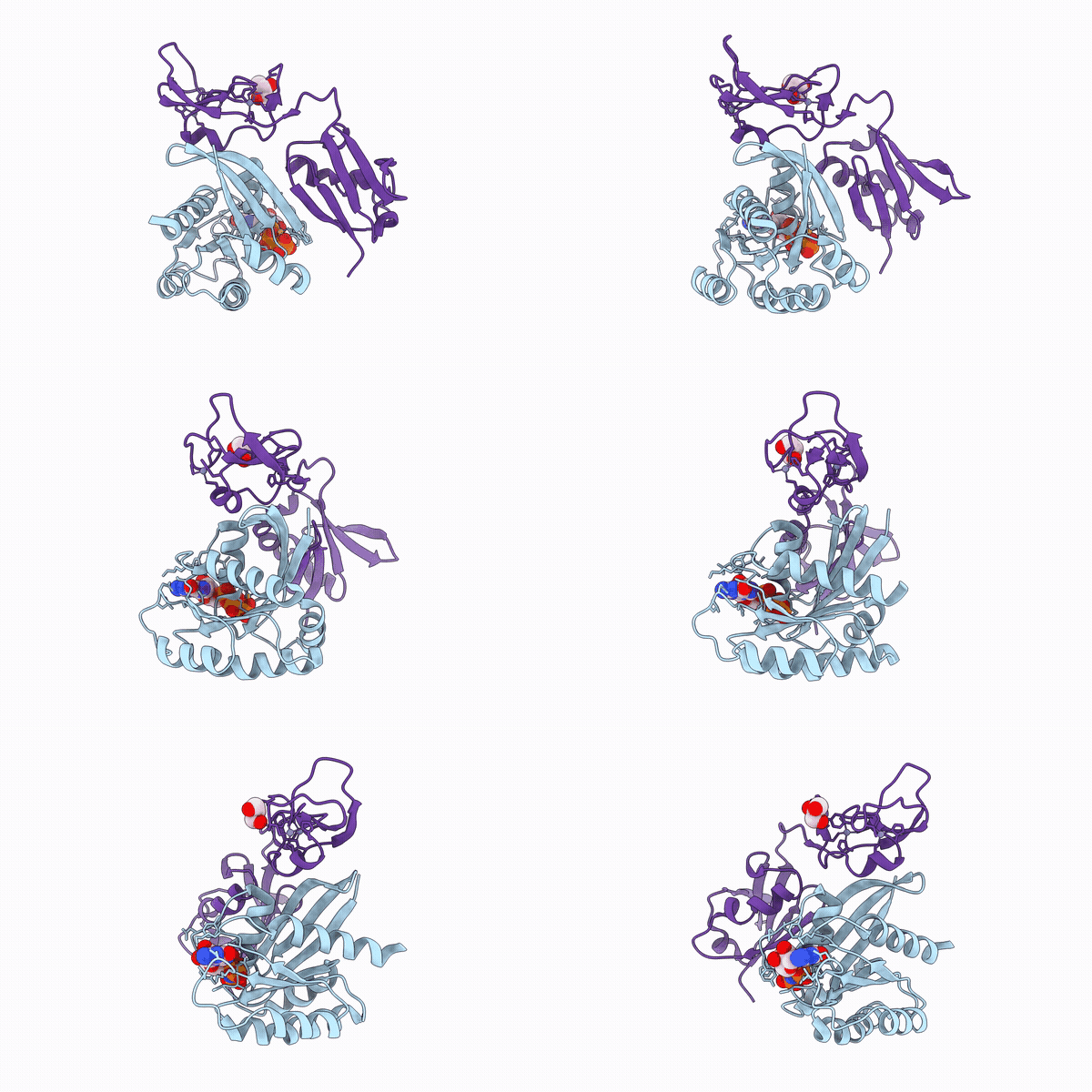
35VB image
Deposition Date 2026-05-19
Release Date 2026-09-23
Last Version Date 2026-10-28
Entry Detail
PDB ID:
35VB
Keywords:
Title:
Crystal structure of KRAS G13C (GMPPNP-bound) in complex with RAS-binding domain (RBD) and cysteine-rich domain (CRD) of BRAF
Biological Source:
Source Organism(s):
Homo sapiens (Taxon ID: 9606)
Expression System(s):
Method Details:
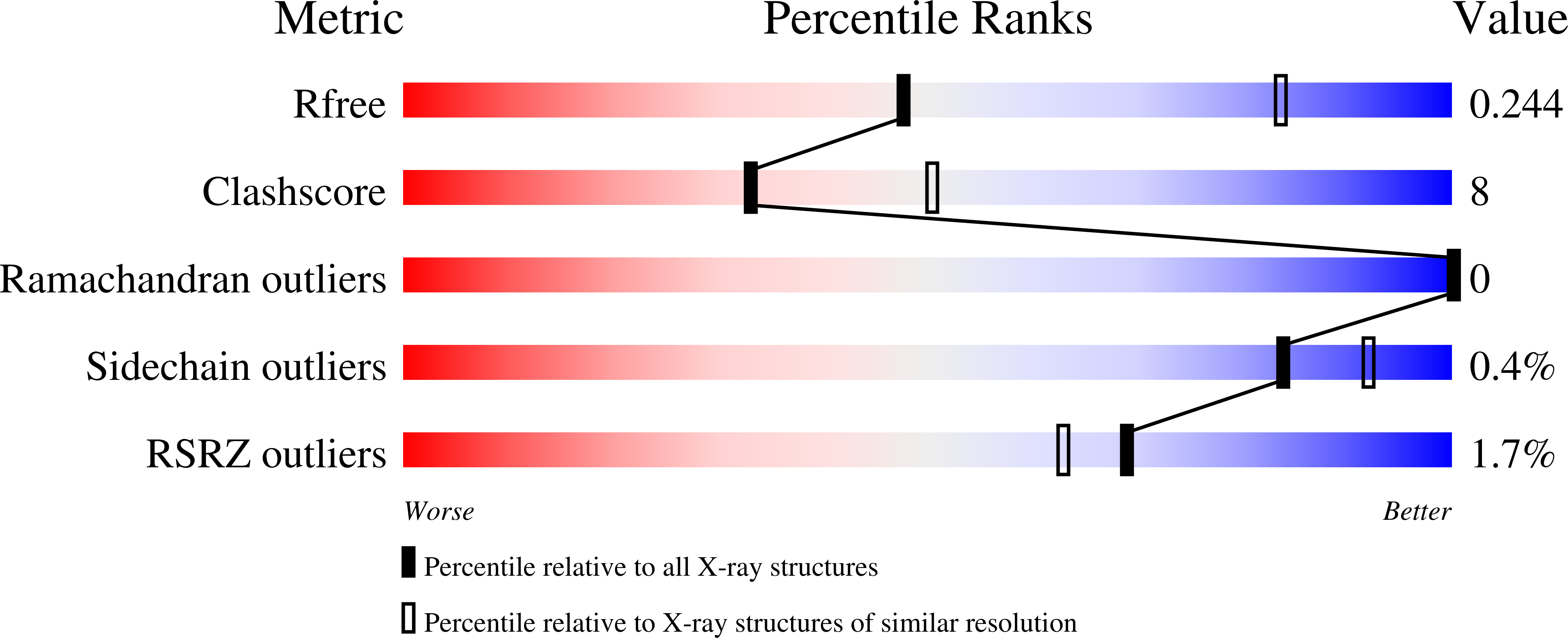
Experimental Method:
Resolution:
2.85 Å
R-Value Free:
0.24
R-Value Work:
0.20
R-Value Observed:
0.21
Space Group:
I 4 3 2
Macromolecular Entities
Polymer Type:polypeptide(L)
Molecule:Isoform 2B of GTPase KRas
Gene (Uniprot):KRAS
Mutagens:G13C
Chain IDs:A
Chain Length:170
Number of Molecules:1
Biological Source:Homo sapiens
Polymer Type:polypeptide(L)
Molecule:Serine/threonine-protein kina
Gene (Uniprot):BRAF
Chain IDs:B
Chain Length:135
Number of Molecules:1
Biological Source:Homo sapiens
Primary Citation
Molecular mechanism of KRAS binding to BRAF and its regulation by the BRAF-specific region.
Structure ? ? ? (2026)
PMID: 42863463 DOI: 10.1016/j.str.2026.09.005

Abstact

MAPK pathway activation requires recruitment of RAF kinases by GTP-bound RAS through the RAS-binding domain (RBD) and cysteine-rich domain (CRD). BRAF uniquely contains an N-terminal BRAF-specific region (BSR), but the structural basis of KRAS engagement and BSR function remain unclear. Here, we report the structure of KRAS bound to BRAF(RBD-CRD) and compare it with KRAS-CRAF(RBD-CRD). Although the RBD engages KRAS through a conserved mechanism, the BRAF(CRD) adopts a hinge-like displacement away from KRAS, forming fewer contacts and contributing less to binding than CRAF(CRD). Structural analysis, biophysical measurements, and AlphaFold3 modeling show that the BSR does not directly contact KRAS but instead regulates RBD accessibility through a cis-acting mechanism that requires linkage to the RBD. Without the CRD, the BSR-RBD linker restricts KRAS binding, whereas CRD inclusion stabilizes BSR positioning and partially relieves inhibition. Disease-associated mutations further support a regulatory role for BRAF(CRD), defining an isoform-specific mechanism regulating RAF activation.

Legend

Protein

Chemical

Disease

Primary Citation of related structures
Feedback Form
Name
Email
Institute
Feedback