

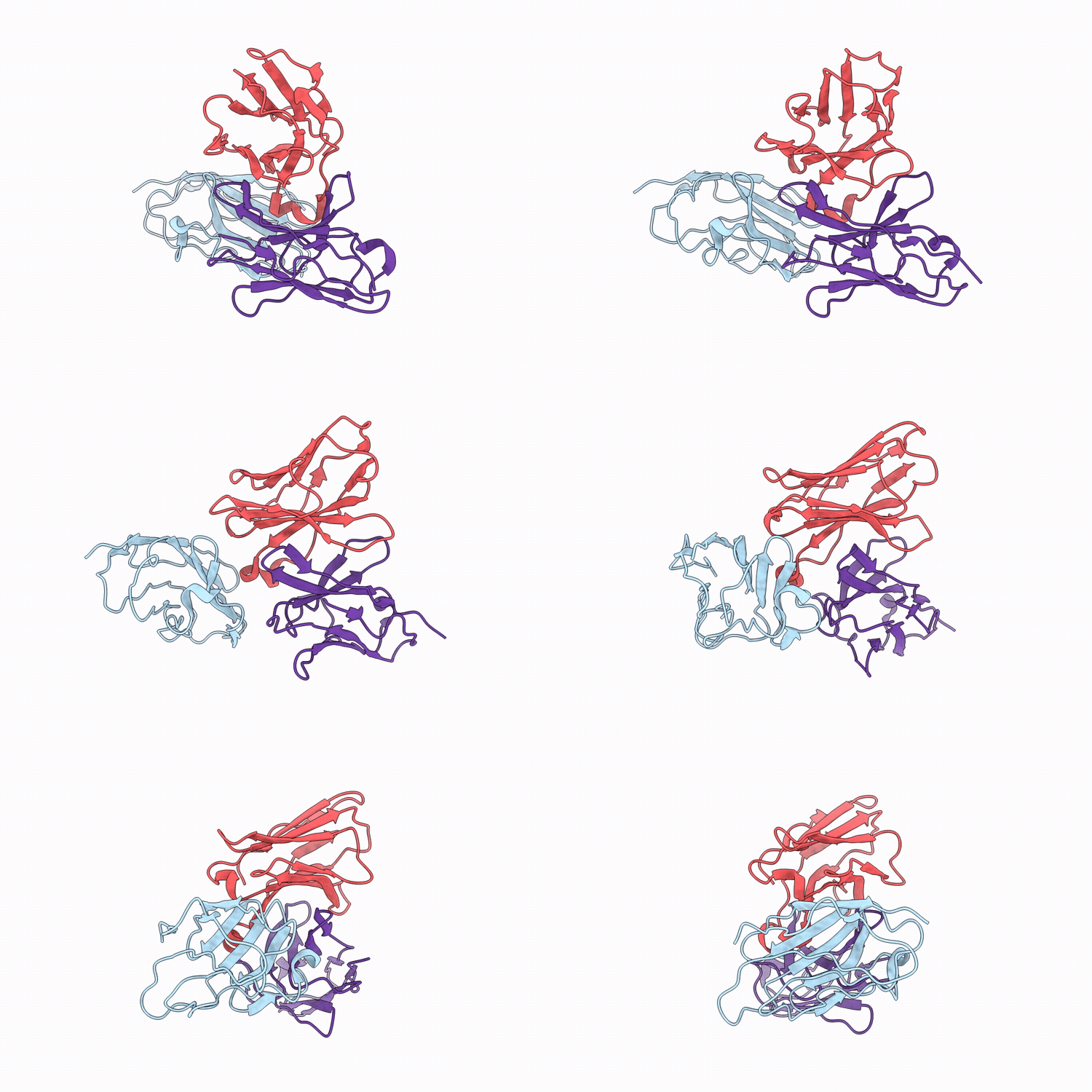
35TL image
Deposition Date 2026-05-15
Release Date 2026-07-22
Last Version Date 2026-07-22
Entry Detail
PDB ID:
35TL
Keywords:
Title:
PD-L1 complexed with Germinal-designed anti-PD-L1 scFv H5
Biological Source:
Source Organism(s):
Expression System(s):
Method Details:
Experimental Method:
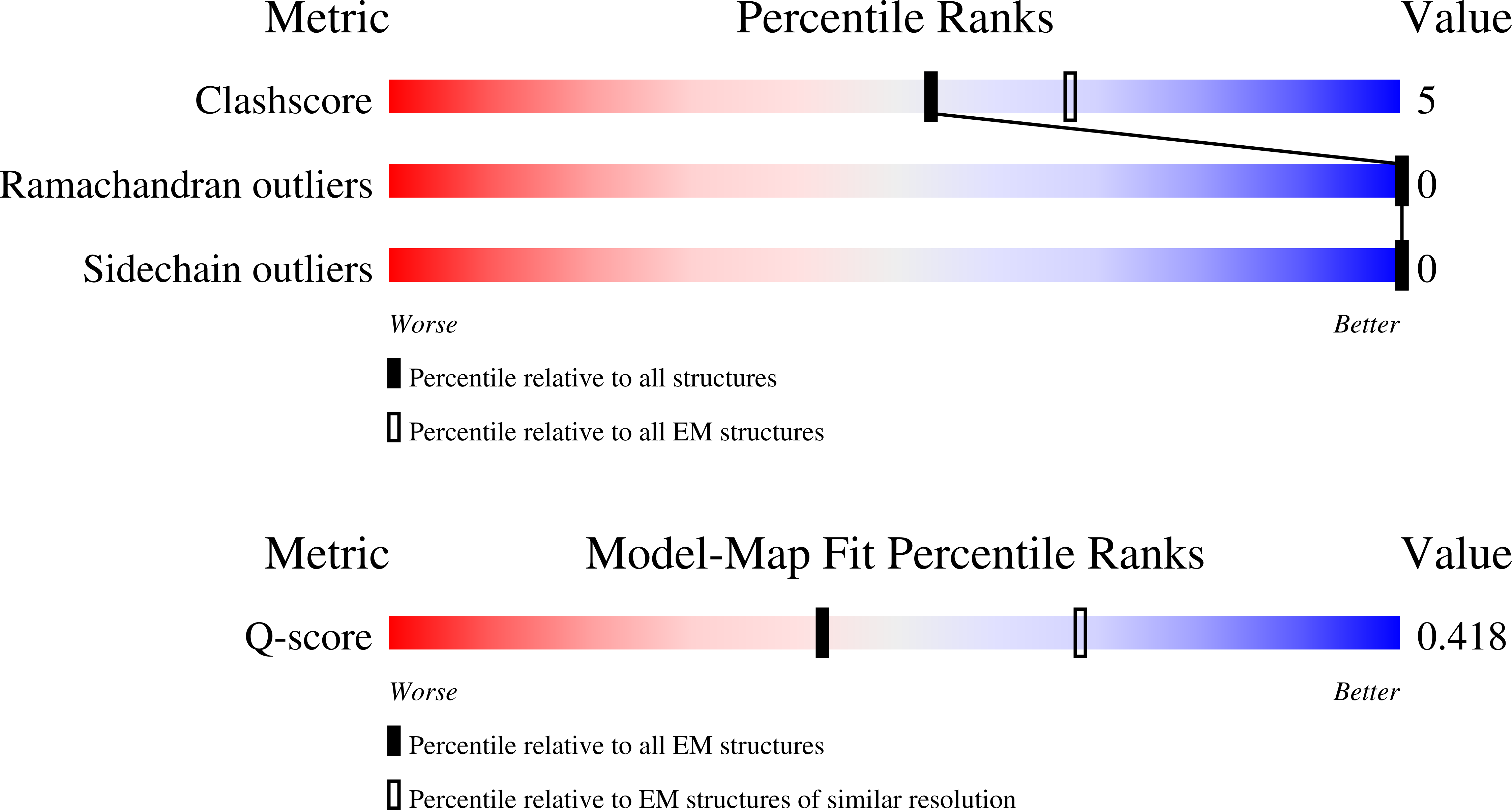
Resolution:
3.93 Å
Aggregation State:
PARTICLE
Reconstruction Method:
SINGLE PARTICLE
Macromolecular Entities
Polymer Type:polypeptide(L)
Molecule:Programmed cell death 1 ligan
Gene (Uniprot):CD274
Chain IDs:A
Chain Length:290
Number of Molecules:1
Biological Source:Homo sapiens
Polymer Type:polypeptide(L)
Molecule:Germinal-designed anti-PD-L1
Chain IDs:B
Chain Length:223
Number of Molecules:1
Biological Source:synthetic construct
Polymer Type:polypeptide(L)
Molecule:Germinal-designed anti-PD-L1
Chain IDs:C
Chain Length:214
Number of Molecules:1
Biological Source:synthetic construct
Ligand Molecules
Primary Citation
Efficient generation of epitope-targeted antibodies with Germinal.
Nat.Biotechnol. ? ? ? (2026)
PMID: 42337361 DOI: 10.1038/s41587-026-03187-0

Abstact

Obtaining antibodies to specific protein targets is a widely important yet experimentally laborious process. Meanwhile, computational methods for antibody design have been limited by low success rates that require resource-intensive screening. Here we introduce Germinal, a broadly enabling generative pipeline that designs antibodies against specific epitopes with nanomolar binding affinities while requiring only low-n experimental testing. Our method co-optimizes antibody structure and sequence by integrating a structure predictor with an antibody-specific protein language model to perform de novo design of functional complementarity-determining regions onto a user-specified structural framework. When tested against four diverse protein targets, Germinal designed functional antibodies across all targets and binder formats, testing only 43-101 designs for each antigen. Validated designs also exhibited robust expression in mammalian cells and high sequence and structural novelty. We provide open-source code and full computational and experimental protocols to facilitate wide adoption.

Legend

Protein

Chemical

Disease

Primary Citation of related structures
Feedback Form
Name
Email
Institute
Feedback