

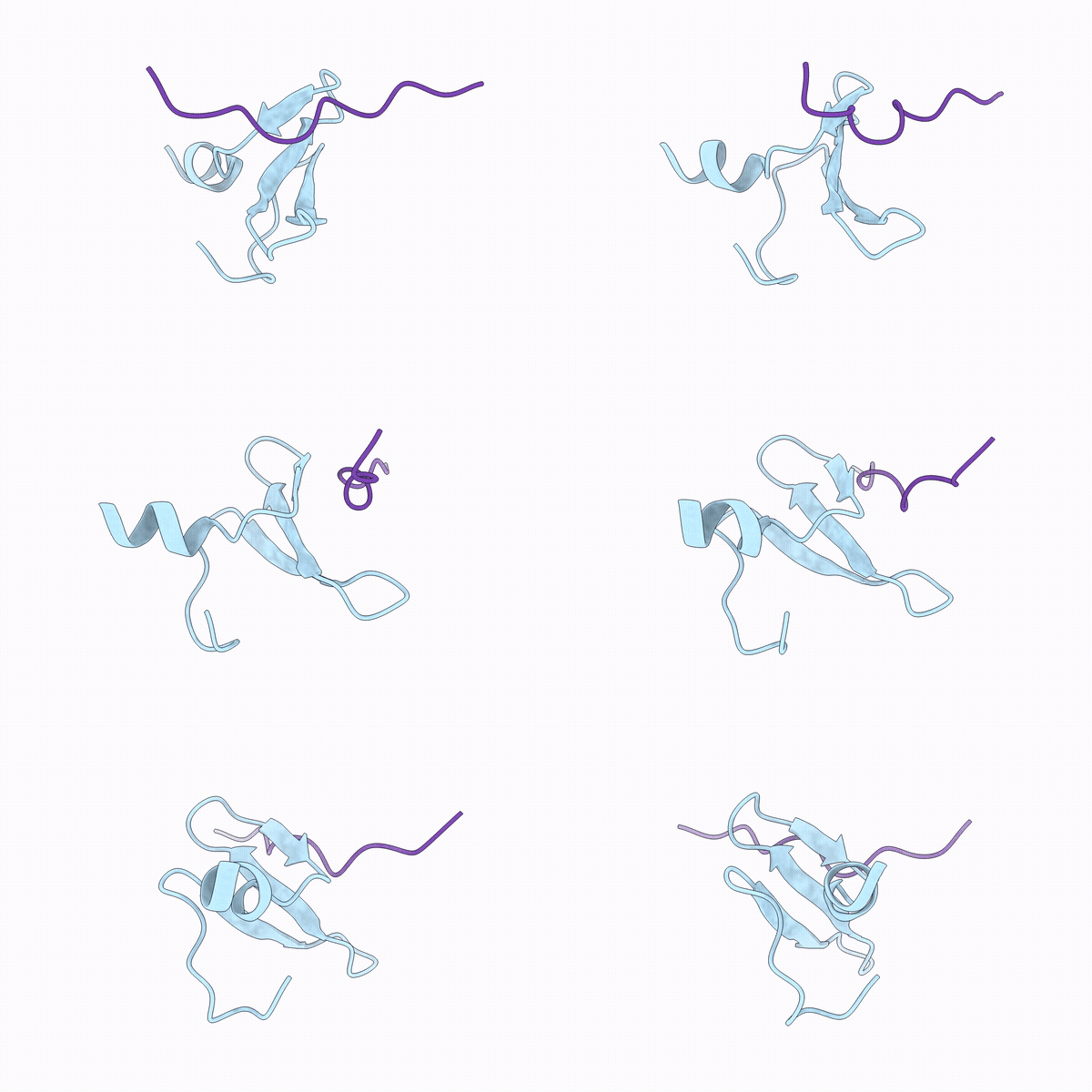
32DH image
Deposition Date 2026-07-06
Release Date 2026-10-07
Last Version Date 2026-10-07
Entry Detail
PDB ID:
32DH
Keywords:
Title:
Crystal structure of YAP1(165-209) in complex with LATS2(511-522_C513S)
Biological Source:
Source Organism(s):
Homo sapiens (Taxon ID: 9606)
Expression System(s):
Method Details:
Experimental Method:
Resolution:
1.03 Å
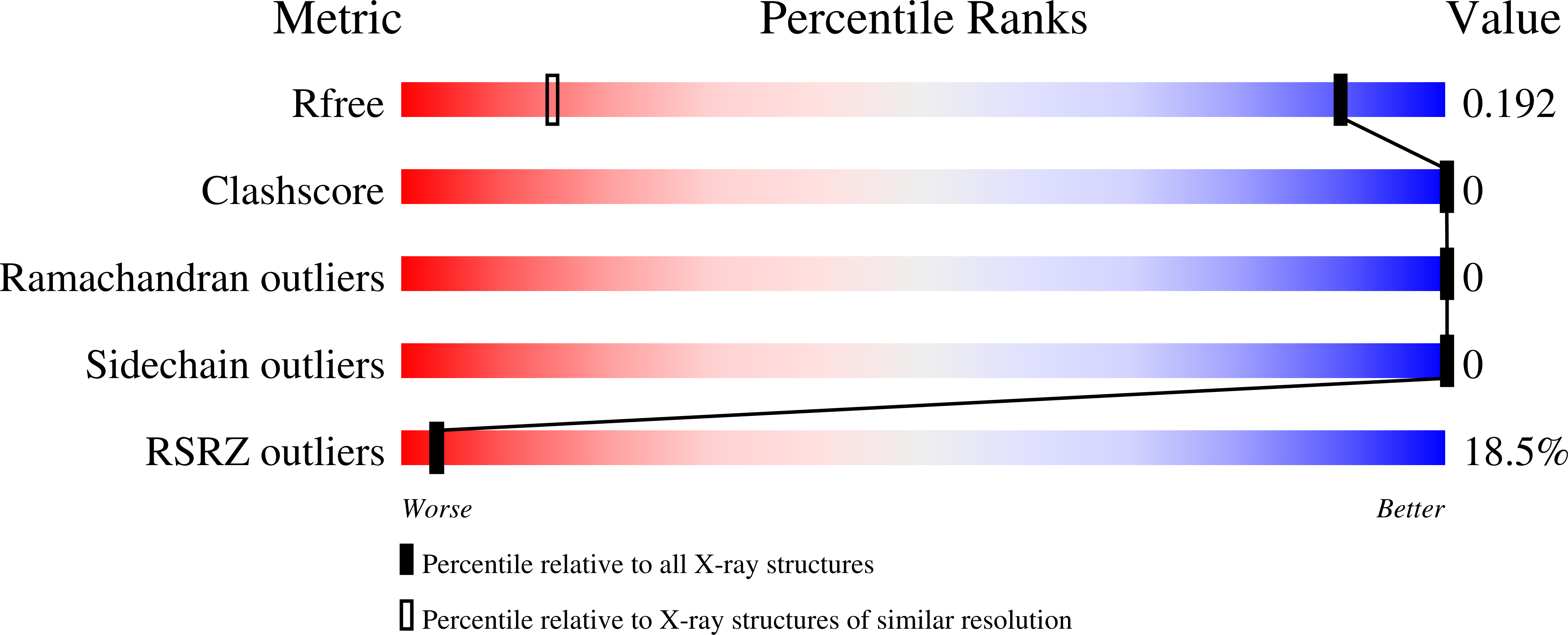
R-Value Free:
0.19
R-Value Work:
0.18
R-Value Observed:
0.18
Space Group:
P 31 2 1
Macromolecular Entities
Polymer Type:polypeptide(L)
Molecule:Transcriptional coactivator Y
Gene (Uniprot):YAP1
Chain IDs:A
Chain Length:49
Number of Molecules:1
Biological Source:Homo sapiens
Polymer Type:polypeptide(L)
Molecule:Serine/threonine-protein kina
Gene (Uniprot):LATS2
Chain IDs:B (auth: L)
Chain Length:13
Number of Molecules:1
Biological Source:Homo sapiens
Primary Citation
Comparing YAP WW1 and TAZ WW : Similar Binding Sites but Different Stability and Conformational Dynamics.
Biomolecules 16 ? ? (2026)
PMID: 42793187 DOI: 10.3390/biom16091355

Abstact

The two paralogs YAP and TAZ act through TEAD transcription factors and bind PPxY motif proteins in the Hippo pathway via WW domains. YAP has up to two WW domains, whereas TAZ has one. Because YAP(WW1) and TAZ(WW) are the most similar in sequence, they can be considered as corresponding modules in these two proteins. This study shows that, despite their similarity, they differ strongly in conformational stability and in how they bind flexible ligands. Nano-differential scanning fluorimetry, circular dichroism, and NMR indicate that both isolated domains populate partially folded or exchanging states in solution, but TAZ(WW) is more thermally stable and has a larger folded population. Peptide binding stabilizes both domains, producing sharper NMR signals. Surface plasmon resonance measurements with PPxY peptides show micromolar affinities and generally modest differences between YAP(WW1) and TAZ(WW), although these differences increase for conformationally plastic ligands. A high resolution LATS2:YAP(WW1) crystal structure and molecular dynamics simulations suggest that preorganized peptides bind more tightly and less selectively, while flexible peptides incur larger binding penalties that dynamic YAP(WW1) compensates more effectively. These observations indicate that differences in WW-domain stability contribute to subtle YAP/TAZ binding preferences despite conserved binding surfaces and evolutionary relatedness between the paralogs.

Legend

Protein

Chemical

Disease

Primary Citation of related structures
Feedback Form
Name
Email
Institute
Feedback