Abstact
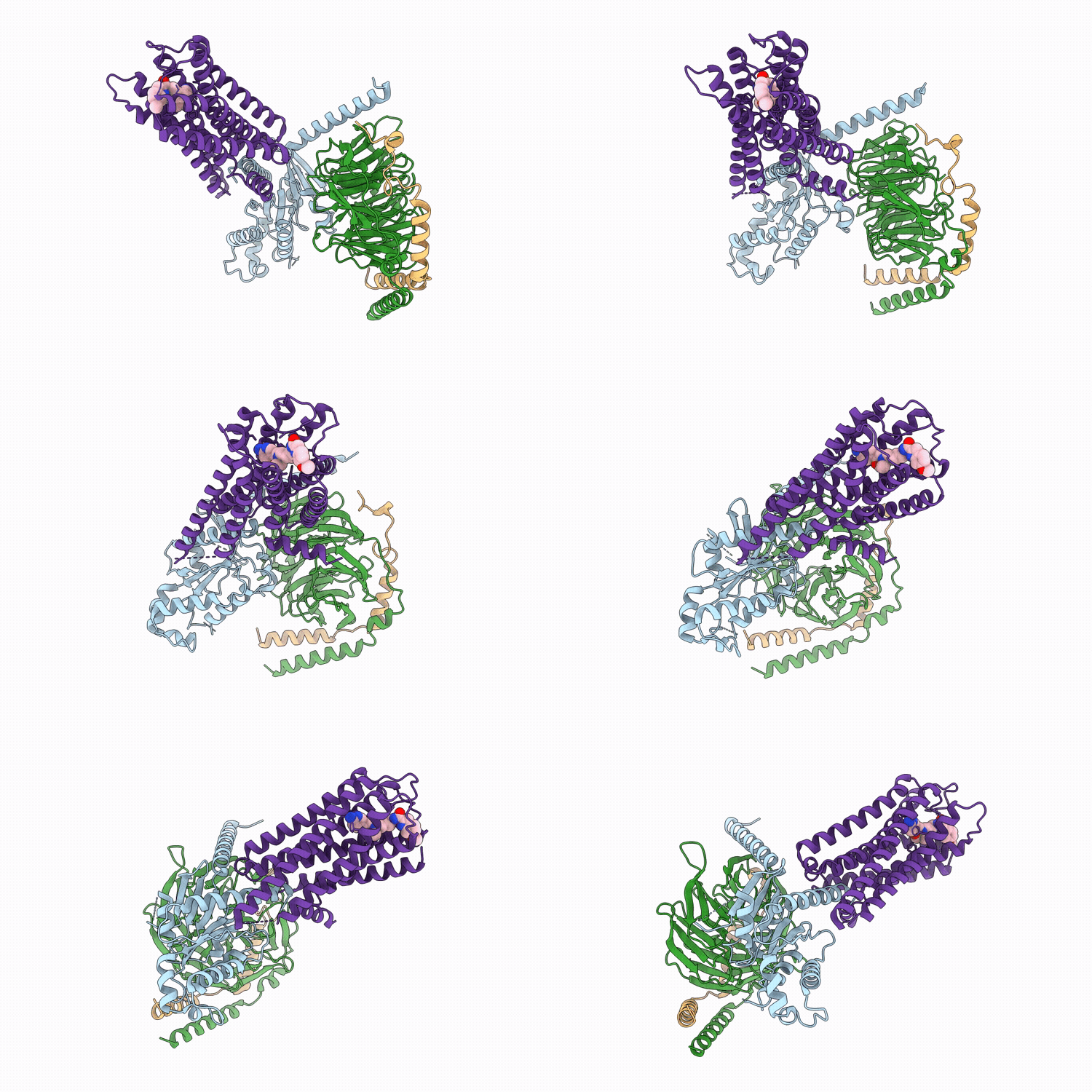
While G protein-coupled receptors (GPCRs) represent the largest drug target family, designing subtype-selective molecules is still a challenge, especially to distinguish among closely related subtypes. One of the most challenging cases is the distinction between dopamine D(2)R and D(3)R, pivotal receptors in motor functions and cognition, and targets of Parkinson's disease treatments, schizophrenia, or substance use disorders. Attempts to design D(3)R-selective molecules with ligands binding toward the first transmembrane helix (the most sequence-diverse and conformationally flexible segment in GPCRs but rarely participating in ligand binding) allowed us to discover a ligand-induced ordering of TM1 unique to D(3)R, yielding an unexploited selectivity site for drug development. Using rational bitopic drug design and the ligand-triggered conformation of the D(3)R we designed, synthesized, and characterized the most selective D(3)R agonists to date, >100,000-fold more selective than available ligands. More specifically, we report D(3)R partial agonists AB12-82 (6d) and AB13-73A (11), with >575,000- and >750,000-fold subtype selectivity, picomolar potency, and 85% and 49% efficacy, respectively. We also present the most selective full agonists reported to date, AB13-08 (4b) and AB13-46A (9), presenting low and subnanomolar potencies with >2,800- and 6,300-fold selectivity for D(3)R. Overall, we introduce a first-in-class pharmacological toolbox to dissect the (patho)-physiology of D(3)R, open new avenues for the design of improved neurotherapeutics, and show that using ligand-induced TM1 reorganizations might represent a promising strategy for the design of subtype-selective molecules in other GPCRs.