

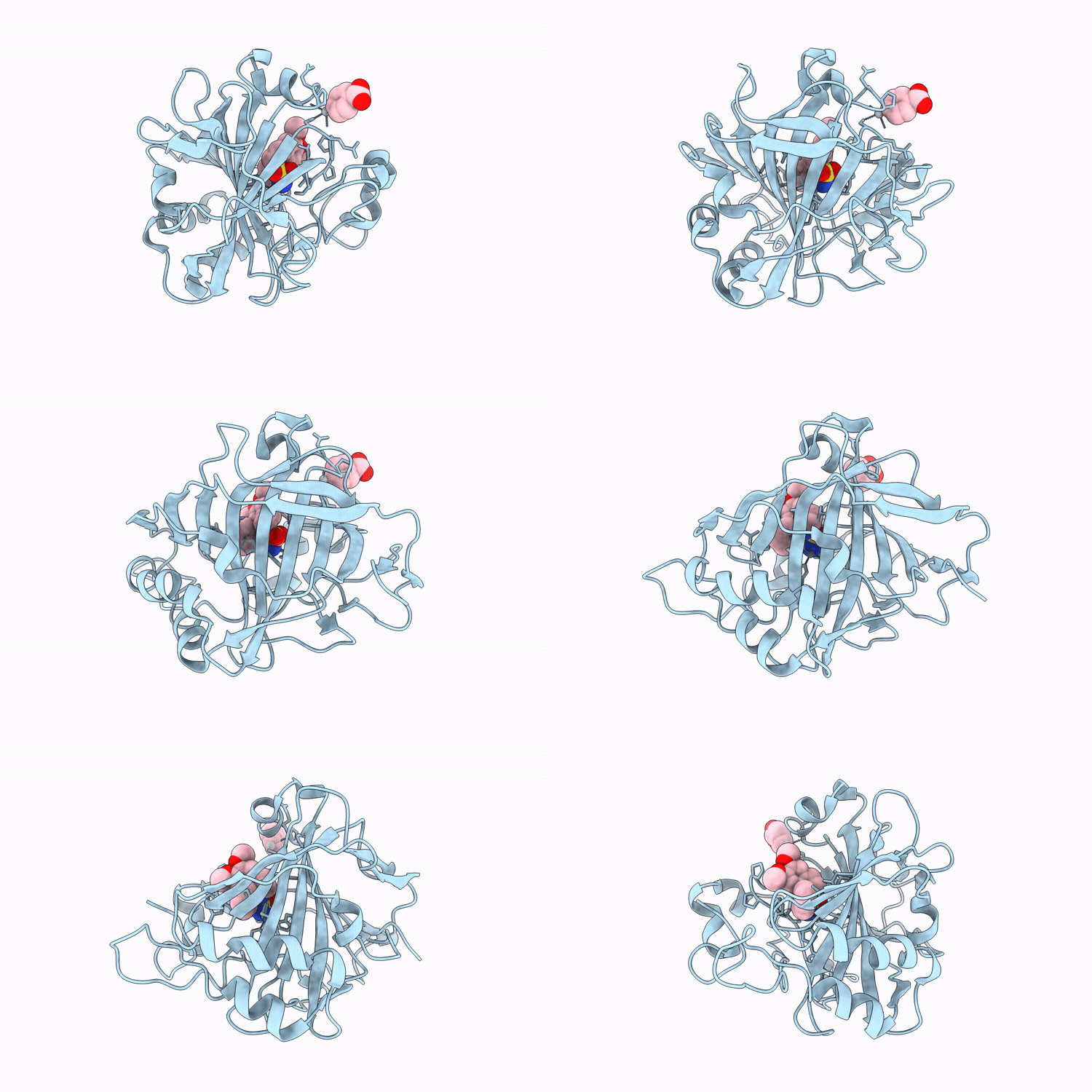
30TA image
Deposition Date 2026-05-12
Release Date 2026-08-05
Last Version Date 2026-09-02
Entry Detail
PDB ID:
30TA
Keywords:
Title:
Crystal structure of hCA II in complex with 1-Aryl-6,7-dimethoxy-3,4-dihydroisoquinoline-2(1H)-sulfonamide inhibitor
Biological Source:
Source Organism(s):
Homo sapiens (Taxon ID: 9606)
Expression System(s):
Method Details:
Experimental Method:
Resolution:
1.05 Å
R-Value Free:
0.18
R-Value Work:
0.16
R-Value Observed:
0.17
Space Group:
P 1 21 1
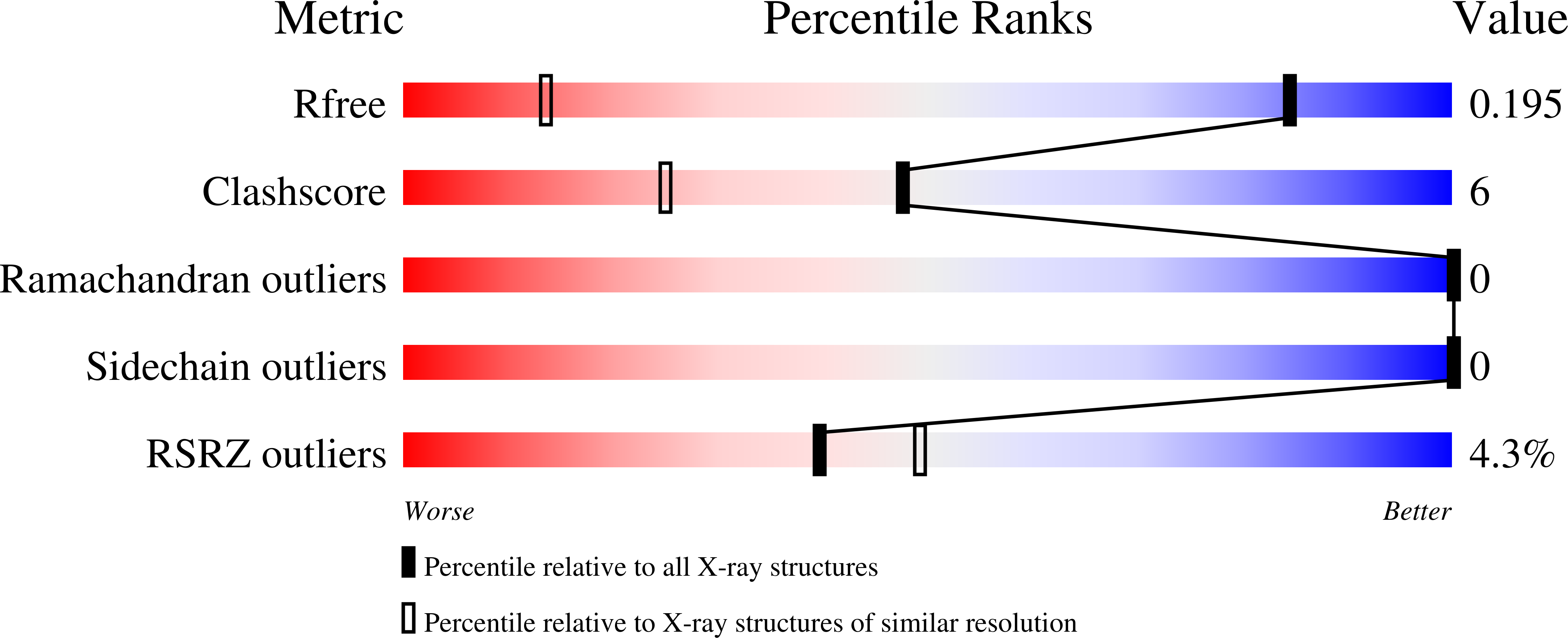
Macromolecular Entities
Polymer Type:polypeptide(L)
Molecule:Carbonic anhydrase 2
Gene (Uniprot):CA2
Chain IDs:A
Chain Length:262
Number of Molecules:1
Biological Source:Homo sapiens
Primary Citation
1-Aryl-6,7-Dimethoxy-3,4-Dihydroisoquinoline-2(1H)-Sulfonamides as hCA XII Selective Inhibitors: Experimental and Theoretical Studies to Interrogate the Isoform Selectivity.
Chemmedchem 21 e70390 e70390 (2026)
PMID: 42493249 DOI: 10.1002/cmdc.70390

Abstact

Human carbonic anhydrase XII (hCA XII) represents an important pharmacological target for different types of cancer. hCA XII plays a crucial role in regulating both extracellular and intracellular pH, thereby influencing cancer cell proliferation, invasion, growth, and metastasis. Although the interaction features of hCA inhibitors (hCAIs) with the catalytic site of distinct hCA isoforms are generally well described, the lack of selectivity remains a major challenge. In a previous work, we have reported a series of 1-aryl-6,7-dimethoxy-3,4-dihydroisoquinoline-2(1H)-sulfonamides displaying weak activity against the ubiquitous hCA I and hCA II, thus emerging as hCAIs that may be free of unwanted side-effects. Herein, further evaluation of their CA inhibitory effects allowed to disclose three potent hCA XII inhibitors at low nanomolar concentrations (K(i) values ranging from 5.5 to 6.5 nM). Additionally, they showed remarkable isoform selectivity compared with the well-known inhibitor SLC-0111, currently in clinical trials as an antitumor agent. Crystallography analyses and computational studies clarified the molecular basis of this behavior and provided valuable insights for the rational design of selective inhibitors targeting hCA XII.

Legend

Protein

Chemical

Disease

Primary Citation of related structures
Feedback Form
Name
Email
Institute
Feedback