

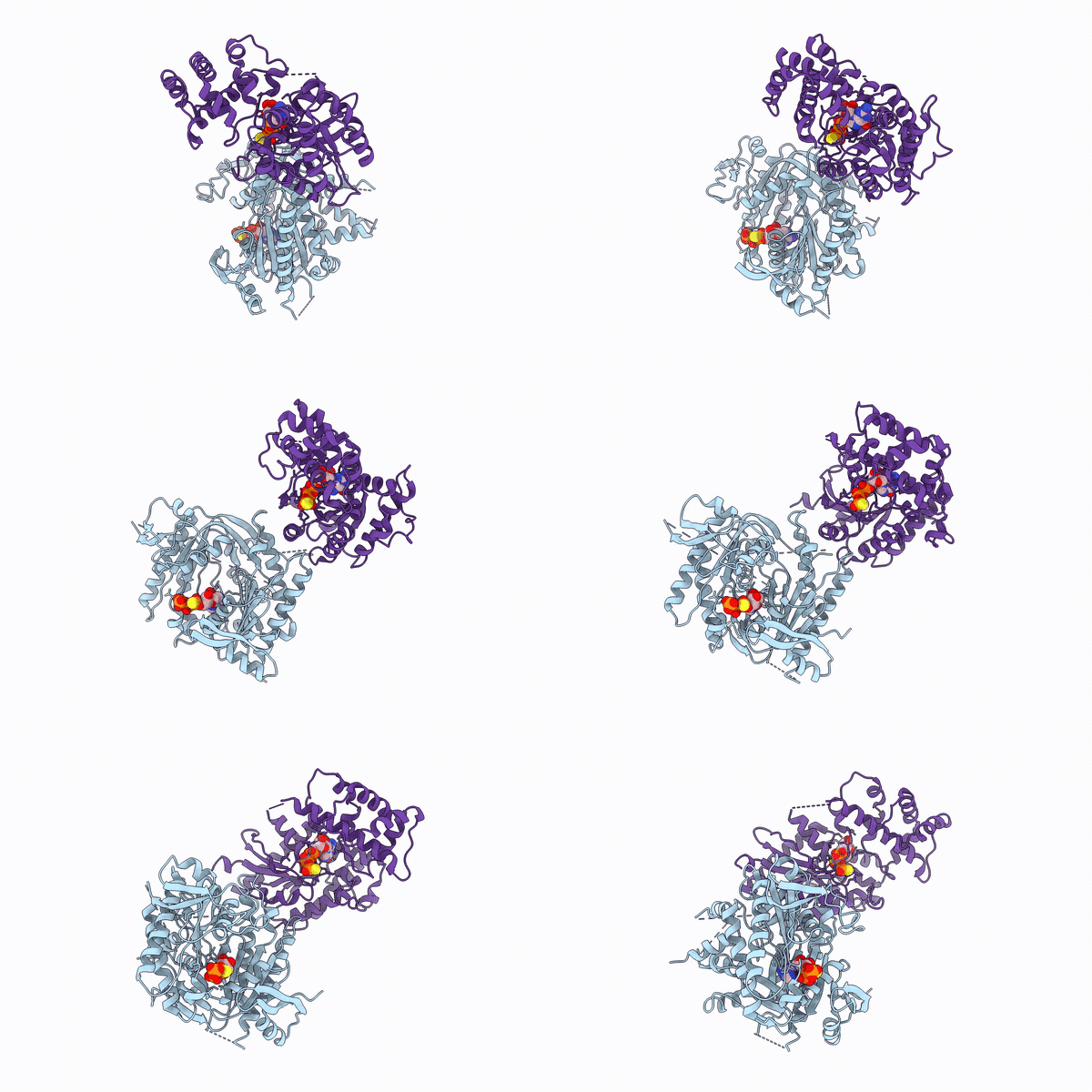
30BA image
Deposition Date 2026-04-19
Release Date 2026-11-04
Last Version Date 2026-11-04
Entry Detail
PDB ID:
30BA
Title:
Structure of the ATPalphaS-bound soluble domain of human Adenylyl cyclase 9 in complex with stimulatory G protein, ATPalphaS, and forskolin
Biological Source:
Source Organism(s):
Homo sapiens (Taxon ID: 9606)
Bos taurus (Taxon ID: 9913)
Expression System(s):
Method Details:
Experimental Method:
Resolution:
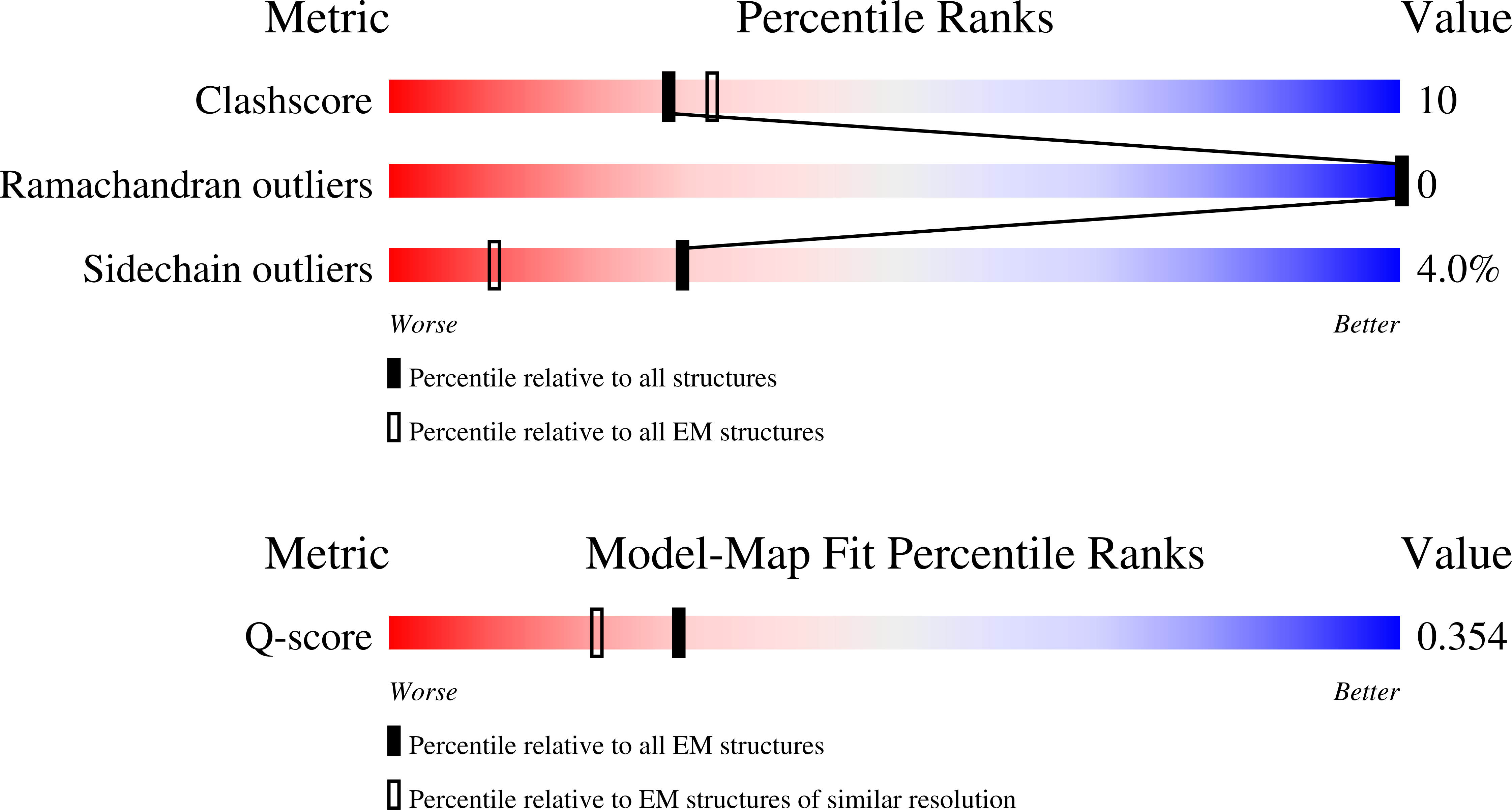
3.57 Å
Aggregation State:
PARTICLE
Reconstruction Method:
SINGLE PARTICLE
Macromolecular Entities
Polymer Type:polypeptide(L)
Molecule:Adenylate cyclase type 9
Gene (Uniprot):ADCY9
Chain IDs:A
Chain Length:1353
Number of Molecules:1
Biological Source:Homo sapiens
Polymer Type:polypeptide(L)
Molecule:Guanine nucleotide-binding pr
Gene (Uniprot):GNAS
Chain IDs:B
Chain Length:404
Number of Molecules:1
Biological Source:Bos taurus
Primary Citation
Adenylyl cyclase 9 as a molecular scaffold to dissect the mechanisms of membrane adenylyl cyclases.
Protein Sci. 35 e70801 e70801 (2026)
PMID: 42752937 DOI: 10.1002/pro.70801

Abstact

Adenylyl cyclases (ACs) convert ATP into the second messenger cAMP, thus directly influencing cellular signaling in response to a wide variety of stimuli. Despite their physiological importance, structural studies of isoform-specific AC regulation are compounded by difficulties in AC expression and purification. Here, we designed a chimeric construct AC95, combining human AC9 as a molecular scaffold and incorporating the catalytic-allosteric core of human AC5. Cryo-EM analysis of AC95 at 3.5 A resolution revealed a state of AC95 bound to both ATPalphaS and forskolin, demonstrating that the chimera partially reproduces allosteric regulation by forskolin while retaining the structural features of the AC9 scaffold. Although AC95 chimera retained the ability to bind to and be activated by forskolin, it lost the ability to be autoinhibited by the C2b domain of AC9. Moreover, AC95 is insensitive to inhibition by AC5 inhibitors SQ22,536 and NKY80, due to either targeting a site distinct from the catalytic-allosteric core of AC5, altered conformational dynamics or long-range allosteric effects imposed by chimeric scaffold, or a requirement for additional AC5 features absent in AC95. Our results establish an approach for investigating isoform-specific regulation of mammalian ACs by small molecules, offering a potential path for structure-based drug discovery targeting distinct AC isoforms.

Legend

Protein

Chemical

Disease

Primary Citation of related structures
Feedback Form
Name
Email
Institute
Feedback