

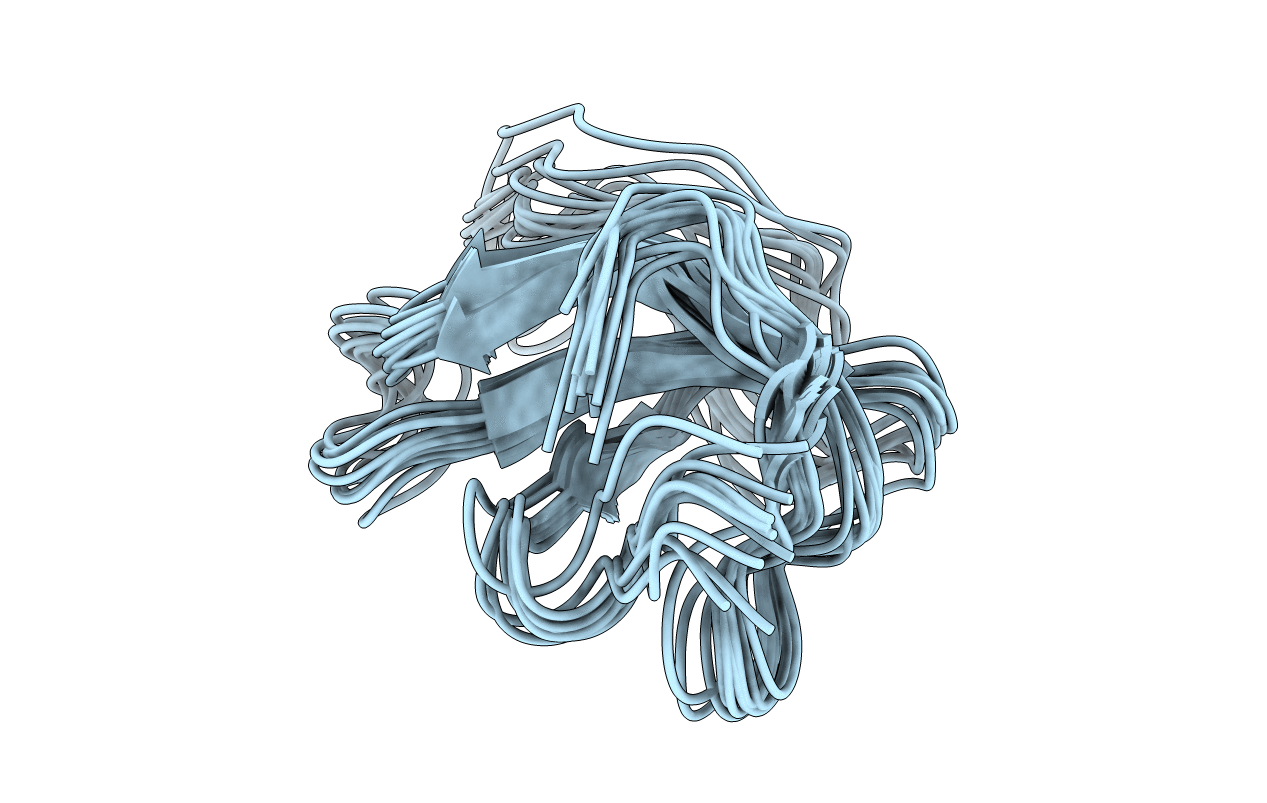
2M02 image
Deposition Date 2012-10-15
Release Date 2013-05-08
Last Version Date 2024-05-15
Entry Detail
PDB ID:
2M02
Keywords:
Title:
3D structure of cap-gly domain of mammalian dynactin determined by magic angle spinning NMR spectroscopy
Biological Source:
Source Organism(s):
Expression System(s):
Method Details:
Experimental Method:
Conformers Calculated:
500
Conformers Submitted:
10
Selection Criteria:
structures with the lowest energy
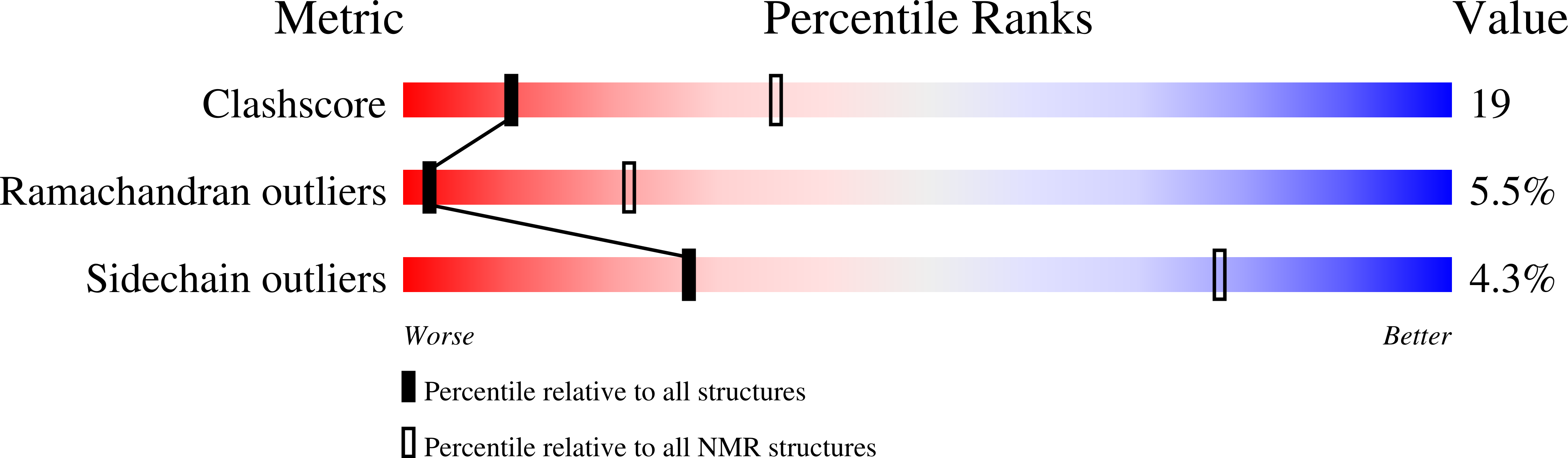
Macromolecular Entities
Polymer Type:polypeptide(L)
Molecule:Dynactin subunit 1
Gene (Uniprot):Dctn1
Chain IDs:A
Chain Length:89
Number of Molecules:1
Biological Source:Rattus norvegicus
Ligand Molecules
Primary Citation
Three-Dimensional Structure of CAP-Gly Domain of Mammalian Dynactin Determined by Magic Angle Spinning NMR Spectroscopy: Conformational Plasticity and Interactions with End-Binding Protein EB1.
J. Mol. Biol. 425 4249 4266 (2013)
PMID: 23648839 DOI: 10.1016/j.jmb.2013.04.027

Abstact

Microtubules and their associated proteins play important roles in vesicle and organelle transport, cell motility and cell division. Perturbation of these processes by mutation typically gives rise to severe pathological conditions. In our efforts to obtain atomic information on microtubule-associated protein/microtubule interactions with the goal to understand mechanisms that might potentially assist in the development of treatments for these diseases, we have determined the three-dimensional structure of CAP-Gly (cytoskeleton-associated protein, glycine-rich) domain of mammalian dynactin by magic angle spinning NMR spectroscopy. We observe two conformations in the beta2 strand encompassing residues T43-V44-A45, residues that are adjacent to the disease-associated mutation, G59S. Upon binding of CAP-Gly to microtubule plus-end tracking protein EB1, the CAP-Gly shifts to a single conformer. We find extensive chemical shift perturbations in several stretches of residues of CAP-Gly upon binding to EB1, from which we define accurately the CAP-Gly/EB1 binding interface. We also observe that the loop regions may exhibit unique flexibility, especially in the GKNDG motif, which participates in the microtubule binding. This study in conjunction with our previous reports suggests that conformational plasticity is an intrinsic property of CAP-Gly likely due to its unusually high loop content and may be required for its biological functions.

Legend

Protein

Chemical

Disease

Primary Citation of related structures
Feedback Form
Name
Email
Institute
Feedback