

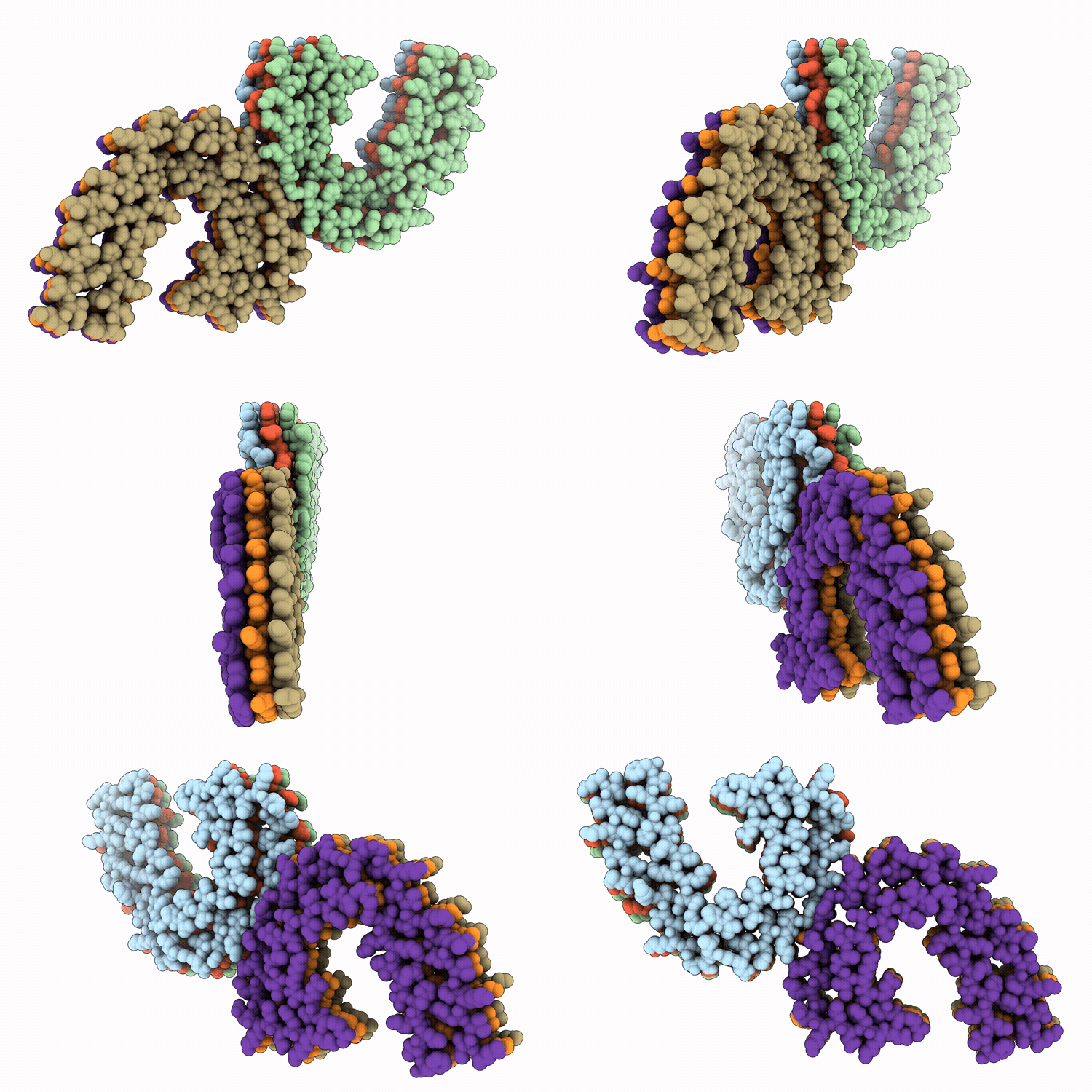
29OS image
Deposition Date 2026-03-27
Release Date 2026-05-27
Last Version Date 2026-11-04
Entry Detail
PDB ID:
29OS
Title:
AD fold in mouse injected with seeds of AD
Biological Source:
Source Organism(s):
Mus musculus (Taxon ID: 10090)
Method Details:
Experimental Method:
Resolution:
3.60 Å
Aggregation State:
FILAMENT
Reconstruction Method:
HELICAL

Macromolecular Entities
Polymer Type:polypeptide(L)
Molecule:Isoform Tau-A of Microtubule-
Gene (Uniprot):Mapt
Chain IDs:A, B, C, D, E, F
Chain Length:430
Number of Molecules:6
Biological Source:Mus musculus
Ligand Molecules
Primary Citation
Prion-like transmission of human tau strains in the mouse brain.
Nature 658 972 976 (2026)
PMID: 42816607 DOI: 10.1038/s41586-026-11061-x

Abstact

Most neurodegenerative diseases are thought to spread through the brain by prion-like mechanisms, in which filamentous protein assemblies self-propagate by templated seeding(1). Distinct conformations of amyloid filaments may provide the physical basis for the strains that lead to different diseases(2). However, a central pillar of the prion hypothesis, that strains retain their structural identity upon transmission, has not been demonstrated. Here we show that the injection of tau filaments from the brains of individuals with Alzheimer's disease or corticobasal degeneration into the brains of wild-type mice leads to the seeded assembly of amyloid filaments made of mouse tau with the same structures as those of the seeds. Thus, we show that, similar to prion strains, tau filaments propagate through templated seeding, and that the mouse is a suitable model to study the molecular mechanisms by which distinct tau folds drive disease-specific pathology in the brain.

Legend

Protein

Chemical

Disease

Primary Citation of related structures
Feedback Form
Name
Email
Institute
Feedback