

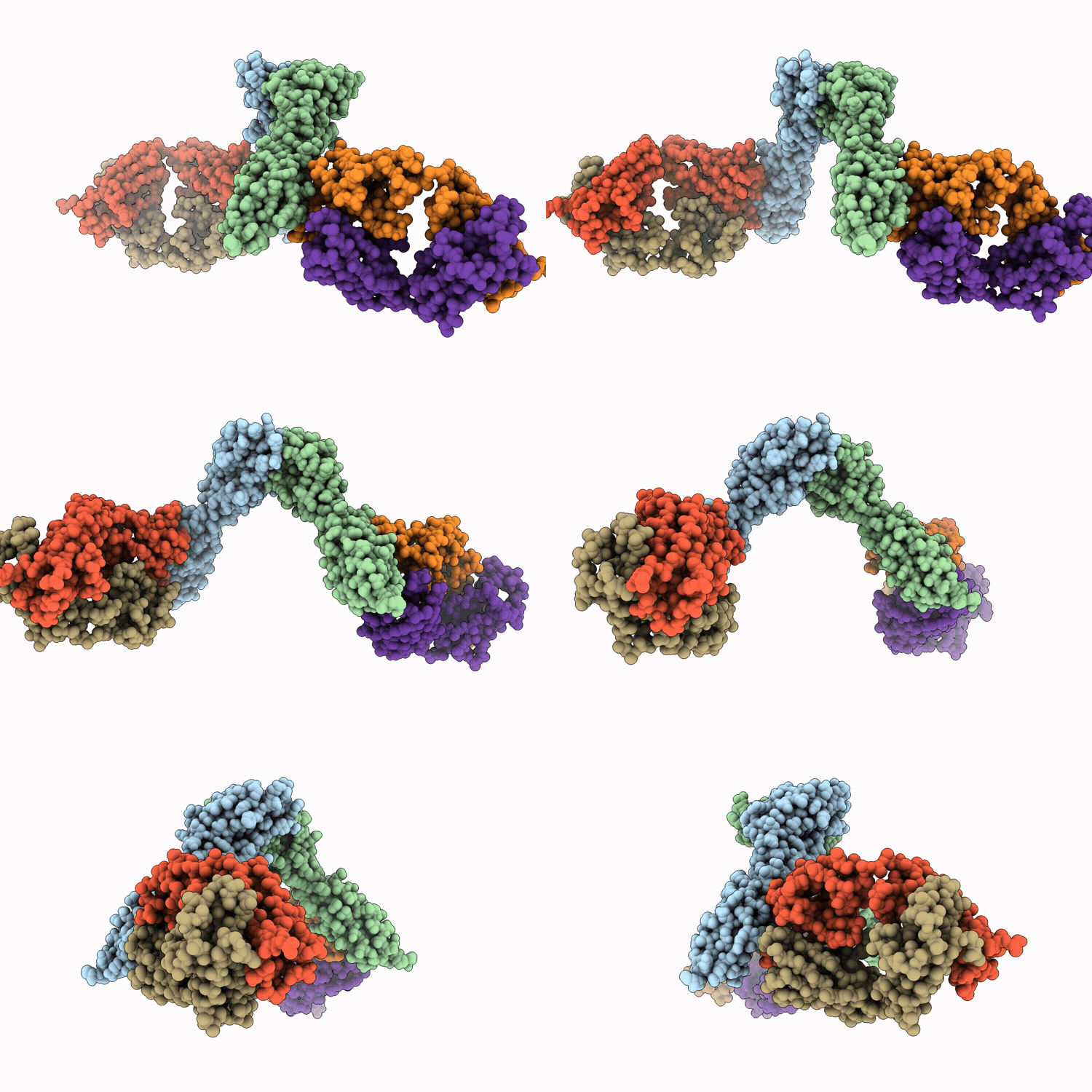
29CP image
Deposition Date 2026-03-05
Release Date 2026-09-02
Last Version Date 2026-10-28
Entry Detail
PDB ID:
29CP
Title:
Structural basis of autoantibody binding in IgLON5 disease
Biological Source:
Source Organism(s):
Homo sapiens (Taxon ID: 9606)
Expression System(s):
Method Details:
Experimental Method:
Resolution:
3.70 Å
Aggregation State:
PARTICLE
Reconstruction Method:
SINGLE PARTICLE
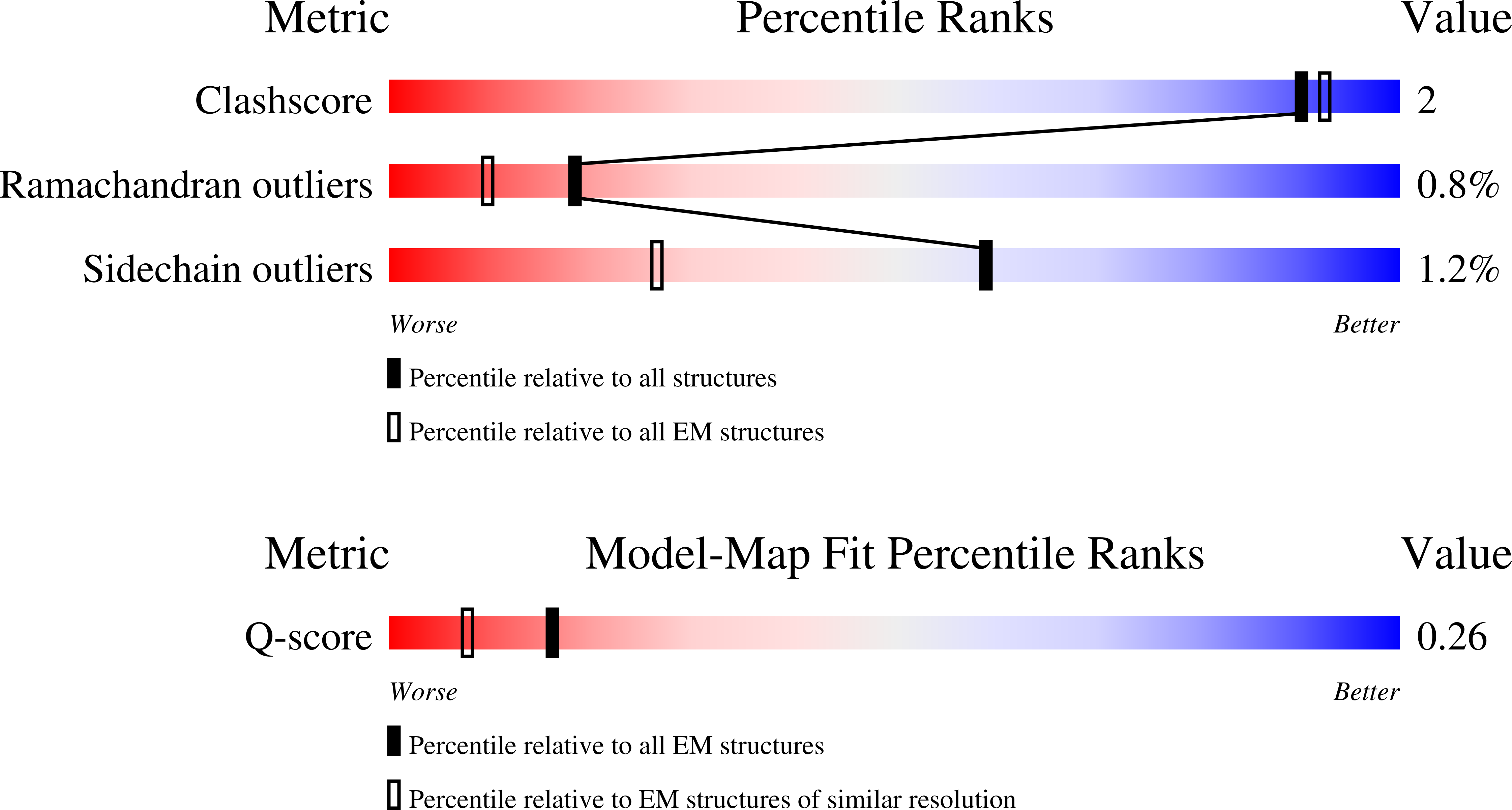
Macromolecular Entities
Polymer Type:polypeptide(L)
Molecule:IgLON family member 5
Gene (Uniprot):IGLON5
Chain IDs:A, B
Chain Length:277
Number of Molecules:2
Biological Source:Homo sapiens
Structural Superimposition Protein Blast
Polymer Type:polypeptide(L)
Molecule:Fab Heavy Chain
Chain IDs:C (auth: H), F (auth: D)
Chain Length:228
Number of Molecules:2
Biological Source:Homo sapiens
Structural Superimposition Protein Blast
Polymer Type:polypeptide(L)
Molecule:Fab Light Chain
Chain IDs:D (auth: L), E (auth: C)
Chain Length:216
Number of Molecules:2
Biological Source:Homo sapiens
Ligand Molecules
Primary Citation
Structural basis of IgLON5 autoantibody recognition in autoimmune encephalitis.
Nat Commun 17 ? ? (2026)
PMID: 42864335 DOI: 10.1038/s41467-026-77812-6

Abstact

Anti-IgLON5 disease is a rare neuro-immunological disorder characterized by autoantibodies targeting the neuronal adhesion molecule IgLON5, as well as profound brain dysfunction and tau pathology. Despite its severe clinical manifestations, the molecular basis of antibody recognition and its contribution to disease pathogenesis is poorly understood. Here, we characterize the B cell receptor repertoire of a patient with anti-IgLON5 disease, revealing marked diversity and no evidence of dominant clonal expansion. We isolate a human monoclonal IgG4 antibody that binds IgLON5 with high affinity and determine the structure of its Fab in complex with IgLON5 using cryo-electron microscopy. Biochemical and structural analyses show that antibody binding preserves IgLON5 adhesive interfaces while remaining compatible with clustering of IgLON5 on the cell surface. Analysis of the germline-reverted precursor suggests that IgLON5 recognition is already present before affinity maturation and is strengthened by somatic mutations that stabilize antigen binding. These findings provide mechanistic insight into autoantibody recognition of neuronal surface proteins and establish a framework for understanding antibody-mediated neurodegeneration in anti-IgLON5 disease.

Legend

Protein

Chemical

Disease

Primary Citation of related structures
Feedback Form
Name
Email
Institute
Feedback