

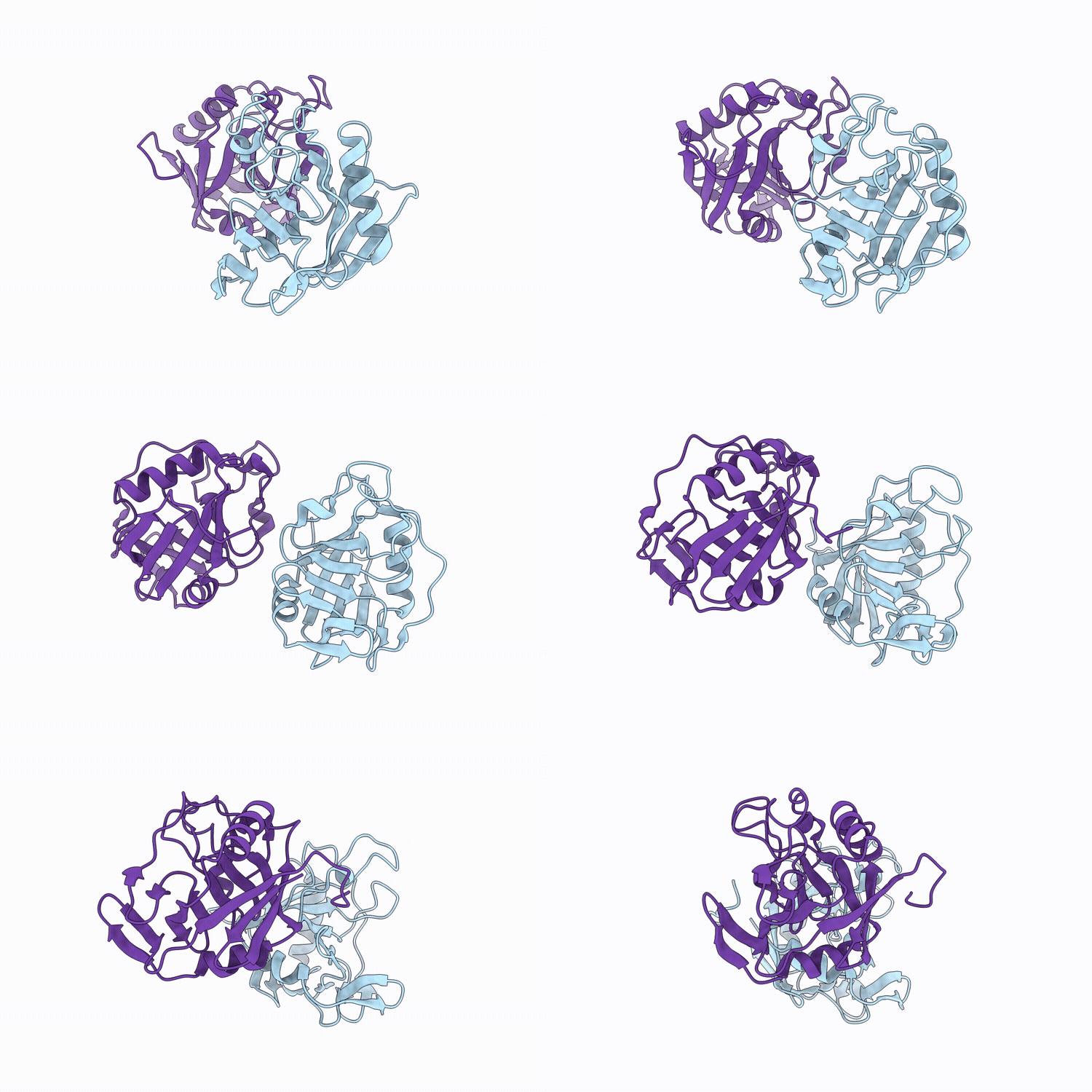
26AO image
Deposition Date 2026-04-24
Release Date 2026-08-05
Last Version Date 2026-08-19
Entry Detail
PDB ID:
26AO
Keywords:
Title:
E. coli peptidyl-prolyl cis-trans isomerase, mutant F4/F5Phe
Biological Source:
Source Organism(s):
Expression System(s):
Method Details:
Experimental Method:
Resolution:
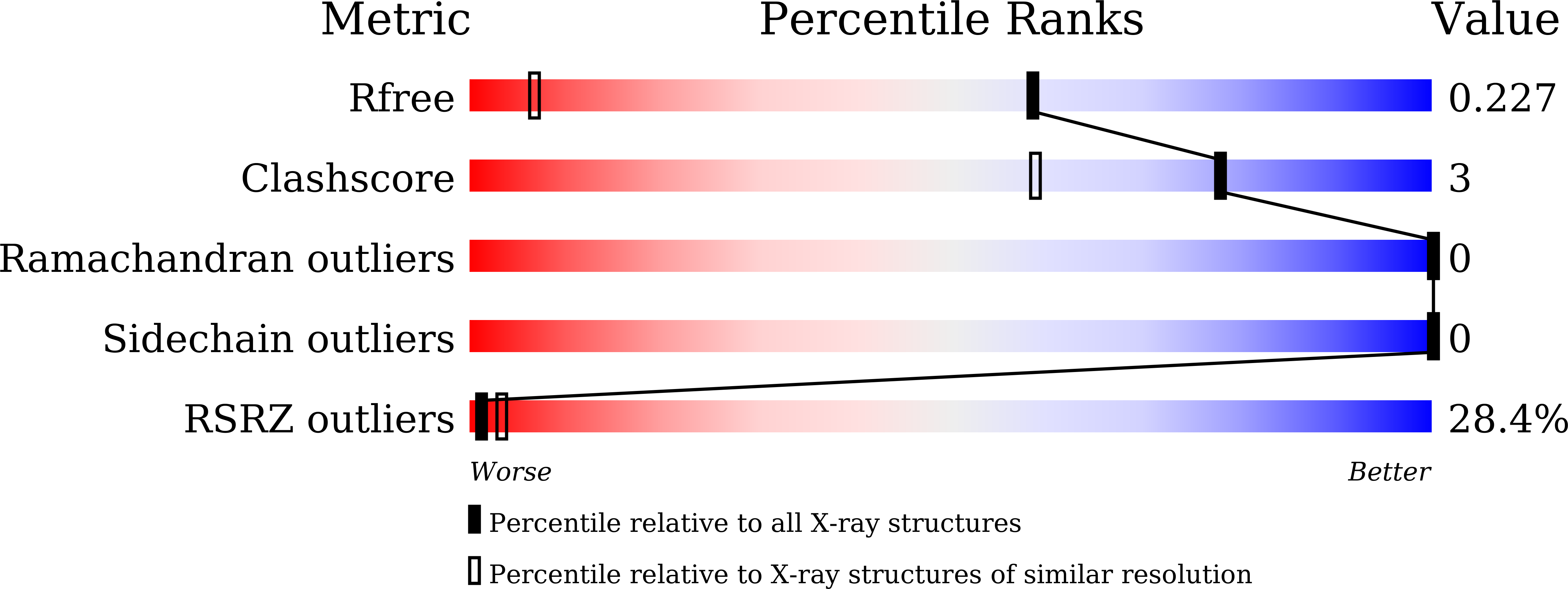
1.15 Å
R-Value Free:
0.22
R-Value Work:
0.19
R-Value Observed:
0.19
Space Group:
P 1
Macromolecular Entities
Polymer Type:polypeptide(L)
Molecule:Peptidyl-prolyl cis-trans iso
Gene (Uniprot):ppiB
Chain IDs:A, B
Chain Length:0
Number of Molecules:2
Biological Source:Escherichia coli K12
Modified Residue
Compound ID Chain ID Parent Comp ID Details 2D Image
PF5 A PHE modified residue
Primary Citation
Genetically Encoded Pentafluorophenylalanine Enables Quantitative Probing of Local Protein Malleability by 19F NMR.
J.Am.Chem.Soc. 148 32644 32655 (2026)
PMID: 42503665 DOI: 10.1021/jacs.6c10121

Abstact

Aromatic ring flips in proteins provide a direct probe of local structural fluctuations, yet their rates are typically too fast for quantitative measurement by NMR spectroscopy. Here we show that site-specific incorporation of 2,3,4,5,6-pentafluoro-l-phenylalanine (F5Phe) reshapes the torsional energy landscape of aromatic side chains, slowing ring flips by over 2 orders of magnitude and shifting them into the slow-exchange regime accessible by 19F NMR. F5Phe can be genetically encoded with high fidelity and minimal structural perturbation, as confirmed by high-resolution X-ray crystallography across multiple proteins. The resulting 19F NMR spectra enable direct, quantitative measurements of ring-flip kinetics without the need for isotope labeling or complex multidimensional experiments. Application to a diverse set of proteins demonstrates that ring-flip rates vary widely even within the same hydrophobic cluster, revealing highly localized conformational fluctuations rather than global unfolding events. Pressure-dependent measurements yield small activation volumes, indicating that the structural rearrangements enabling ring flips are spatially confined. Ligand binding and protein-protein interactions modulate ring-flip rates in a site-specific manner, providing a sensitive readout of allosteric effects on local protein malleability. These results establish fluorinated aromatic amino acids as a general chemical strategy to engineer dynamic observables in proteins, transforming aromatic ring flips into a broadly applicable probe of local conformational dynamics and allostery.

Legend

Protein

Chemical

Disease

Primary Citation of related structures
Feedback Form
Name
Email
Institute
Feedback