

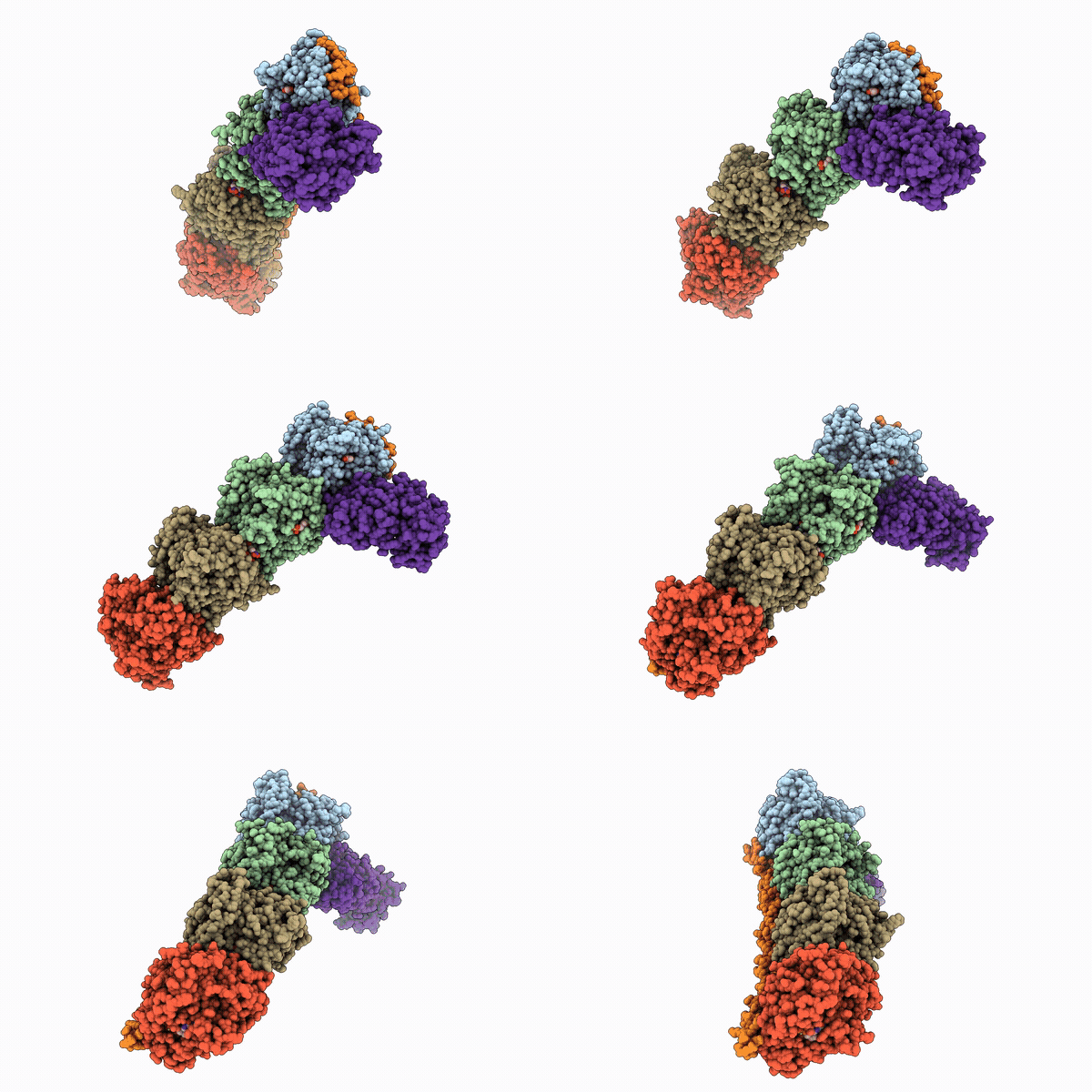
24PT image
Deposition Date 2026-03-16
Release Date 2026-10-28
Last Version Date 2026-11-04
Entry Detail
PDB ID:
24PT
Keywords:
Title:
SB225002 with Tubulin
Biological Source:
Source Organism(s):
Sus scrofa (Taxon ID: 9823)
Mus musculus (Taxon ID: 10090)
Gallus gallus (Taxon ID: 9031)
Expression System(s):
Method Details:
Experimental Method:
Resolution:
2.60 Å
R-Value Free:
0.25
R-Value Work:
0.19
R-Value Observed:
0.19
Space Group:
P 21 21 21
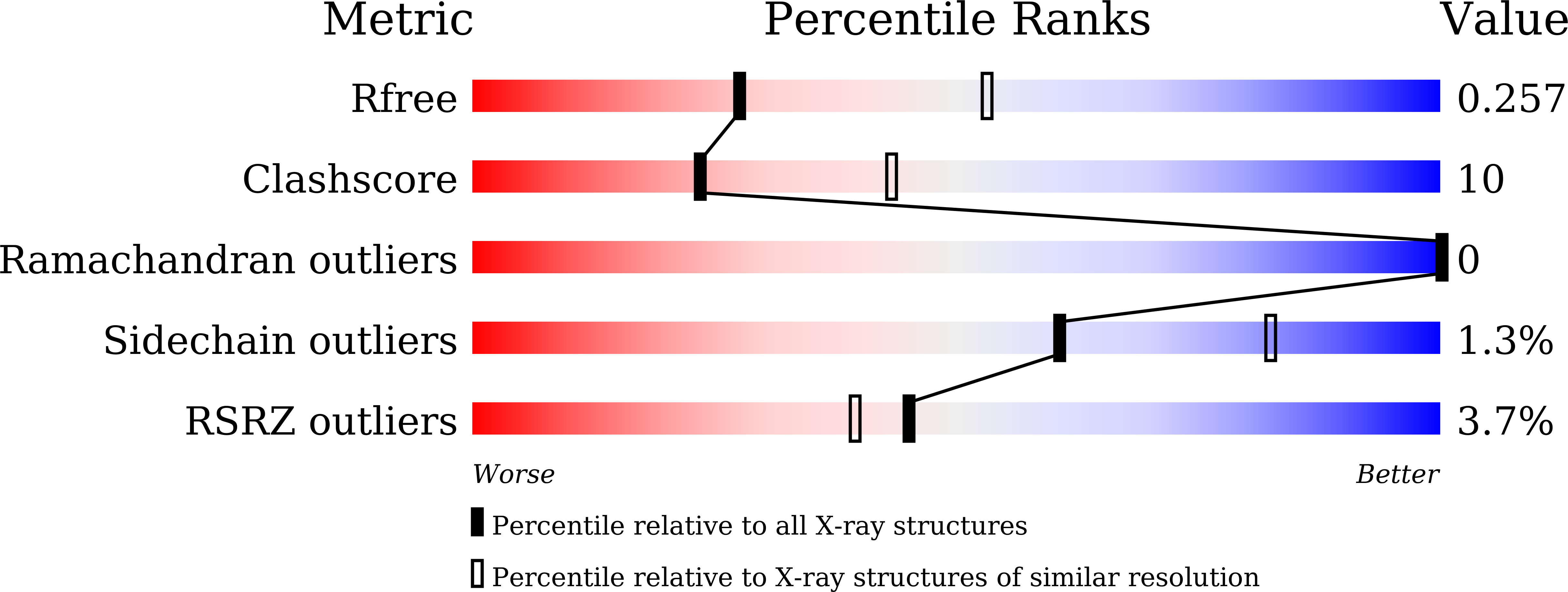
Macromolecular Entities
Polymer Type:polypeptide(L)
Molecule:Detyrosinated tubulin alpha-1
Gene (Uniprot):TUBA1B
Chain IDs:A (auth: B), C (auth: D)
Chain Length:440
Number of Molecules:2
Biological Source:Sus scrofa
Polymer Type:polypeptide(L)
Molecule:Tubulin beta chain
Gene (Uniprot):TUBB2B
Chain IDs:B (auth: C), D (auth: E)
Chain Length:431
Number of Molecules:2
Biological Source:Sus scrofa
Polymer Type:polypeptide(L)
Molecule:Stathmin-4
Gene (Uniprot):Stmn4
Chain IDs:E (auth: F)
Chain Length:143
Number of Molecules:1
Biological Source:Mus musculus
Polymer Type:polypeptide(L)
Molecule:Tubulin--tyrosine ligase
Gene (Uniprot):TTL
Chain IDs:F (auth: G)
Chain Length:384
Number of Molecules:1
Biological Source:Gallus gallus
Primary Citation
Microtubule destabilization by SB225002 through preferential weakening of lateral tubulin interactions revealed by structural and computational analyses.
J.Biol.Chem. ? 113625 113625 (2026)
PMID: 42849728 DOI: 10.1016/j.jbc.2026.113625

Abstact

Microtubules are essential for cell division and intracellular signaling, making them well-established targets for anticancer therapy. However, the clinical utility of conventional microtubule-targeting agents is often limited by toxicity and drug resistance. SB225002, originally identified as an interleukin-8 receptor antagonist, has been reported to disrupt microtubule dynamics and exhibit anticancer activity with relatively low toxicity in preclinical studies. Yet, the structural basis of its interaction with tubulin remains poorly understood. Here, we determined the crystal structure of the SB225002-tubulin complex at 2.60 A resolution and performed molecular dynamics simulations to characterize ligand binding, as well as drug-induced changes in tubulin structure and inter-subunit interactions. The crystal structure revealed three SB225002 molecules occupying the colchicine- and vinblastine-binding regions of tubulin. Simulations showed persistent ligand association over the simulated timescale and relatively limited overall changes in longitudinal inter-subunit interactions, whereas structural flexibility and dynamic coupling were preferentially altered at the lateral-interface-associated surface of beta-tubulin. Additional simulations incorporating both lateral and longitudinal tubulin interfaces further revealed a greater reduction in lateral than in longitudinal inter-subunit contacts upon drug binding. Together, these results support a mechanism in which SB225002 preferentially perturbs lateral tubulin interactions and provide a structural framework for understanding its microtubule-modulating activity.

Legend

Protein

Chemical

Disease

Primary Citation of related structures
Feedback Form
Name
Email
Institute
Feedback