

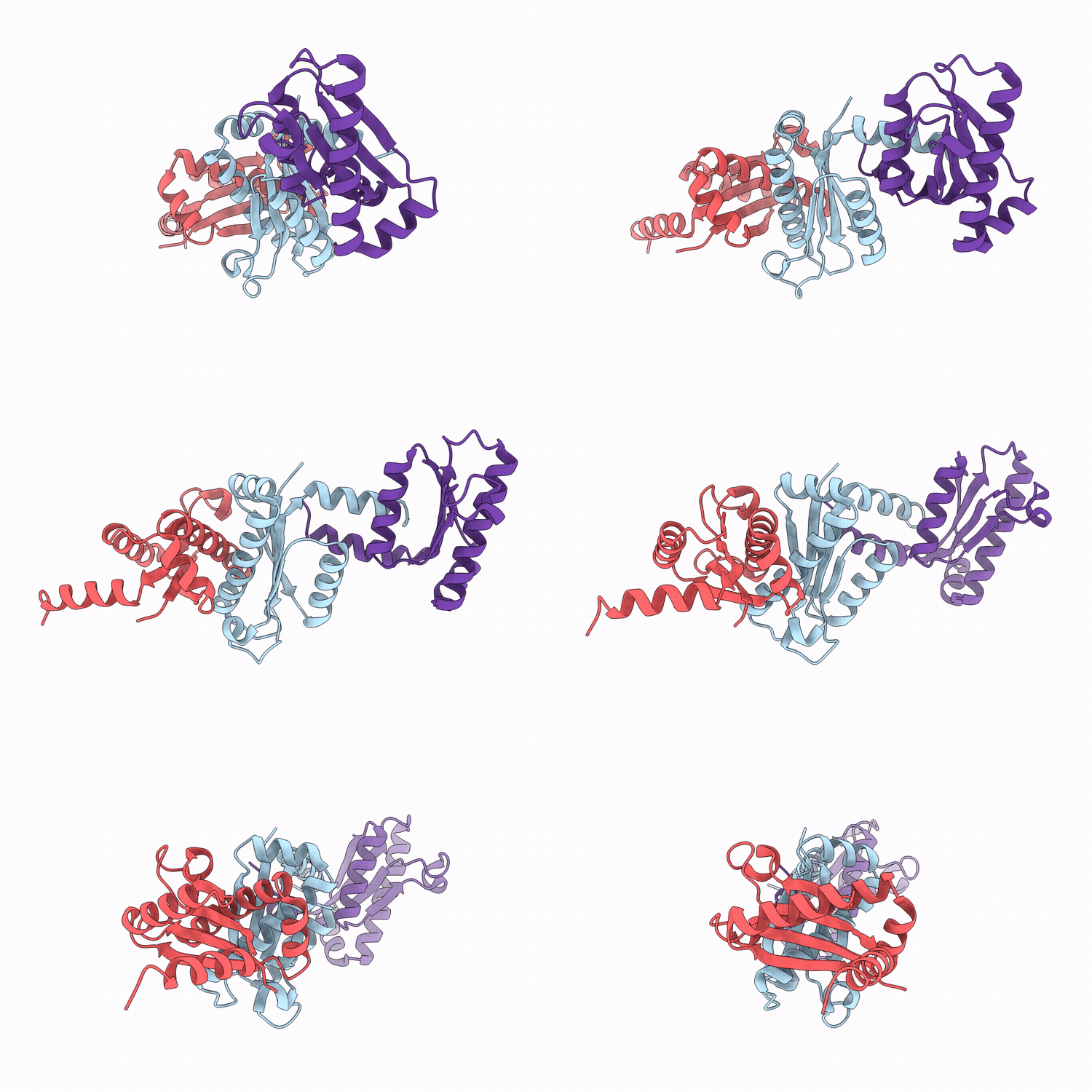
24BT image
Deposition Date 2026-02-27
Release Date 2026-09-02
Last Version Date 2026-09-09
Entry Detail
PDB ID:
24BT
Keywords:
Title:
Crystal structure of Peptidyl-tRNA Hydrolase 2 from Candidatus Lokiarchaeum sp. GC14_75
Biological Source:
Source Organism(s):
Expression System(s):
Method Details:
Experimental Method:
Resolution:
2.12 Å
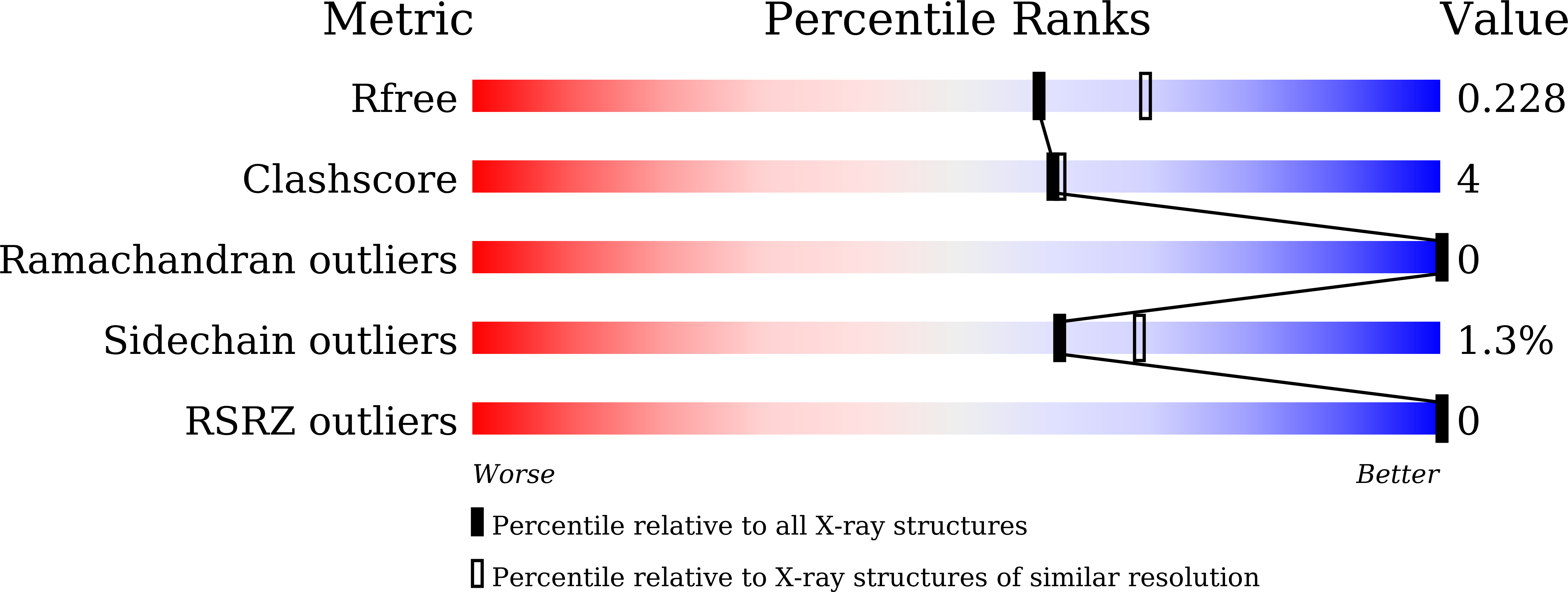
R-Value Free:
0.21
R-Value Work:
0.19
R-Value Observed:
0.20
Space Group:
C 1 2 1
Macromolecular Entities
Polymer Type:polypeptide(L)
Molecule:peptidyl-tRNA hydrolase
Chain IDs:A, B, C
Chain Length:127
Number of Molecules:3
Biological Source:Candidatus Lokiarchaeum sp. GC14_75
Primary Citation
Structural and functional analysis of peptidyl-tRNA hydrolase 2 from Candidatus Lokiarchaeum sp. GC14_75.
Acta Crystallogr.,Sect.F 82 320 328 (2026)
PMID: 42626907 DOI: 10.1107/S2053230X26008423

Abstact

Peptidyl-tRNA hydrolase (Pth2) hydrolyzes peptidyl-tRNA, an immature product of aborted translation, into peptide and tRNA, thereby maintaining cellular protein synthesis through peptide release and tRNA recycling. Here, we present the crystal structure of Pth2 from Candidatus Lokiarchaeum sp. GC14_75 (LokiPth2) at 2.12 A resolution. This is the first structure of Pth2 from a lineage within Promethearchaeati, a kingdom of archaea closely related to eukaryotes. The structure reveals that LokiPth2 forms a homodimer and closely resembles Pth2 structures from other species. However, LokiPth2 exhibits two prominent structural differences: a short helix around the catalytic center, which is absent in other Pth2s, and a distinct orientation of the C-terminal helix. Detailed comparative structural analysis suggests that these regions may regulate enzymatic activity and substrate binding, respectively. Furthermore, the corresponding regions in other Pth2s also exhibit high flexibility, suggesting that similar mechanisms may be conserved among Pth2s. To gain insights into the growth environment of Candidatus Lokiarchaeum sp. GC14_75, we assess the optimal temperature for the catalytic reaction of LokiPth2, which suggests that Candidatus Lokiarchaeum sp. GC14_75 inhabits moderately thermophilic environments.

Legend

Protein

Chemical

Disease

Primary Citation of related structures
Feedback Form
Name
Email
Institute
Feedback