

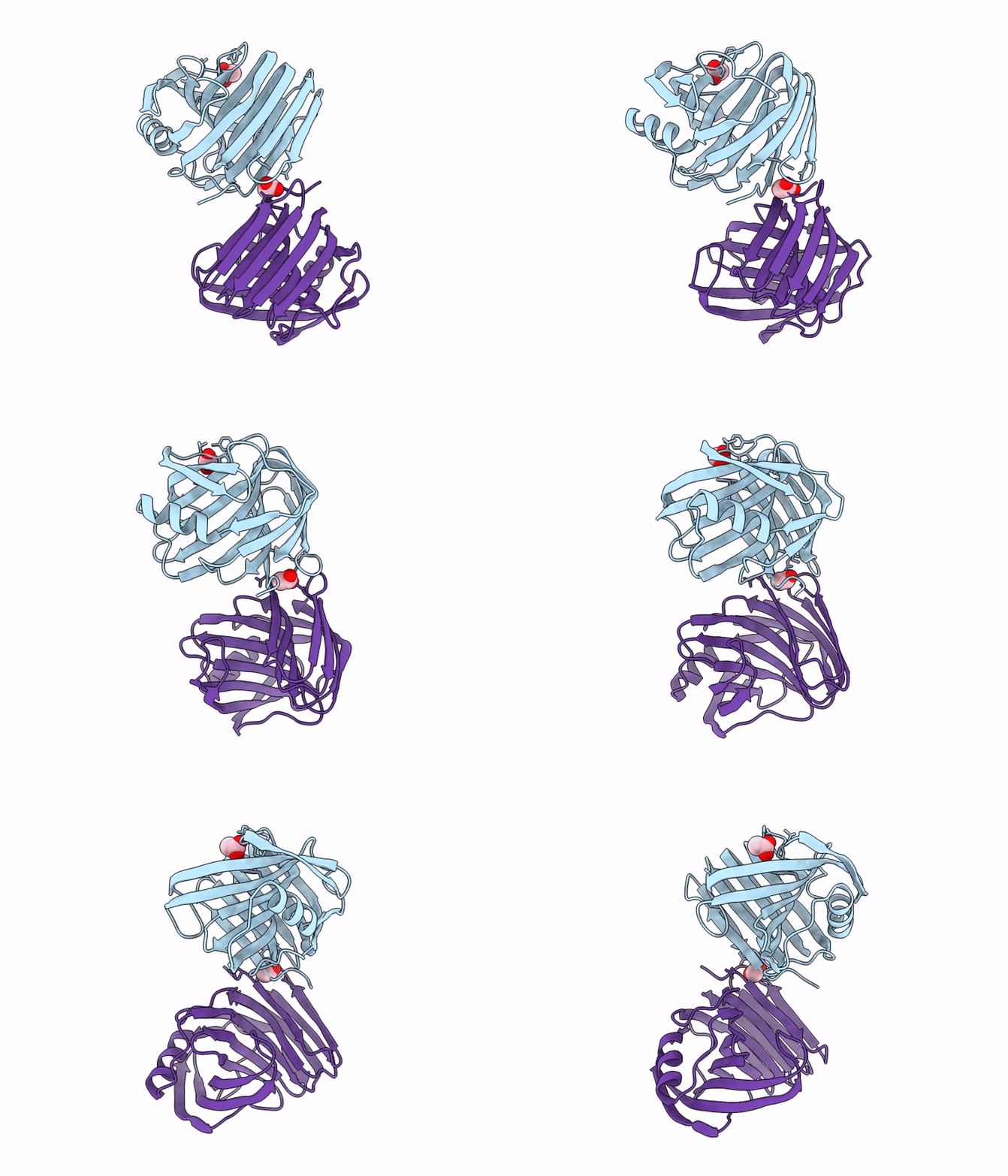
23AC image
Deposition Date 2026-01-29
Release Date 2026-02-11
Last Version Date 2026-08-26
Entry Detail
PDB ID:
23AC
Keywords:
Title:
Crystal structure of TsaGH11
Biological Source:
Source Organism(s):
Expression System(s):
Method Details:
Experimental Method:
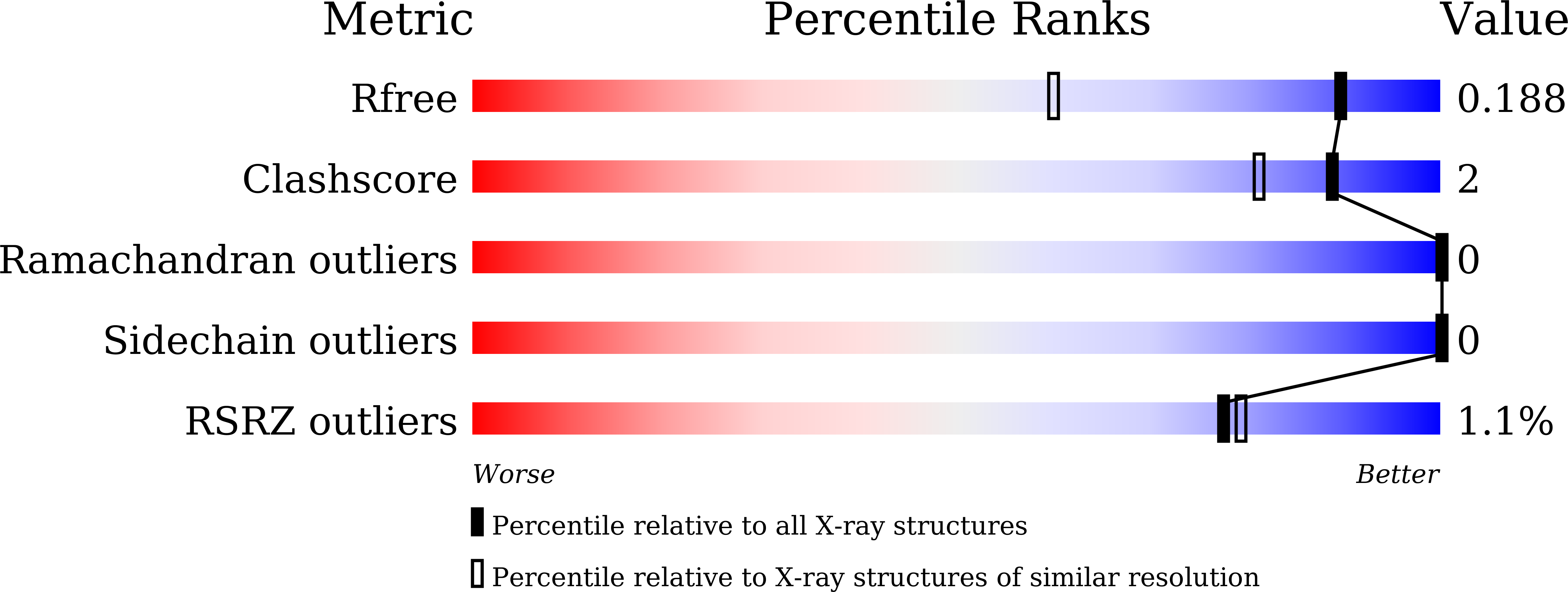
Resolution:
1.40 Å
R-Value Free:
0.18
R-Value Work:
0.17
R-Value Observed:
0.17
Space Group:
P 43 21 2
Macromolecular Entities
Polymer Type:polypeptide(L)
Molecule:Endo-1,4-beta-xylanase
Gene (Uniprot):Tsac_0897
Chain IDs:A, B
Chain Length:193
Number of Molecules:2
Biological Source:Thermoanaerobacterium saccharolyticum
Ligand Molecules
Primary Citation
Temperature-Dependent Thumb Domain Dynamics of Xylanase TsaGH11: Insights from Molecular Dynamics Simulations.
Int J Mol Sci 27 ? ? (2026)
PMID: 42589522 DOI: 10.3390/ijms27156869

Abstact

Xylanases catalyze the hydrolysis of beta-1,4-xylosidic linkages in xylan, a major component of plant cell walls, and are widely used in the food, feed, pulp and paper, and biofuel industries. GH11 xylanase from the hemicellulose-degrading bacterium Thermoanaerobacterium saccharolyticum (TsaGH11) exhibits high catalytic activity, making it an attractive enzyme for industrial applications. The flexibility of the thumb domain of TsaGH11 has been investigated under cryogenic and room temperature conditions; however, the substrate recognition mechanism of TsaGH11 at the optimal temperature is unknown. To better understand the molecular mechanism of substrate recognition, the high-resolution crystal structure of TsaGH11 was determined at 1.4 A resolution. All-atom molecular dynamics simulations at 300, 320, 340, and 360 K revealed that increasing the temperature induced fluctuations in the substrate-recognizing thumb domain. At an optimal temperature of 340 K, the substrate-binding cleft of TsaGH11 predominantly adopted a closed conformation. However, the thumb domain exhibited larger fluctuations at 340 K than at other temperatures, sampling both open and closed conformations, suggesting that substrate recognition in TsaGH11 proceeds through a conformational selection-like mechanism. At 360 K, TsaGH11 unfolded partially at a site opposite the substrate-binding cleft, providing potential targets for protein engineering to improve its thermostability for industrial applications. These findings provide a better understanding of the molecular mechanism of TsaGH11 and offer valuable guidance for the rational engineering of GH11 xylanases for industrial applications.

Legend

Protein

Chemical

Disease

Primary Citation of related structures
Feedback Form
Name
Email
Institute
Feedback