

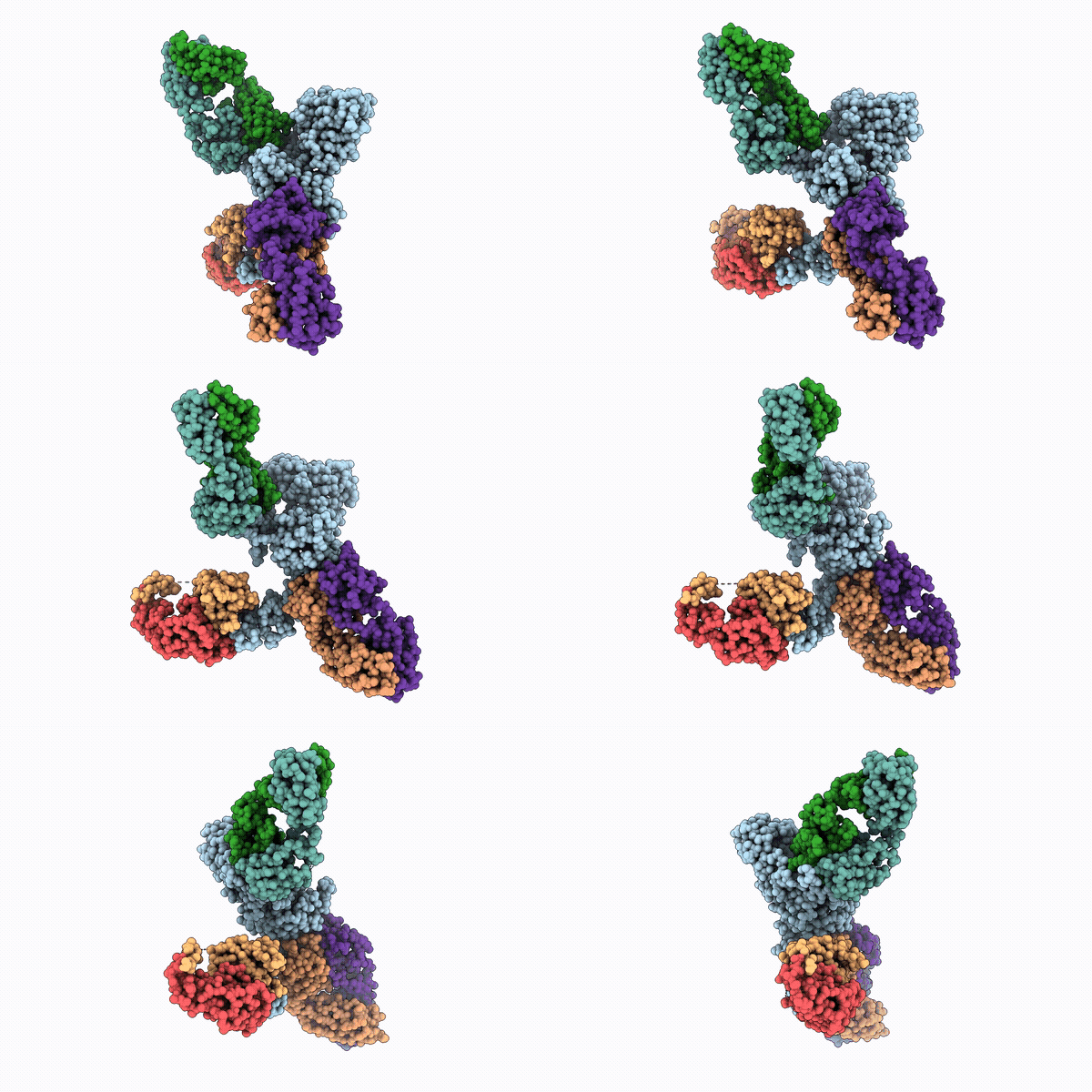
22GE image
Deposition Date 2026-01-09
Release Date 2026-10-28
Last Version Date 2026-10-28
Entry Detail
PDB ID:
22GE
Title:
The structure of HER2-r40-trastuzumab-pertuzumab
Biological Source:
Source Organism(s):
Method Details:
Experimental Method:
Resolution:
3.10 Å
Aggregation State:
PARTICLE
Reconstruction Method:
SINGLE PARTICLE
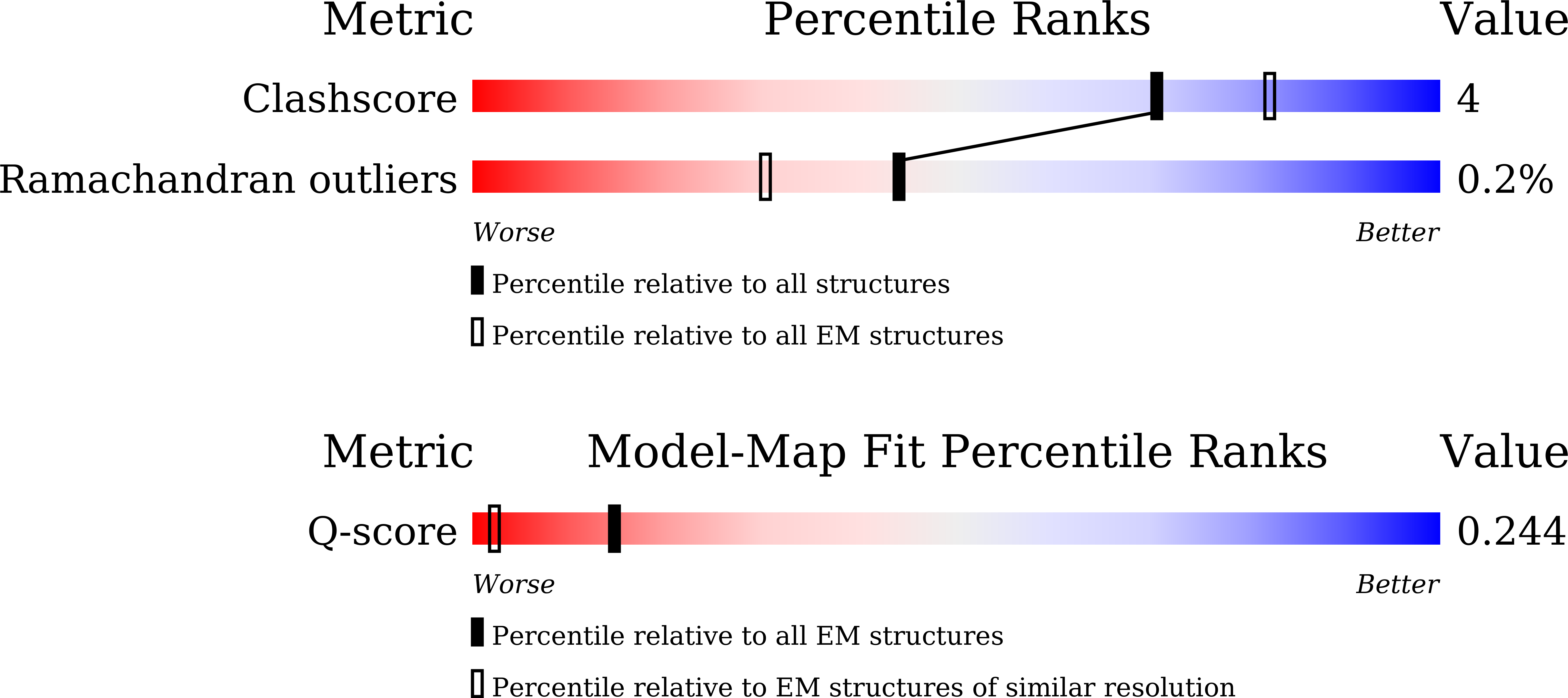
Macromolecular Entities
Polymer Type:polypeptide(L)
Molecule:Receptor tyrosine-protein kin
Gene (Uniprot):ERBB2
Chain IDs:A
Chain Length:664
Number of Molecules:1
Biological Source:Homo sapiens
Structural Superimposition Protein Blast
Polymer Type:polypeptide(L)
Molecule:Pertuzumab FAB LIGHT CHAIN
Chain IDs:B
Chain Length:236
Number of Molecules:1
Biological Source:Homo sapiens
Structural Superimposition Protein Blast
Polymer Type:polypeptide(L)
Molecule:Pertuzumab FAB HEAVY CHAIN
Chain IDs:C
Chain Length:235
Number of Molecules:1
Biological Source:Homo sapiens
Structural Superimposition Protein Blast
Polymer Type:polypeptide(L)
Molecule:Trastuzumab FAB LIGHT CHAIN
Chain IDs:D
Chain Length:236
Number of Molecules:1
Biological Source:Homo sapiens
Structural Superimposition Protein Blast
Polymer Type:polypeptide(L)
Molecule:Trastuzumab FAB HEAVY CHAIN
Chain IDs:E
Chain Length:236
Number of Molecules:1
Biological Source:Homo sapiens
Structural Superimposition Protein Blast
Polymer Type:polypeptide(L)
Molecule:r40 (rabbit-derived) HEAVY CH
Chain IDs:F (auth: G)
Chain Length:237
Number of Molecules:1
Biological Source:Oryctolagus cuniculus
Structural Superimposition Protein Blast
Polymer Type:polypeptide(L)
Molecule:r40 (rabbit-derived) LIGHT CH
Chain IDs:G (auth: H)
Chain Length:255
Number of Molecules:1
Biological Source:Oryctolagus cuniculus
Ligand Molecules
Primary Citation
Inhibition of HER2 signaling and breast cancer cell growth with a novel antibody targeting HER2 ECD III/IV.
Plos One 21 e0338127 e0338127 (2026)
PMID: 41538393 DOI: 10.1371/journal.pone.0338127

Abstact

Human epidermal growth factor receptor 2 (HER2), a ligand-independent tyrosine kinase receptor belonging to the EGFR family, serves as a key oncogenic driver in breast, gastric, and several other solid tumors. Although anti-HER2 therapies have substantially improved survival outcomes-particularly in breast and gastric cancers-treatment resistance and cancer recurrence remain major clinical challenges. Thus, developing novel antibodies exhibiting complementary effects to the current anti-HER2 therapies could provide additional therapeutic benefits. Here, we describe two novel HER2-targeting monoclonal antibodies, m66 (murine-derived) and r40 (rabbit-derived), which inhibit breast cancer cell proliferation in vitro. Of the two, antibody r40 exhibits stronger suppression of the PI3K/AKT and MAPK signaling pathways compared to m66. Moreover, the addition of r40 to the combination of trastuzumab and pertuzumab leads to a significantly enhanced inhibitory effect. We also determined the cryo-EM structures of the HER2-m66-trastuzumab ternary complex and the HER2-r40-trastuzumab-pertuzumab tetrameric complex, at overall resolutions of 3.2 A and 3.1 A, respectively. Structural analyses reveal that m66 recognizes an epitope overlapping with that of pertuzumab, whereas r40 binds within the HER2 ECD III/IV-a region distinct from the binding sites of both trastuzumab and pertuzumab. These findings identify r40 as a promising therapeutic candidate for use in combination with trastuzumab and pertuzumab in the treatment of HER2-positive breast cancer.

Legend

Protein

Chemical

Disease

Primary Citation of related structures
Feedback Form
Name
Email
Institute
Feedback