

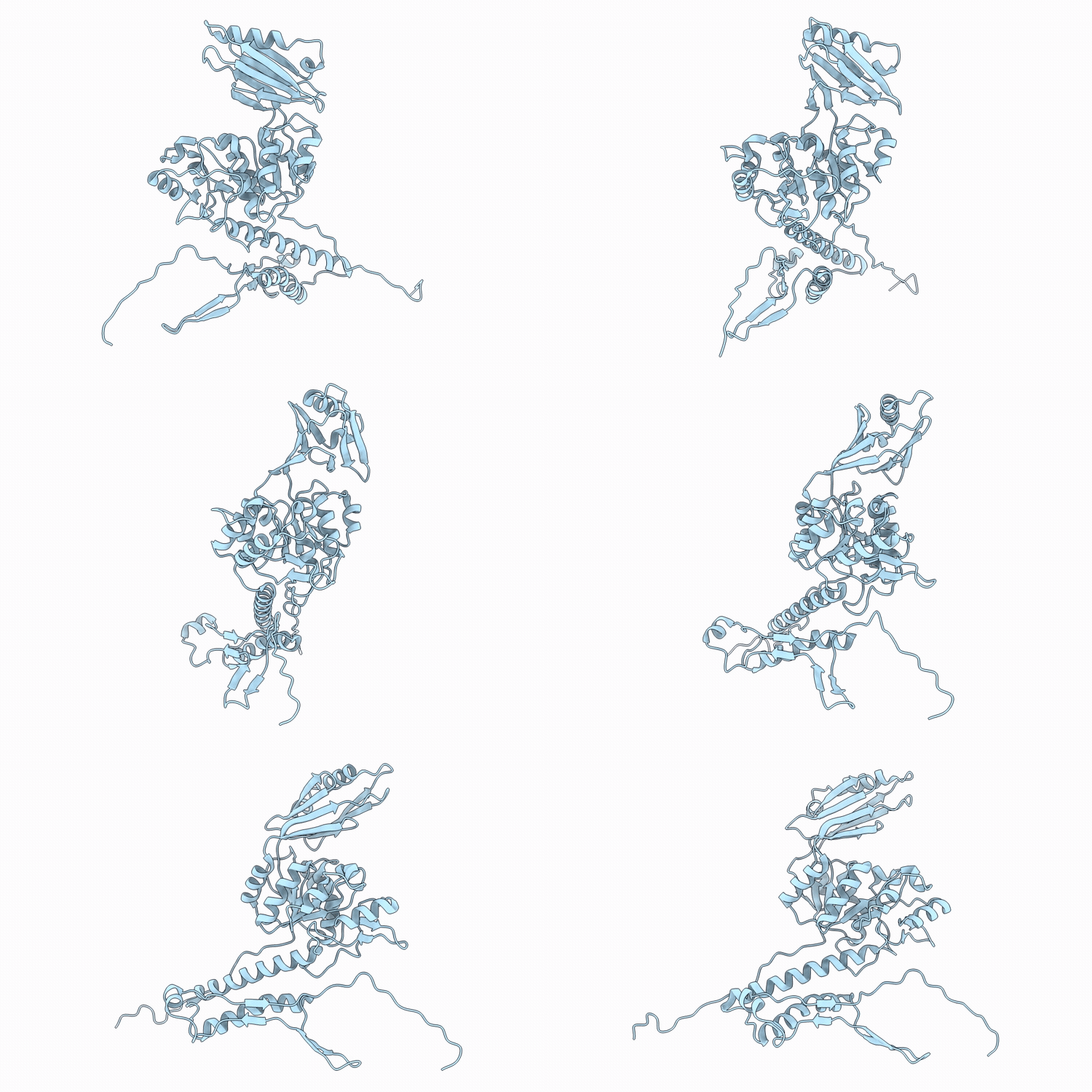
21WL image
Deposition Date 2025-12-31
Release Date 2026-07-22
Last Version Date 2026-10-28
Entry Detail
PDB ID:
21WL
Keywords:
Title:
Cryo-EM structure of the tail sheath from the contracted phi92 bacteriophage
Biological Source:
Source Organism(s):
Method Details:
Experimental Method:
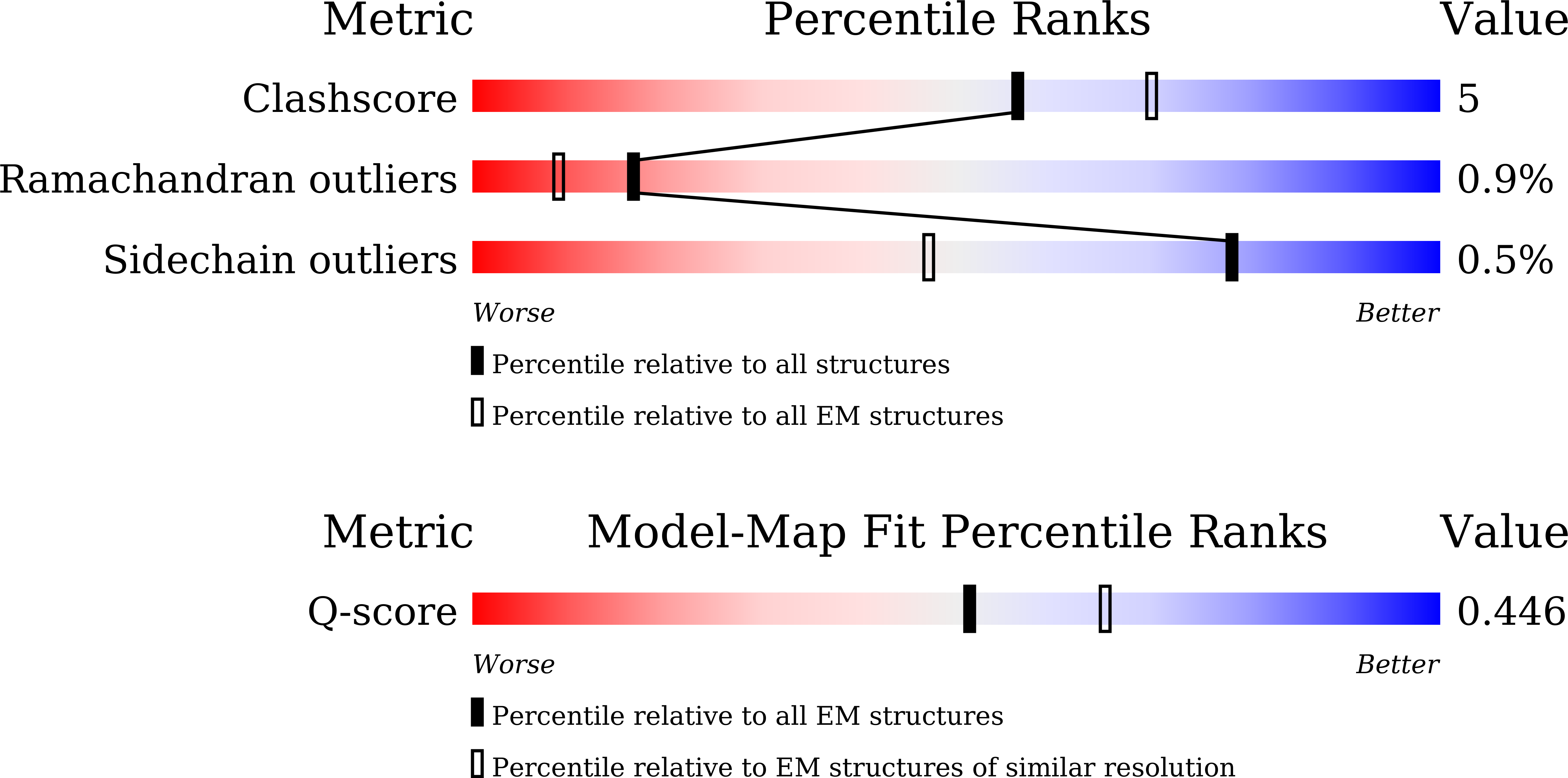
Resolution:
3.70 Å
Aggregation State:
PARTICLE
Reconstruction Method:
SINGLE PARTICLE
Macromolecular Entities
Polymer Type:polypeptide(L)
Molecule:Phi92_gp130
Gene (Uniprot):PHI92_gene_130
Chain IDs:A (auth: G)
Chain Length:468
Number of Molecules:1
Biological Source:Escherichia phage phi92
Ligand Molecules
Primary Citation
Intact architectures of myophage phi92 in extended and contracted states.
Plos Pathog. 22 e1014494 e1014494 (2026)
PMID: 42566408 DOI: 10.1371/journal.ppat.1014494

Abstact

Since conventional antibiotics frequently fail to effectively treat infections caused by encapsulated bacteria, phage therapy has gained attention as a potential treatment approach. However, the understanding of phages that can specifically infect encapsulated bacteria-particularly myophages-remains limited, especially regarding their structures with multi-states, and infection and contraction mechanisms, such as tail fiber conformational changes and what triggers tail contraction. In this study, we resolved the intact structures of phi92, which possesses a broad host range encompassing both encapsulated and non-encapsulated strains of Escherichia coli strains and diverse Salmonella strains, in both its extended and contracted states by cryo-electron microscopy (cryo-EM). We identified and built atomic models for most components in the head, connector, tail, and baseplate. Notably, we inferred that one of the three fibers corresponds to fiber I (gp143) and identified another as fiber III (gp147). We propose that fiber I specifically degrades host capsular polysaccharides, while fiber III mediates stable adsorption to the host cell membrane. Phi92 achieves broad host adaptability through its multiple fibers, thereby conferring a significant competitive advantage when infecting bacteria with distinct types. Comparison of the two states reveals that significant conformational rearrangements of fiber III and baseplate periphery play a pivotal role in triggering sheath contraction. This study elucidates the trigger mechanism of the contractile nanomachine in phi92-like myophages with a baseplate architecture, providing a crucial structural foundation for developing myophage-based therapies against encapsulated, drug-resistant bacteria.

Legend

Protein

Chemical

Disease

Primary Citation of related structures
Feedback Form
Name
Email
Institute
Feedback