

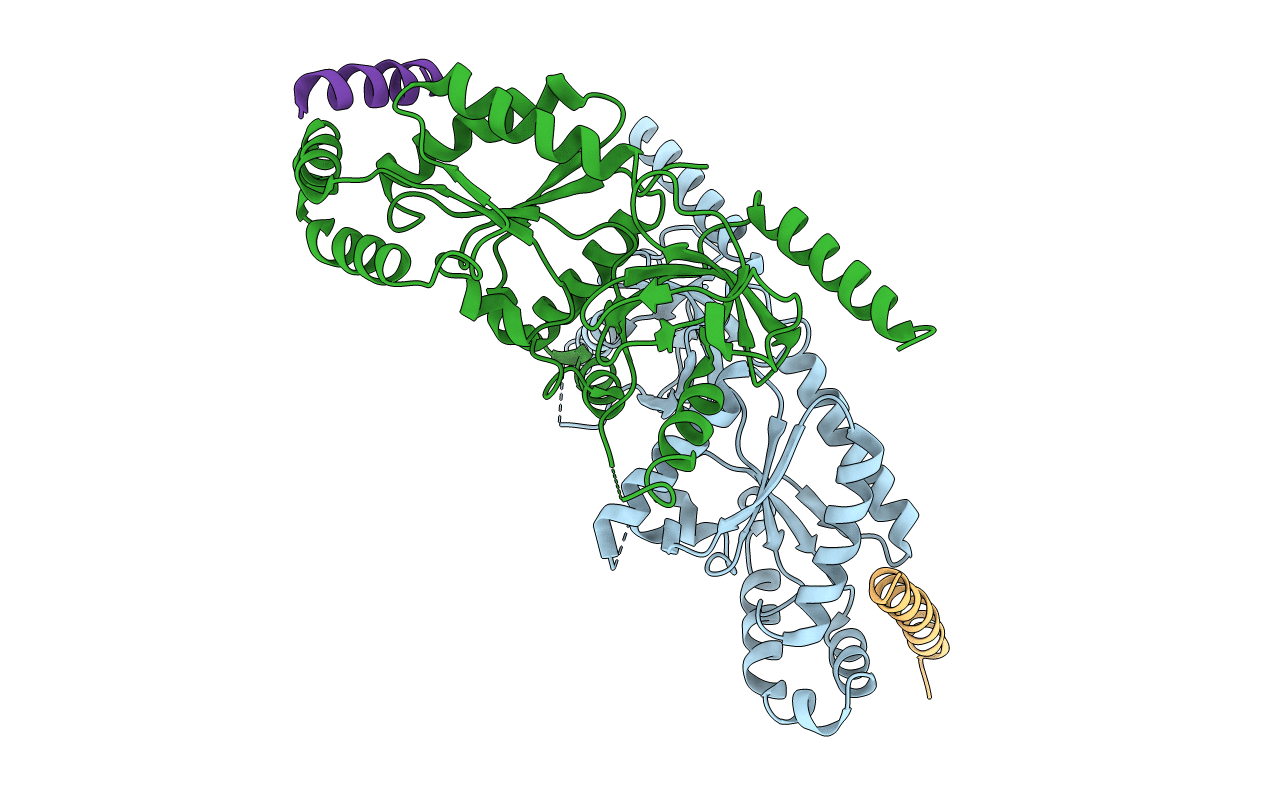
1VYT image
Deposition Date 2004-05-07
Release Date 2004-06-15
Last Version Date 2024-10-16
Entry Detail
PDB ID:
1VYT
Title:
beta3 subunit complexed with aid
Biological Source:
Source Organism(s):
Expression System(s):
Method Details:
Experimental Method:
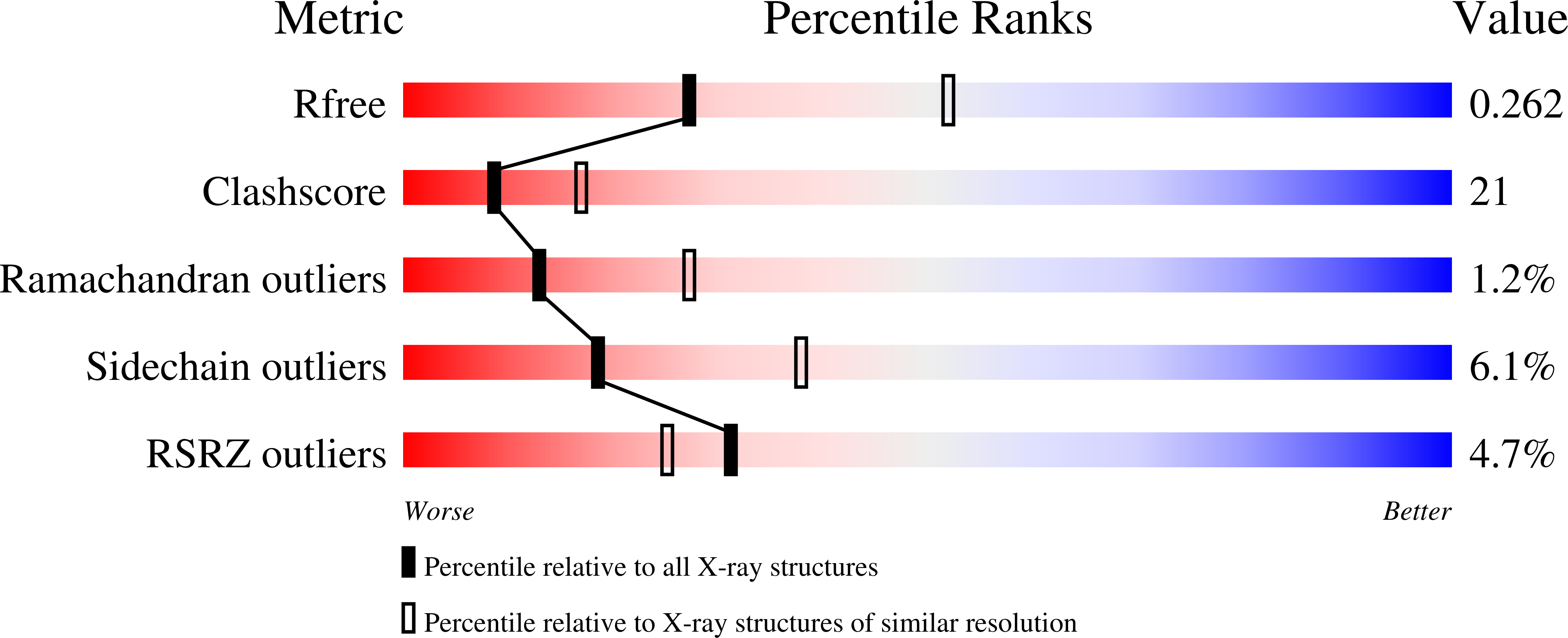
Resolution:
2.60 Å
R-Value Free:
0.27
R-Value Work:
0.23
R-Value Observed:
0.23
Space Group:
C 1 2 1
Macromolecular Entities
Structures with similar UniProt ID
Protein Blast
Polymer Type:polypeptide(L)
Molecule:CALCIUM CHANNEL BETA-3 SUBUNI
Gene (Uniprot):Cacnb3
Chain IDs:A, B
Chain Length:351
Number of Molecules:2
Biological Source:RATTUS NORVEGICUS
Structures with similar UniProt ID
Protein Blast
Polymer Type:polypeptide(L)
Molecule:VOLTAGE-DEPENDENT L-TYPE CALC
Gene (Uniprot):Cacna1c
Chain IDs:C (auth: E), D (auth: F)
Chain Length:25
Number of Molecules:2
Biological Source:RATTUS NORVEGICUS
Primary Citation
Structural Basis of the Alpha(1)-Beta Subunit Interaction of Voltage-Gated Ca(2+) Channels
Nature 429 675 ? (2004)
PMID: 15170217 DOI: 10.1038/NATURE02641

Abstact

High-voltage-activated Ca2+ channels are essential for diverse biological processes. They are composed of four or five subunits, including alpha1, alpha2-delta, beta and gamma (ref. 1). Their expression and function are critically dependent on the beta-subunit, which transports alpha1 to the surface membrane and regulates diverse channel properties. It is believed that the beta-subunit interacts with alpha1 primarily through the beta-interaction domain (BID), which binds directly to the alpha-interaction domain (AID) of alpha1; however, the molecular mechanism of the alpha1-beta interaction is largely unclear. Here we report the crystal structures of the conserved core region of beta3, alone and in complex with AID, and of beta4 alone. The structures show that the beta-subunit core contains two interacting domains: a Src homology 3 (SH3) domain and a guanylate kinase (GK) domain. The AID binds to a hydrophobic groove in the GK domain through extensive interactions, conferring extremely high affinity between alpha1 and beta-subunits. The BID is essential both for the structural integrity of and for bridging the SH3 and GK domains, but it does not participate directly in binding alpha1. The presence of multiple protein-interacting modules in the beta-subunit opens a new dimension to its function as a multi-functional protein.

Legend

Protein

Chemical

Disease

Primary Citation of related structures
Feedback Form
Name
Email
Institute
Feedback