

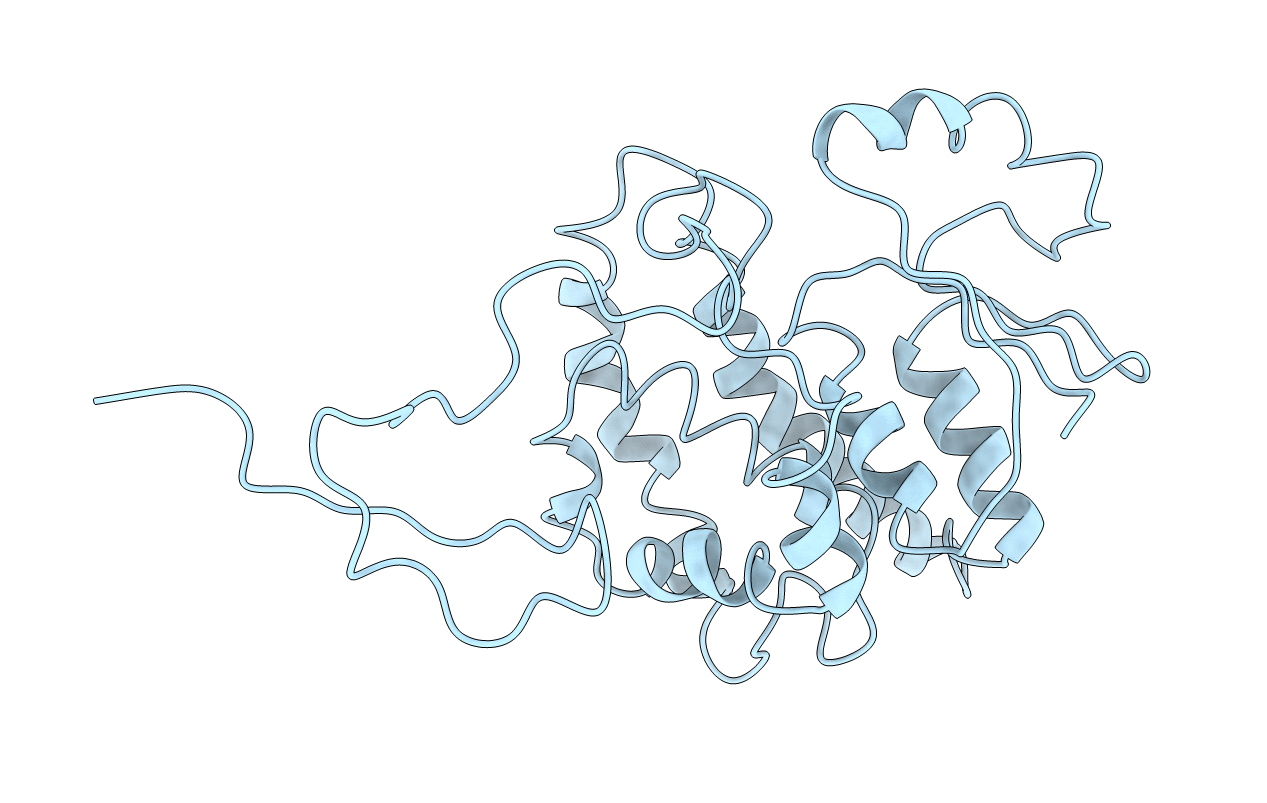
1BG5 image
Deposition Date 1998-06-05
Release Date 1999-01-13
Last Version Date 2024-05-22
Entry Detail
PDB ID:
1BG5
Keywords:
Title:
CRYSTAL STRUCTURE OF THE ANKYRIN BINDING DOMAIN OF ALPHA-NA,K-ATPASE AS A FUSION PROTEIN WITH GLUTATHIONE S-TRANSFERASE
Biological Source:
Source Organism(s):
Expression System(s):
Method Details:
Experimental Method:
Resolution:
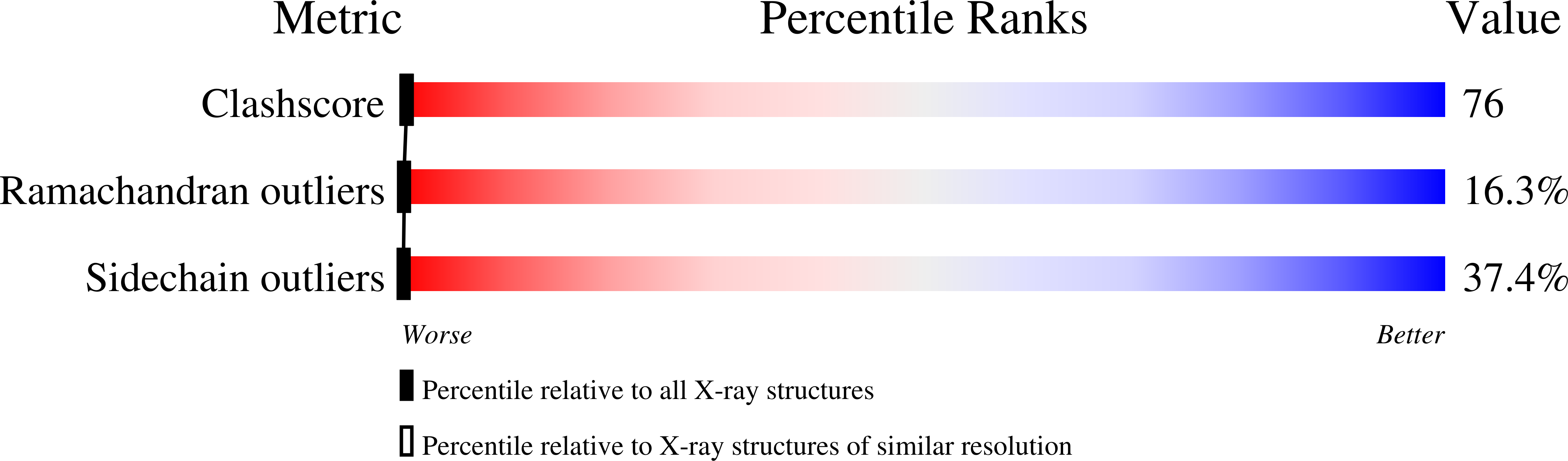
2.60 Å
R-Value Free:
0.35
R-Value Work:
0.19
R-Value Observed:
0.19
Space Group:
P 43 21 2
Macromolecular Entities
Structures with similar UniProt ID
Protein Blast
Polymer Type:polypeptide(L)
Molecule:FUSION PROTEIN OF ALPHA-NA,K-
Chain IDs:A
Chain Length:254
Number of Molecules:1
Biological Source:Rattus norvegicus
Primary Citation
Structure of the ankyrin-binding domain of alpha-Na,K-ATPase.
J. Biol. Chem. 273 18681 18684 (1998)
PMID: 9668035 DOI: 10.1074/jbc.273.30.18681

Abstact

The ankyrin 33-residue repeating motif, an L-shaped structure with protruding beta-hairpin tips, mediates specific macromolecular interactions with cytoskeletal, membrane, and regulatory proteins. The association between ankyrin and alpha-Na,K-ATPase, a ubiquitous membrane protein critical to vectorial transport of ions and nutrients, is required to assemble and stabilize Na,K-ATPase at the plasma membrane. alpha-Na,K-ATPase binds both red cell ankyrin (AnkR, a product of the ANK1 gene) and Madin-Darby canine kidney cell ankyrin (AnkG, a product of the ANK3 gene) utilizing residues 142-166 (SYYQEAKSSKIMESFK NMVPQQALV) in its second cytoplasmic domain. Fusion peptides of glutathione S-transferase incorporating these 25 amino acids bind specifically to purified ankyrin (Kd = 118 +/- 50 nM). The three-dimensional structure (2.6 A) of this minimal ankyrin-binding motif, crystallized as the fusion protein, reveals a 7-residue loop with one charged hydrophilic face capping a double beta-strand. Comparison with ankyrin-binding sequences in p53, CD44, neurofascin/L1, and the inositol 1,4,5-trisphosphate receptor suggests that the valency and specificity of ankyrin binding is achieved by the interaction of 5-7-residue surface loops with the beta-hairpin tips of multiple ankyrin repeat units.

Legend

Protein

Chemical

Disease

Primary Citation of related structures
Feedback Form
Name
Email
Institute
Feedback