

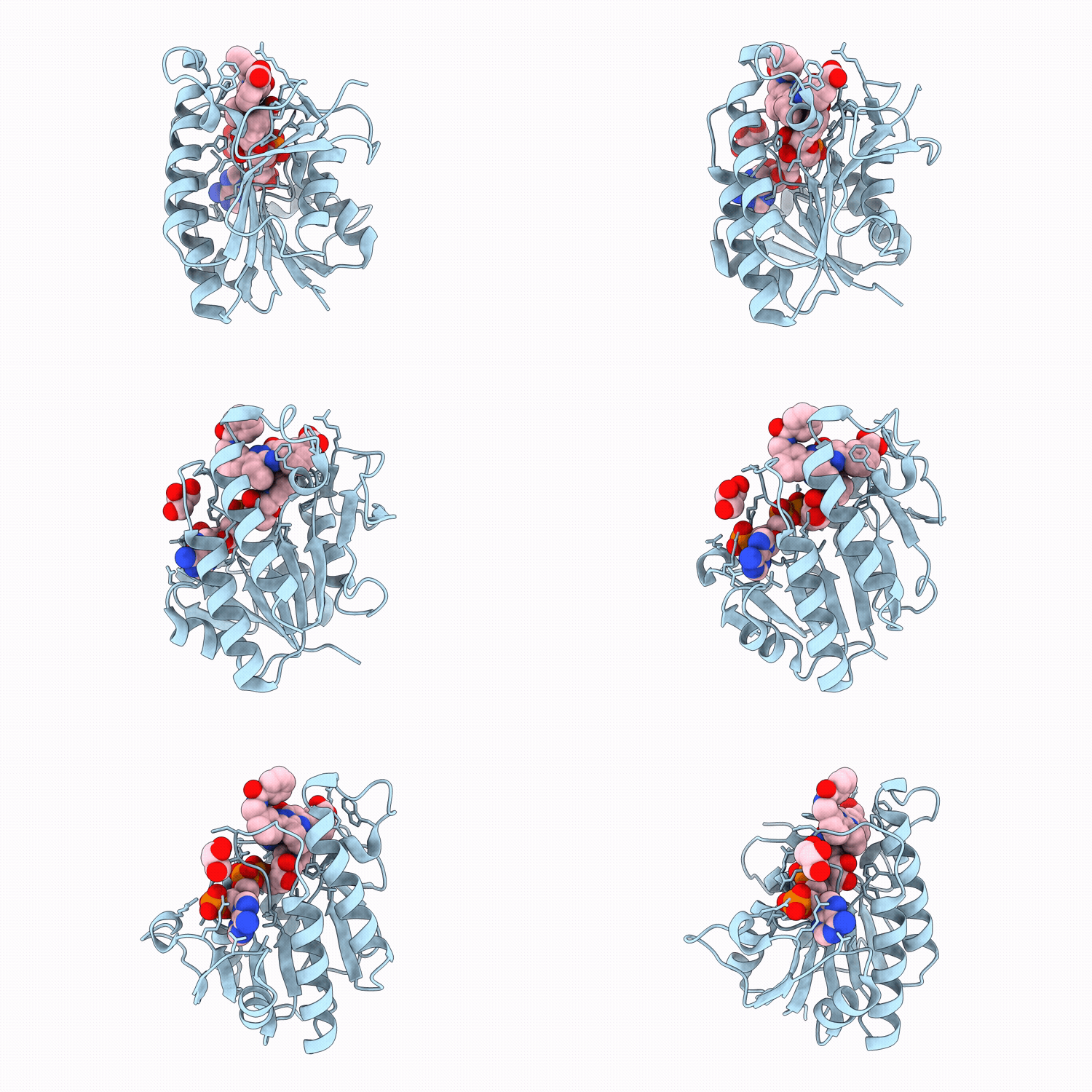
13EB image
Deposition Date 2026-05-01
Release Date 2026-08-05
Last Version Date 2026-09-16
Entry Detail
PDB ID:
13EB
Keywords:
Title:
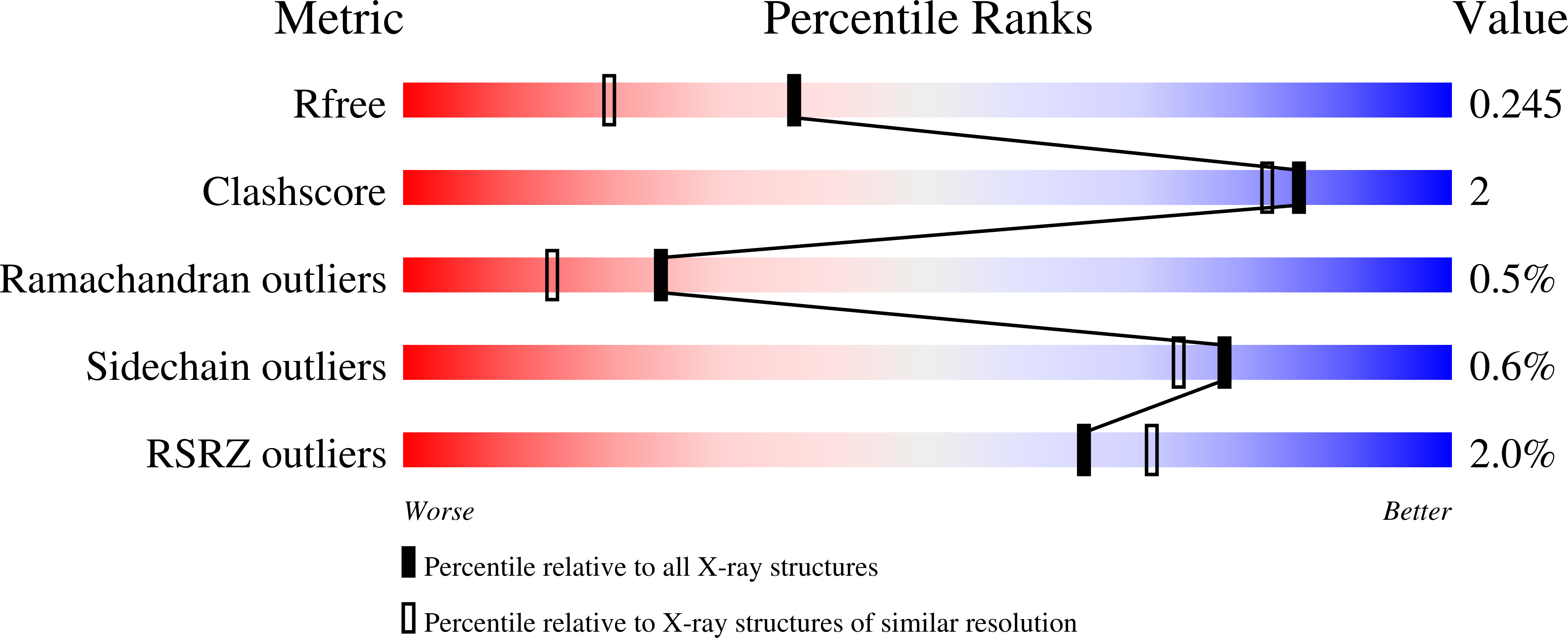
X-ray crystal structure of human biliverdin beta IX reductase in complex with NADP and BCT002109
Biological Source:
Source Organism(s):
Homo sapiens (Taxon ID: 9606)
Expression System(s):
Method Details:
Experimental Method:
Resolution:
1.82 Å
R-Value Free:
0.24
R-Value Work:
0.20
R-Value Observed:
0.21
Space Group:
C 1 2 1
Macromolecular Entities
Polymer Type:polypeptide(L)
Molecule:Flavin reductase (NADPH)
Gene (Uniprot):BLVRB
Chain IDs:A
Chain Length:0
Number of Molecules:1
Biological Source:Homo sapiens
Primary Citation
A Structure-guided Active Site Affinity Ligand Unmasks a Stress-Sensitizing Role for BLVRB in the Endoplasmic Reticulum.
J.Med.Chem. 69 19933 19950 (2026)
PMID: 42505148 DOI: 10.1021/acs.jmedchem.6c01466

Abstact

Biliverdin IXb reductase (BLVRB) is an NAD(P)H-dependent oxidoreductase that regulates hematopoiesis and cellular stress, although measurement and sequelae of cellular active site engagement remain undefined. Here, we report the development of a nanoBRET platform enabling real-time BLVRB target engagement. Structure-guided design and chemical syntheses of BODIPY-labeled pyrazolopyrimidinone inhibitors generate cell-permeable acceptor ligands retaining high-affinity binding to the BLVRB active site. In vitro and cellular nanoBRET assays demonstrate specific energy transfer and inform equilibrium binding affinities, target engagement, and residence time analyses for diverse panels of BLVRB inhibitors. NanoBRET demonstrates strong concordance with enzymatic inhibition and is validated by crystallographic structures confirming active site binding. Live-cell imaging using affinity ligands reveals predominant endoplasmic reticulum localization and transient suppression of the ER stress chaperone GRP78/BiP without eliciting a canonical unfolded protein response. These studies inform a redox-regulated mechanism whereby spatiotemporal BLVRB active site engagement functions as a stress sensitizer modulating ER proteostasis.

Legend

Protein

Chemical

Disease

Primary Citation of related structures
Feedback Form
Name
Email
Institute
Feedback