

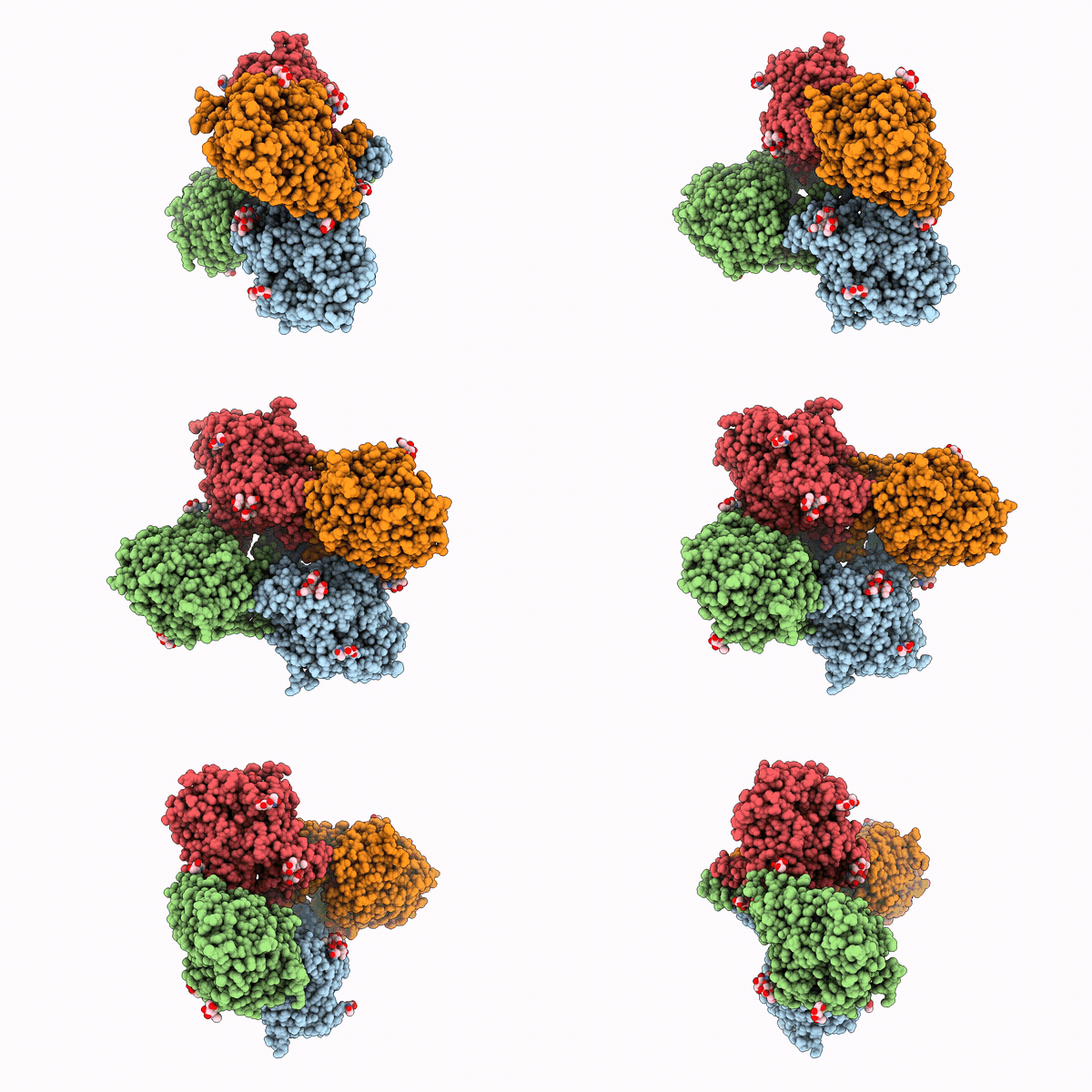
13CO image
Deposition Date 2026-04-29
Release Date 2026-09-16
Last Version Date 2026-11-18
Entry Detail
PDB ID:
13CO
Keywords:
Title:
Cryo-EM structure of an intact human acetylcholinesterase (T-form) tetramer in complex with ColQ
Biological Source:
Source Organism(s):
Homo sapiens (Taxon ID: 9606)
Expression System(s):
Method Details:
Experimental Method:
Resolution:
2.81 Å
Aggregation State:
PARTICLE
Reconstruction Method:
SINGLE PARTICLE
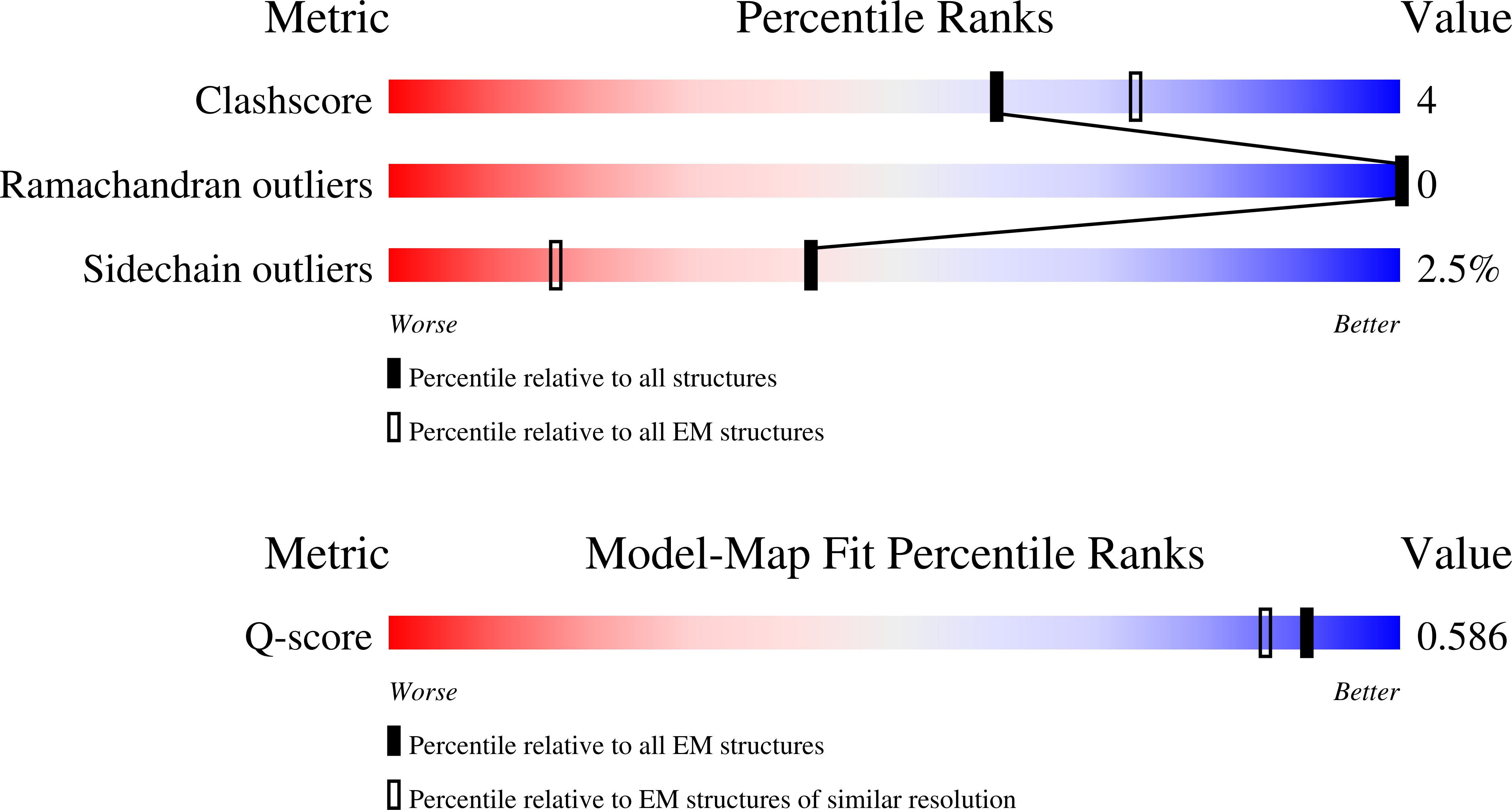
Macromolecular Entities
Polymer Type:polypeptide(L)
Molecule:Acetylcholinesterase
Gene (Uniprot):ACHE
Chain IDs:A, B, C, D
Chain Length:583
Number of Molecules:4
Biological Source:Homo sapiens
Structural Superimposition
Polymer Type:polypeptide(L)
Molecule:Small ubiquitin-related modif
Gene (Uniprot):SMT3, COLQ
Mutagens:R64T, R71E
Chain IDs:E
Chain Length:185
Number of Molecules:1
Biological Source:Homo sapiens
Ligand Molecules
Primary Citation
Structures of distinct human acetylcholinesterase tetramer forms in complex with synaptic anchoring proteins.
Structure 34 1459 ? (2026)
PMID: 42772275 DOI: 10.1016/j.str.2026.08.016

Abstact

Acetylcholinesterase (AChE) hydrolyzes the neurotransmitter acetylcholine in the nervous system. Higher order oligomeric forms of AChE are specific to synapses in vertebrates. The enzyme is anchored to the basal lamina at neuromuscular junctions by ColQ and to neuronal membranes in the brain by the membrane protein PRiMA. We use cryo-electron microscopy to show that human AChE (hAChE) forms distinct tetramers in complex with the two synaptic anchors. The ColQ complex is more compact and square-like while the PRiMA complex is more open, asymmetric, and flexible. 3D variability analysis also reveals different flexibilities within the complexes, which are also different than AChE tetramers from other species. Binding of hAChE to the anchors occurs through a conserved mechanism but differences within the anchor sequences may lead to significantly different structures. Flexibility of hAChE tetramer form may be important for interactions with endogenous proteins in the nervous system.

Legend

Protein

Chemical

Disease

Primary Citation of related structures
Feedback Form
Name
Email
Institute
Feedback