

12AO image
Deposition Date 2026-03-23
Release Date 2026-09-16
Last Version Date 2026-10-21
Entry Detail
PDB ID:
12AO
Keywords:
Title:
Crystal structure of the A/Puerto Rico/8/1934 (H1N1) influenza virus hemagglutinin in complex with fusion inhibitor peptide DP142014
Biological Source:
Expression System(s):
Method Details:
Experimental Method:
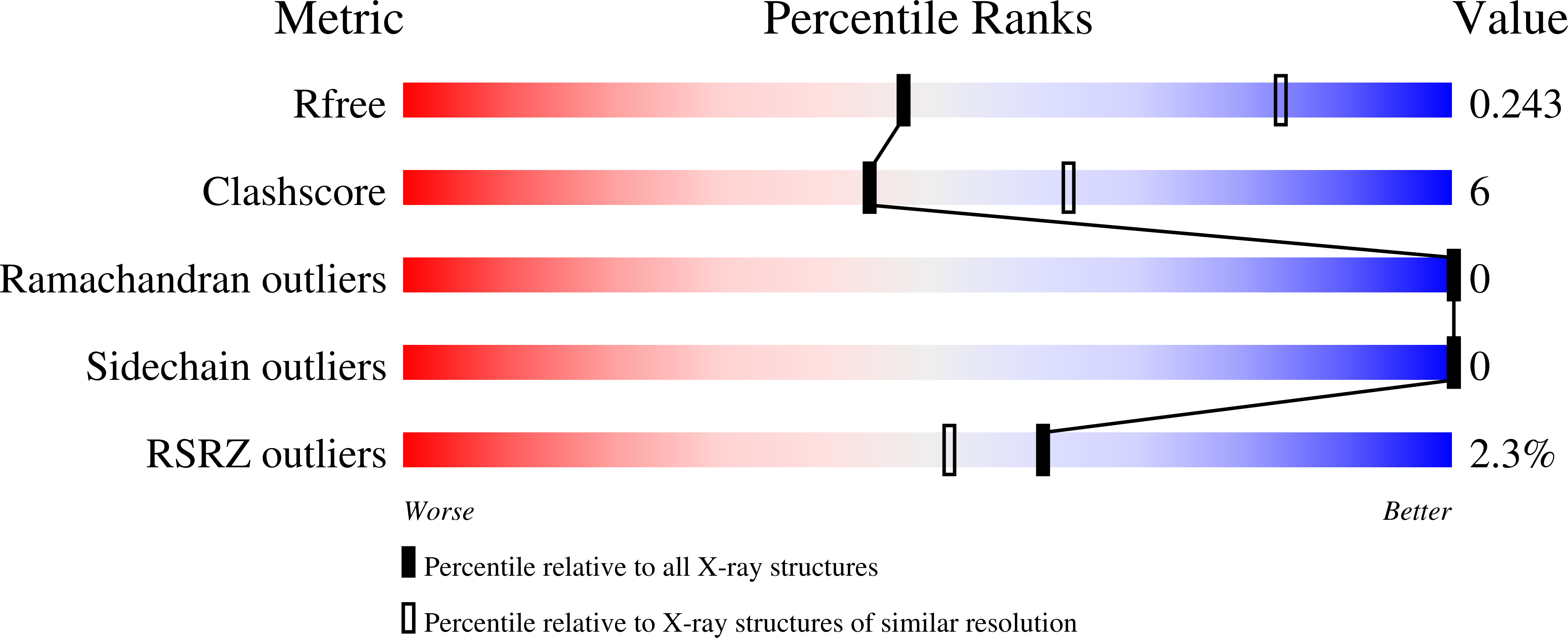
Resolution:
2.85 Å
R-Value Free:
0.24
R-Value Work:
0.20
R-Value Observed:
0.21
Space Group:
I 21 3
Macromolecular Entities
Polymer Type:polypeptide(L)
Molecule:Hemagglutinin
Gene (Uniprot):HA
Chain IDs:A
Chain Length:326
Number of Molecules:1
Biological Source:Influenza A virus (A/Puerto Rico/8/1934(H1N1))
Polymer Type:polypeptide(L)
Molecule:Hemagglutinin HA2 chain
Gene (Uniprot):HA
Chain IDs:B
Chain Length:176
Number of Molecules:1
Biological Source:Influenza A virus (A/Puerto Rico/8/1934(H1N1))
Polymer Type:polypeptide(L)
Molecule:Synthetic peptide
Chain IDs:C
Chain Length:30
Number of Molecules:1
Biological Source:Papillomaviridae
Ligand Molecules
Primary Citation
Antibody Hotspot-Centric de Novo Design of Peptide Inhibitors of Influenza A Virus Membrane Fusion.
Acs Med.Chem.Lett. 17 2191 2196 (2026)
PMID: 42866404 DOI: 10.1021/acsmedchemlett.6c00321

Abstact

Here we report the applicability of a hotspot-centric approach for de novo computational design of l-peptides based on crystal structures of antigen-antibody complexes. Broadly neutralizing antibodies (bnAbs) FI6v3 and CR9114, which target influenza A virus hemagglutinin (HA), guided the peptide design. Disembodied hotspot residues from these bnAbs were selected and anchored onto known peptide scaffolds (</=35 amino acids) from the Protein Data Bank (PDB). The top-scoring designs were subsequently synthesized, folded, tested in vitro, and structurally characterized in complex with HA. The designed peptides demonstrate structural and functional mimicry by recapitulating the binding mode of the bnAbs on HA and act as inhibitors of low-pH-dependent conformational transitions in HA that facilitate membrane fusion. These findings demonstrate that hotspot-guided design strategy, previously applied to proteins and d-peptides, can be effectively extended to l-peptide scaffolds, enabling the development of functional HA inhibitors informed by key residues at antigen-antibody interfaces.

Legend

Protein

Chemical

Disease

Primary Citation of related structures
Feedback Form
Name
Email
Institute
Feedback