

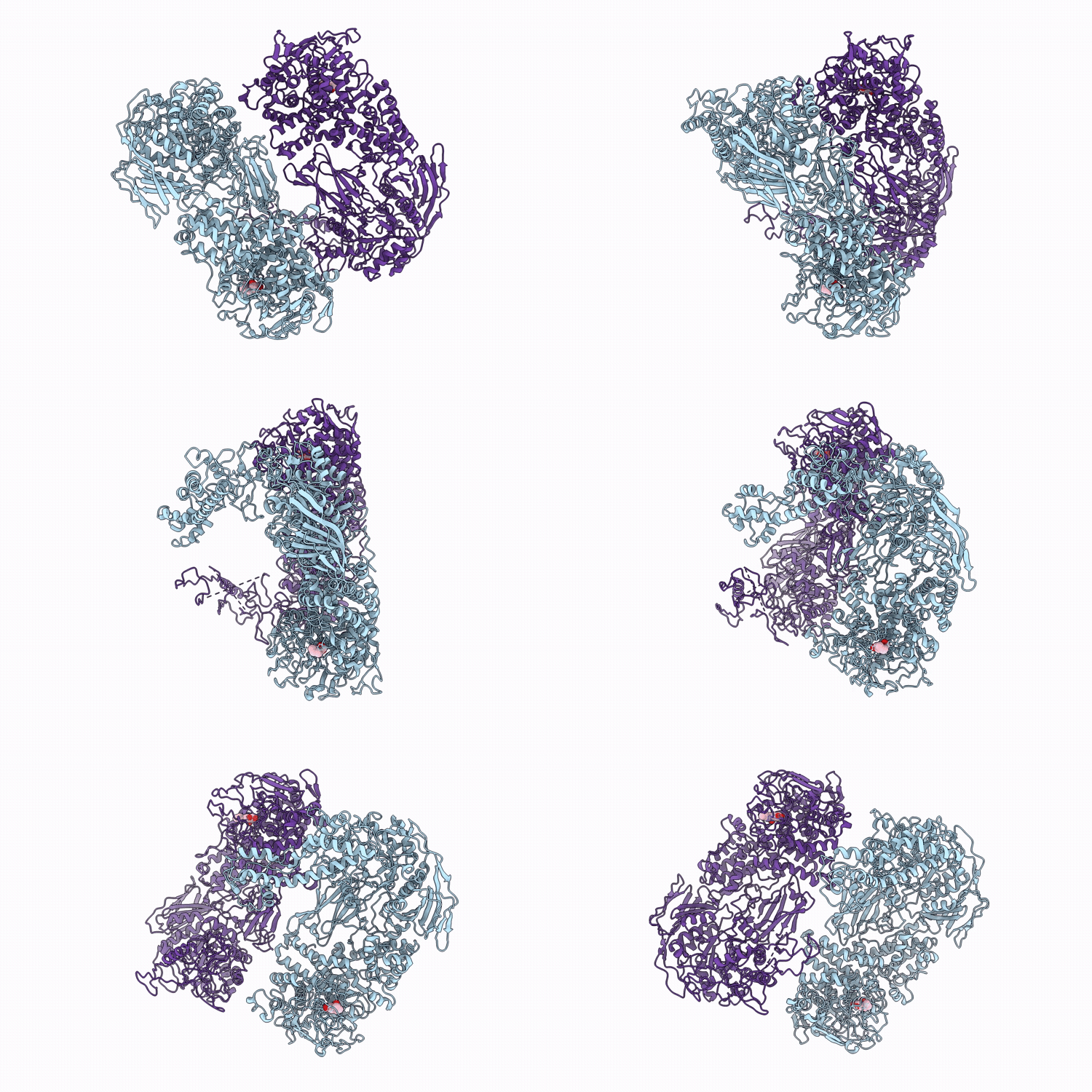
11TN image
Deposition Date 2026-03-12
Release Date 2026-06-24
Last Version Date 2026-07-08
Entry Detail
PDB ID:
11TN
Title:
Candida glabrata Glycogen Debranching Enzyme (GDE) in complex with Miglustat
Biological Source:
Source Organism(s):
Expression System(s):
Method Details:
Experimental Method:
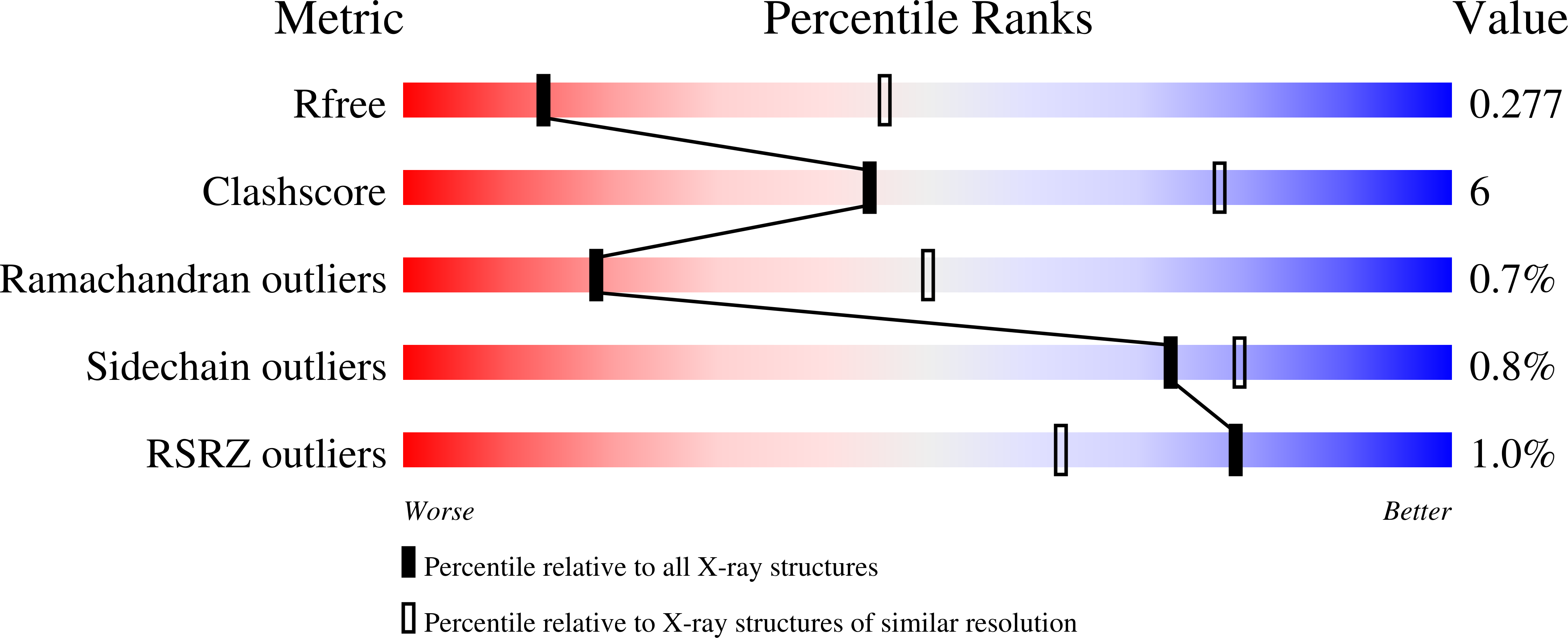
Resolution:
3.24 Å
R-Value Free:
0.27
R-Value Work:
0.23
Space Group:
C 2 2 21
Macromolecular Entities
Polymer Type:polypeptide(L)
Molecule:Glycogen debranching enzyme
Gene (Uniprot):GDB1
Chain IDs:A, B
Chain Length:1524
Number of Molecules:2
Biological Source:Nakaseomyces glabratus
Ligand Molecules
Primary Citation
Off-Target Binding of Miglustat to Glycogen Debranching Enzyme.
Int J Mol Sci 27 ? ? (2026)
PMID: 42353206 DOI: 10.3390/ijms27125490

Abstact

The iminosugar N-butyldeoxynojirimycin (Miglustat) is clinically used for the inhibition of ceramide glucosyltransferase for treating Type 1 Gaucher and Niemann-Pick type C diseases. This drug also inhibits glycogen debranching enzyme (GDE), the enzyme responsible for terminal glycogen catabolism via coordinated glucotransferase and amylo-alpha-1,6-glucosidase (GC) activities, although the structural basis for inhibition has been undefined. Here, we report the crystal structure of Candida glabrata GDE in complex with Miglustat, revealing inhibitor engagement at the conserved GC domain in an area that was previously hypothesized to accommodate the alpha-1,6-linked glucose moiety of glycogen. Structure-guided mutagenesis demonstrates that alanine substitution of residues at the GC site abolishes Miglustat binding, functionally validating the pocket and defining the interaction hot spots. To assess the possible relevance of these observations to the human enzyme, in silico docking predicts that Miglustat binds to the human enzyme in a pose close, albeit not identical, to our structure. These findings provide an opportunity to determine the molecular basis of GDE-inhibitor recognition, rationalize reported off-target effects of Miglustat, and provide a template for designing iminosugar therapies with reduced off-target binding.

Legend

Protein

Chemical

Disease

Primary Citation of related structures
Feedback Form
Name
Email
Institute
Feedback