

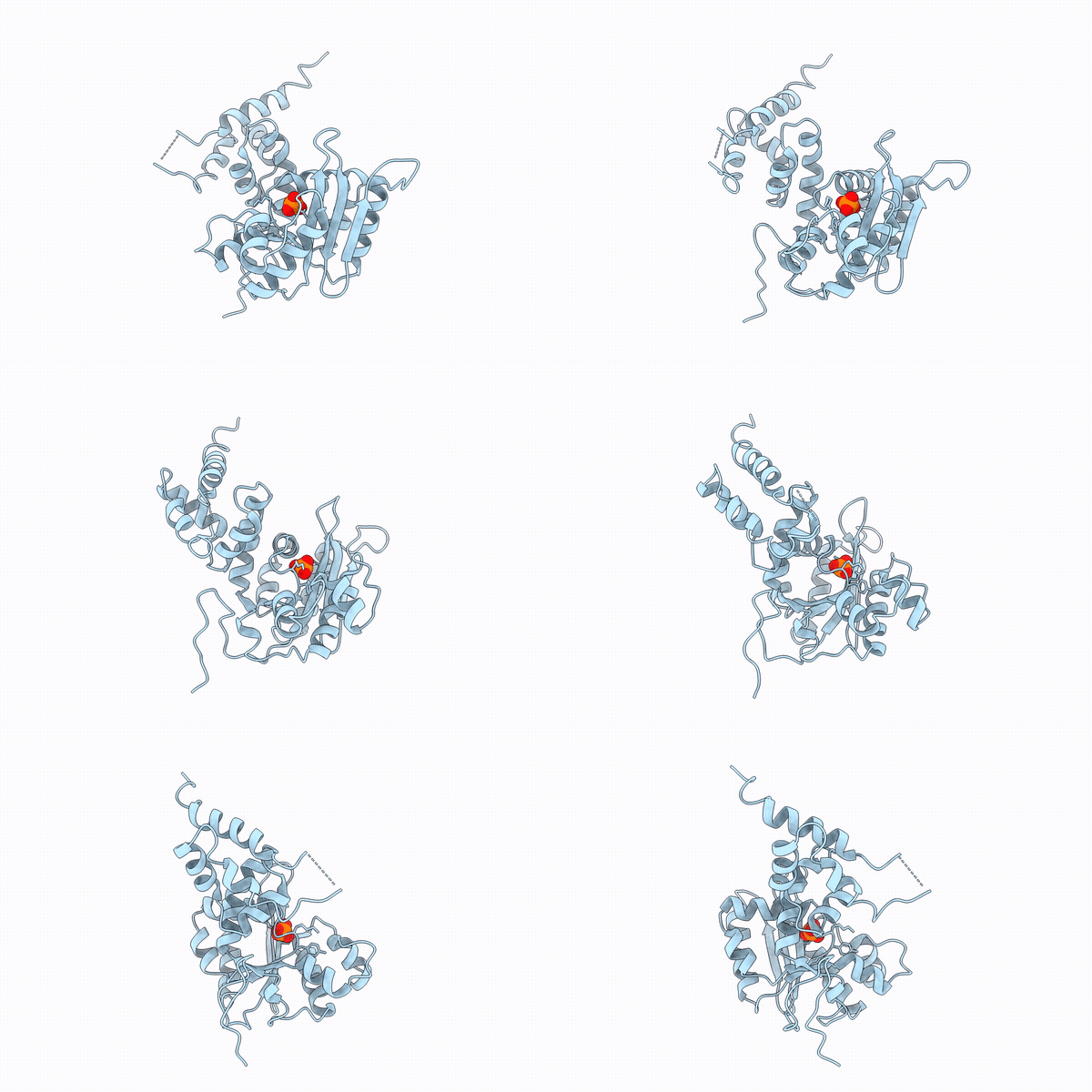
10TH image
Deposition Date 2026-02-07
Release Date 2026-10-28
Last Version Date 2026-10-28
Entry Detail
PDB ID:
10TH
Title:
Crystal structure of the PXL domain of the human promyelocytic leukemia (PML) protein isoform 1
Biological Source:
Source Organism(s):
Homo sapiens (Taxon ID: 9606)
Expression System(s):
Method Details:
Experimental Method:
Resolution:
3.01 Å
R-Value Free:
0.24
R-Value Work:
0.16
R-Value Observed:
0.17
Space Group:
P 31 2 1
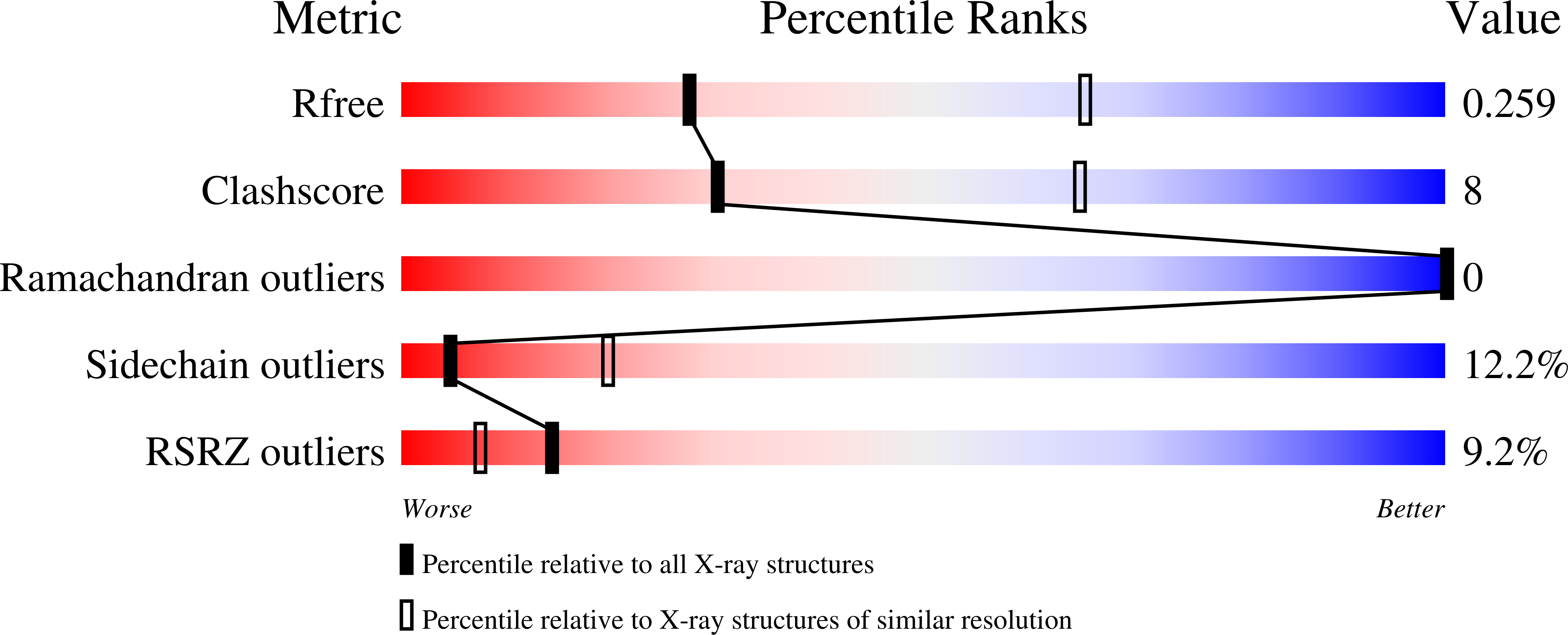
Macromolecular Entities
Polymer Type:polypeptide(L)
Molecule:Protein PML
Gene (Uniprot):PML
Chain IDs:A
Chain Length:281
Number of Molecules:1
Biological Source:Homo sapiens
Ligand Molecules
Primary Citation
PXL: a nucleic acid-binding module of the promyelocytic leukemia protein.
Nucleic Acids Res. 54 ? ? (2026)
PMID: 42866950 DOI: 10.1093/nar/gkag966

Abstact

The promyelocytic leukemia protein (PML) is a stress-response factor that assembles into PML nuclear bodies, dynamic subnuclear compartments involved in tumor suppression and antiviral defense. The most abundant isoform, PML-1, has been linked to transcriptional regulation, genome stability, and antiviral responses, yet the molecular basis of these functions remains unclear and is generally attributed to proteins associated with PML nuclear bodies. Here, we report that PML-1 itself harbors a previously structurally uncharacterized nucleic acid-binding domain. The domain, termed PXL, is encoded by exon 9 of the PML gene and is unique to isoform 1. Its structure reveals an exonuclease III fold, but lacks the catalytic residues required for activity, defining PXL as a pseudo-exonuclease. Biochemical, structural, mutational, and cellular analyses demonstrate that PXL specifically binds G-rich oligonucleotides implicated in G-quadruplex formation and displays a strong in vitro preference for polyUG RNA. Furthermore, deletion of the PXL domain significantly decreases PML colocalization with G-quadruplexes in cells, downregulates genomic maintenance pathways, and modulates the expression of E2F target and interferon-alpha response genes. These findings provide a molecular basis for previous observations implicating PML in nucleic acid-associated functions and establish a mechanistic framework for future studies of PML-mediated stress responses, nuclear organization, and gene regulation.

Legend

Protein

Chemical

Disease

Primary Citation of related structures
Feedback Form
Name
Email
Institute
Feedback