

9ppp image
Deposition Date 2025-07-21
Release Date 2026-04-08
Last Version Date 2026-04-15
Entry Detail
PDB ID:
9PPP
Keywords:
Title:
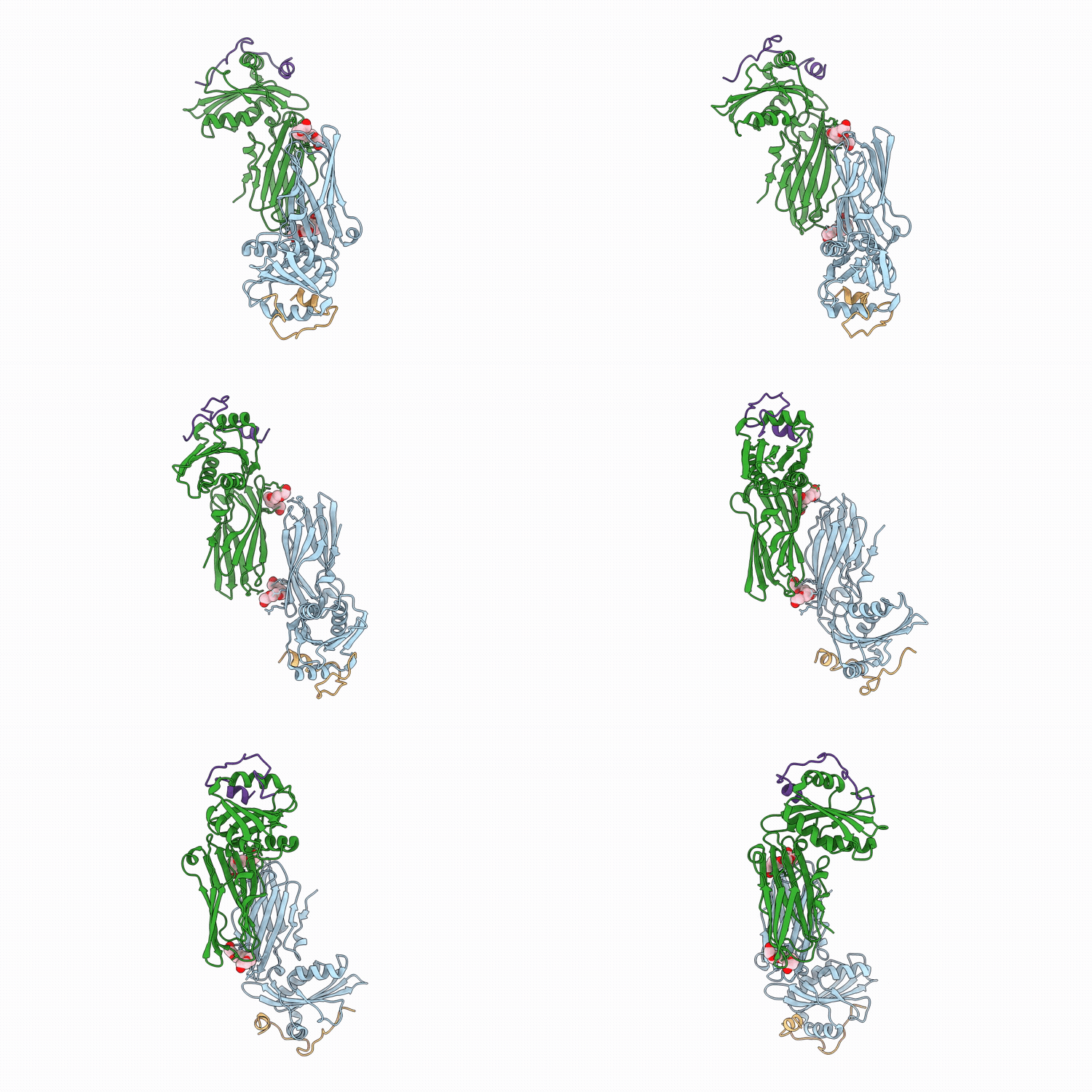
Structure of Alpha Appendage of AP2 bound to the extended FxDxF motif derived of CCDC32
Biological Source:
Source Organism(s):
Mus musculus (Taxon ID: 10090)
Expression System(s):
Method Details:
Experimental Method:
Resolution:
2.10 Å
R-Value Free:
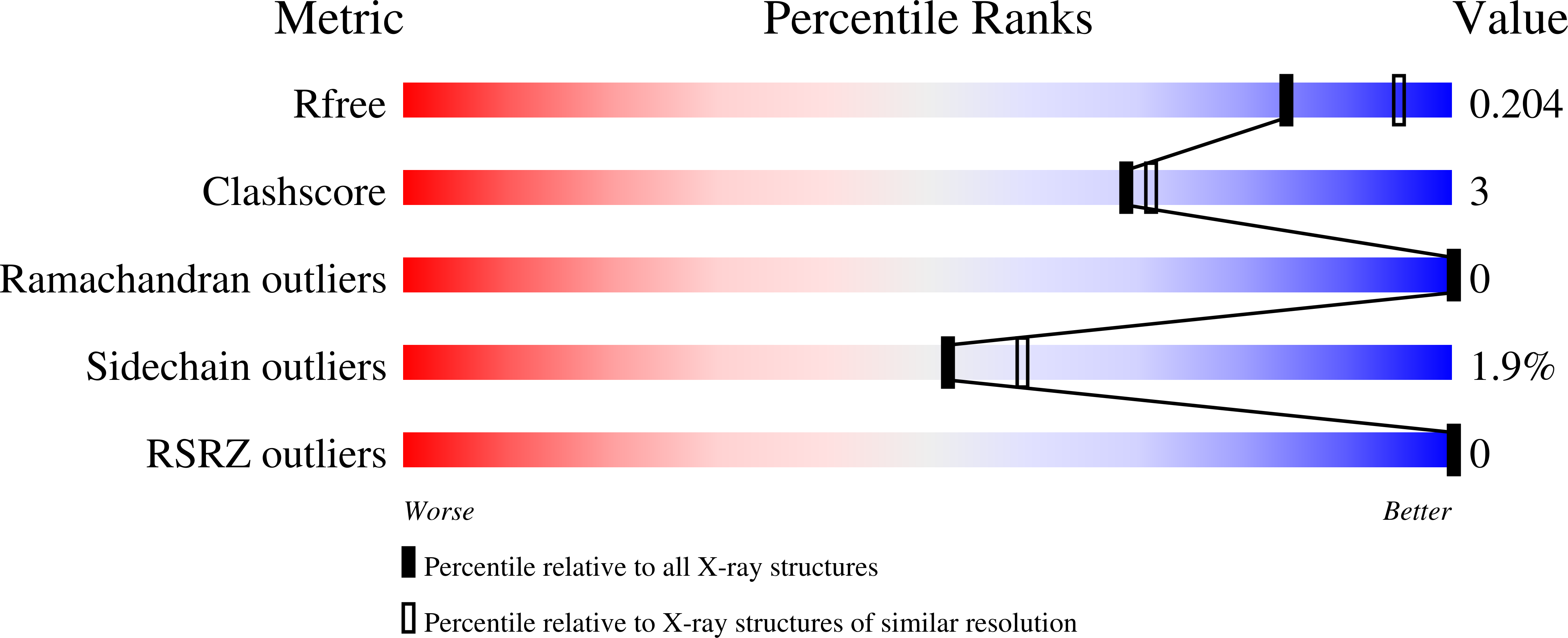
0.20
R-Value Work:
0.16
R-Value Observed:
0.17
Space Group:
H 3
Macromolecular Entities
Structures with similar UniProt ID
Protein Blast
Polymer Type:polypeptide(L)
Molecule:AP-2 complex subunit alpha-2
Gene (Uniprot):Ap2a2
Chain IDs:A, B
Chain Length:244
Number of Molecules:2
Biological Source:Mus musculus
Structures with similar UniProt ID
Protein Blast
Polymer Type:polypeptide(L)
Molecule:Coiled-coil domain-containing
Gene (Uniprot):Ccdc32
Chain IDs:C (auth: P), D (auth: Q)
Chain Length:28
Number of Molecules:2
Biological Source:Mus musculus
Ligand Molecules
Primary Citation
CCDC32 collaborates with the membrane to assemble the AP-2 clathrin adaptor complex.
Biorxiv ? ? ? (2025)
PMID: 40799577 DOI: 10.1101/2025.08.05.668722

Abstact

Cells have evolved a variety of assembly chaperones to aid in the difficult process of forming macromolecular complexes in a crowded cytoplasm. Assembly of adaptor protein complex 2 (AP-2), the primary cargo adaptor in clathrin-mediated endocytosis, is regulated by the chaperones AAGAB and CCDC32, whose deletion causes loss of all AP-2 subunits in vivo. AAGAB and CCDC32 are thought to act sequentially to assemble the AP-2 tetramer from its constituent heterodimers. However, the molecular requirements and structural consequences of CCDC32 interaction with AP-2 are not yet understood. Here, using in vitro reconstitution and integrative structural analysis, we describe the molecular mechanism of CCDC32-mediated AP-2 assembly. First, CCDC32 interacts with the appendage domain of the AP-2 alpha subunit, using the same binding site as canonical endocytic regulators in addition to a novel, yet highly conserved pocket on alpha. CCDC32 contains cargo sorting motifs normally found in trans-membrane cargo and binds to AP-2 heterodimers using canonical cargo-binding sites. Additionally, two amphipathic helices in CCDC32 bind to the alpha/sigma2 heterodimer. Surprisingly, in solution, we find that CCDC32 prevents complex assembly and actively disassembles AP-2 tetramers. Inhibition requires the amphipathic helices of CCDC32, which also mediate binding to PIP2-containing membranes. The presence of PIP2-containing membrane stabilizes the final stages of assembly. We propose that the membrane acts as a molecular switch to release inhibitory interactions, allowing for full complex assembly to proceed. Using cryo-EM, we visualize an assembly intermediate that mimics the conformation of AP-2 found in vesicles, with CCDC32 bound at both cargo binding sites and both membrane-binding sites, suggesting that assembly leads to deposition of active complexes on the plasma membrane.

Legend

Protein

Chemical

Disease

Primary Citation of related structures
Feedback Form
Name
Email
Institute
Feedback