

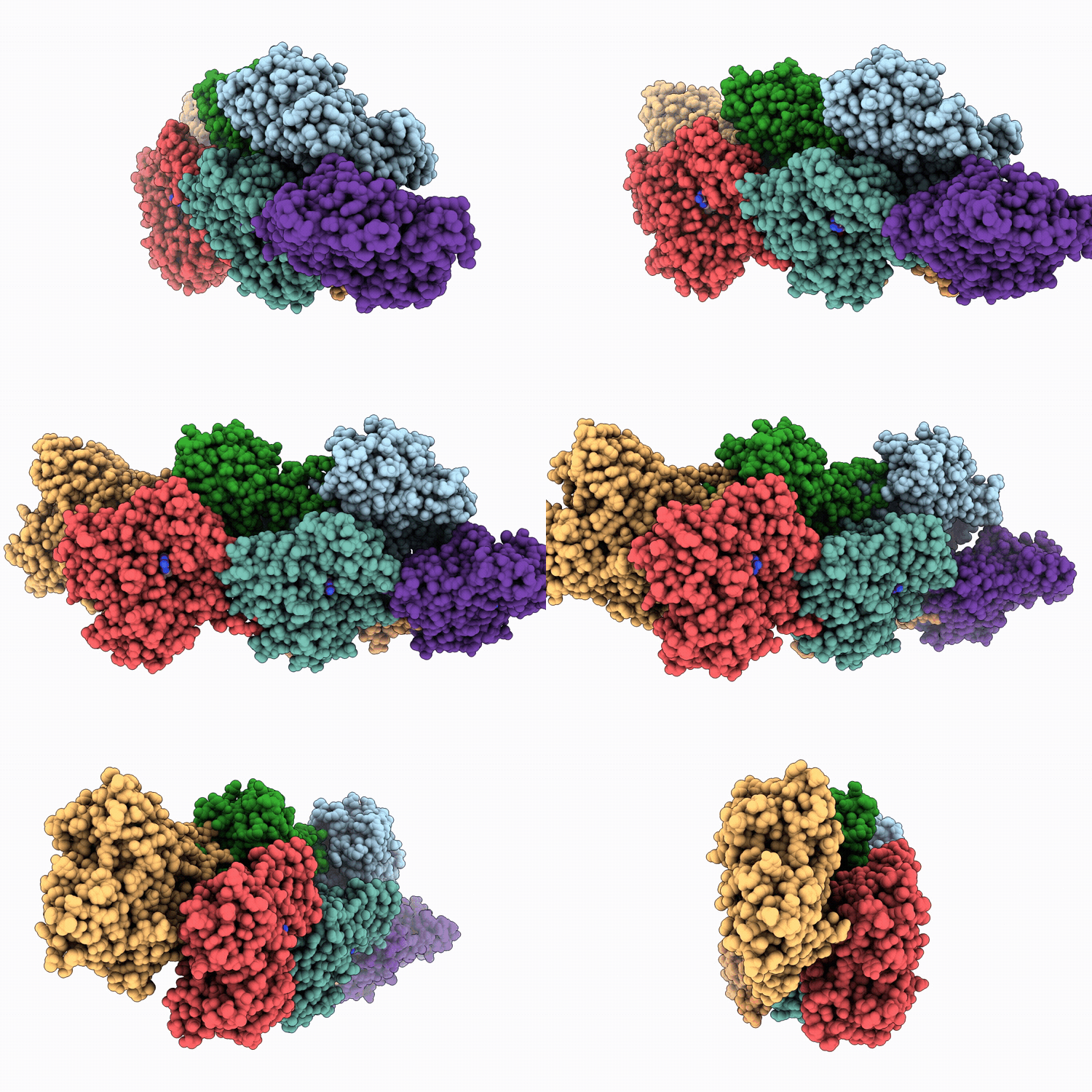
9ZZK image
Deposition Date 2026-01-07
Release Date 2026-06-24
Last Version Date 2026-08-05
Entry Detail
PDB ID:
9ZZK
Title:
One Lmod2 and incoming actin at the pointed end of F-actin
Biological Source:
Source Organism(s):
Method Details:
Experimental Method:
Resolution:
4.00 Å
Aggregation State:
FILAMENT
Reconstruction Method:
SINGLE PARTICLE
Macromolecular Entities
Polymer Type:polypeptide(L)
Molecule:Actin, alpha skeletal muscle
Chain IDs:A, B, C, D, E, G (auth: O)
Chain Length:375
Number of Molecules:6
Biological Source:Oryctolagus cuniculus
Polymer Type:polypeptide(L)
Molecule:Leiomodin-2
Chain IDs:F (auth: M)
Chain Length:556
Number of Molecules:1
Biological Source:Homo sapiens
Modified Residue
Compound ID Chain ID Parent Comp ID Details 2D Image
HIC A HIS modified residue
Primary Citation
Leiomodin 2 is a processive pointed-end elongator of actin filaments.
Nat Commun 17 ? ? (2026)
PMID: 42477321 DOI: 10.1038/s41467-026-74809-z

Abstact

The actin cytoskeleton drives essential processes like cell migration and muscle contraction. While barbed-end polymerization is well-established, pointed-end elongation was long considered impossible in vivo. Here, we demonstrate that Leiomodin 2 (Lmod2), which localizes to thin-filament pointed ends in striated muscle cells, functions as an actin polymerase for pointed-end elongation. Single-molecule and single-filament imaging reveal that Lmod2 remains processively bound to pointed ends in vitro, enabling elongation even in the presence of high profilin concentrations found in the cytoplasm that otherwise would cause depolymerization of free pointed ends. Kinetic analysis indicates that Lmod2-mediated elongation proceeds through a linked two-step mechanism, in which monomer addition is followed by a first-order transition at the Lmod2-bound pointed end that limits elongation at high actin concentrations. Lmod2's activity also persists in the presence of tropomyosin, underscoring its physiological relevance. Both processivity and elongation rate of Lmod2 are dependent on its WH2 domain. Remarkably, human dilated cardiomyopathy-associated mutations in Lmod2 greatly reduce Lmod2's pointed-end elongation activity, providing a potential mechanism for disease progression and supporting a role for Lmod2-mediated polymerization in the formation and maintenance of muscle sarcomeres.

Legend

Protein

Chemical

Disease

Primary Citation of related structures
Feedback Form
Name
Email
Institute
Feedback