

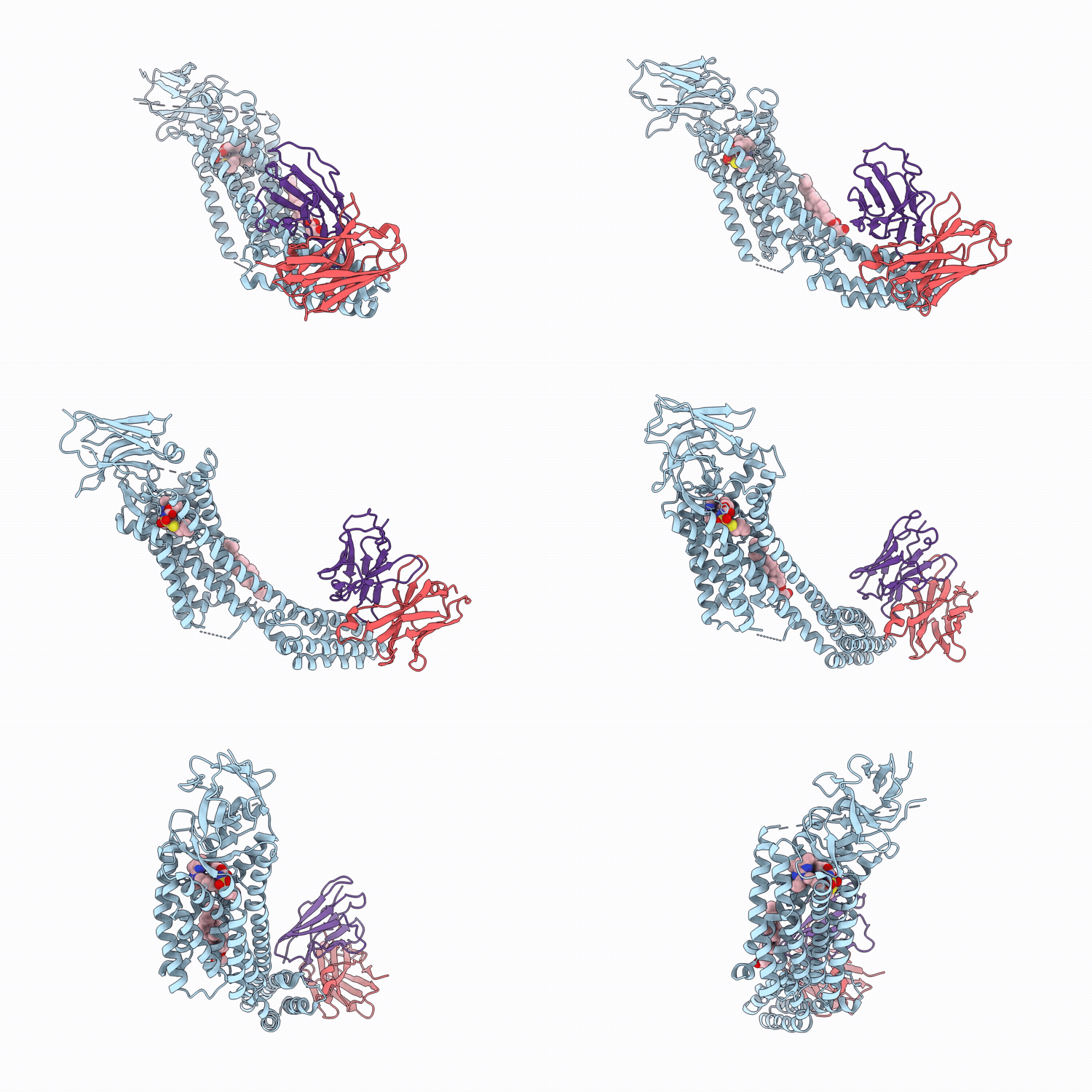
9ZXD image
Deposition Date 2026-01-03
Release Date 2026-07-29
Last Version Date 2026-08-12
Entry Detail
PDB ID:
9ZXD
Title:
Structure of AT118-R nanobody in complex with the angiotensin II type I receptor bound to L-162,313
Biological Source:
Source Organism(s):
Expression System(s):
Method Details:
Experimental Method:
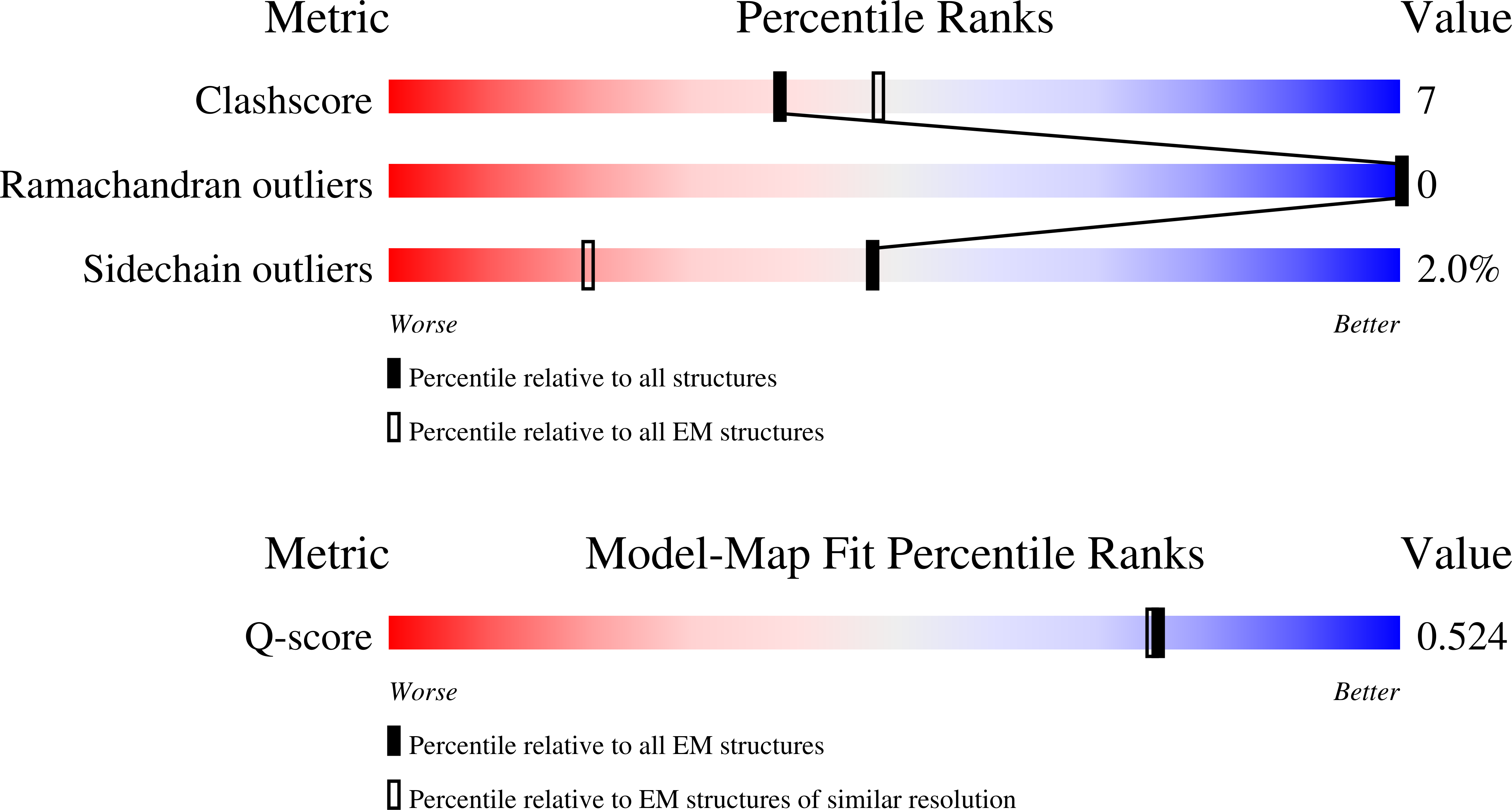
Resolution:
3.00 Å
Aggregation State:
PARTICLE
Reconstruction Method:
SINGLE PARTICLE
Macromolecular Entities
Polymer Type:polypeptide(L)
Molecule:AT118-R nanobody,Type-1 angio
Gene (Uniprot):cybC, AGTR1
Chain IDs:A
Chain Length:0
Number of Molecules:1
Biological Source:synthetic construct, Homo sapiens, Escherichia coli
Polymer Type:polypeptide(L)
Molecule:BAG2 Anti-BRIL Fab Heavy Chai
Chain IDs:B (auth: C)
Chain Length:0
Number of Molecules:1
Biological Source:synthetic construct
Polymer Type:polypeptide(L)
Molecule:BAG2 Anti-BRIL Fab Light Chai
Chain IDs:C (auth: D)
Chain Length:0
Number of Molecules:1
Biological Source:synthetic construct
Primary Citation
Activation of the angiotensin II type I receptor by a nonpeptide agonist.
Proc.Natl.Acad.Sci.USA 123 e2602538123 e2602538123 (2026)
PMID: 42550893 DOI: 10.1073/pnas.2602538123

Abstact

The angiotensin II type I receptor (AT1R) is a G protein-coupled receptor that regulates the cardiovascular system and as a result is one of the most successful pharmacological targets for the treatment of hypertension. Within the angiotensin receptor pharmacological landscape, agonists are peptide ligands, whereas potent antagonists are predominantly small molecules. Three decades ago, a small number of nonpeptide AT1R agonists were identified. These molecules largely share a chemical scaffold with AT1R antagonists, but appeared to interact with the receptor in a manner that diverges from both antagonists and peptide agonists. Here, we revisit L-162,313, the prototype nonpeptide AT1R agonist and determine how the antagonist-like chemical scaffold acts as an agonist. L-162,313 binds similarly to AT1R antagonists, but unlike antagonists, it engages the same activation switches as peptide agonists. We map the spatial relationship required for activation of AT1R by nonpeptide agonists and used this information to design a small library of L-162,313 derivatives. These rationally designed derivatives had the expected reduced or enhanced potency based on the structural basis for activation. Our data resolve a long-standing pharmacological mystery and provide a foundation for generating more efficacious small molecule AT1R agonists.

Legend

Protein

Chemical

Disease

Primary Citation of related structures
Feedback Form
Name
Email
Institute
Feedback