Abstact
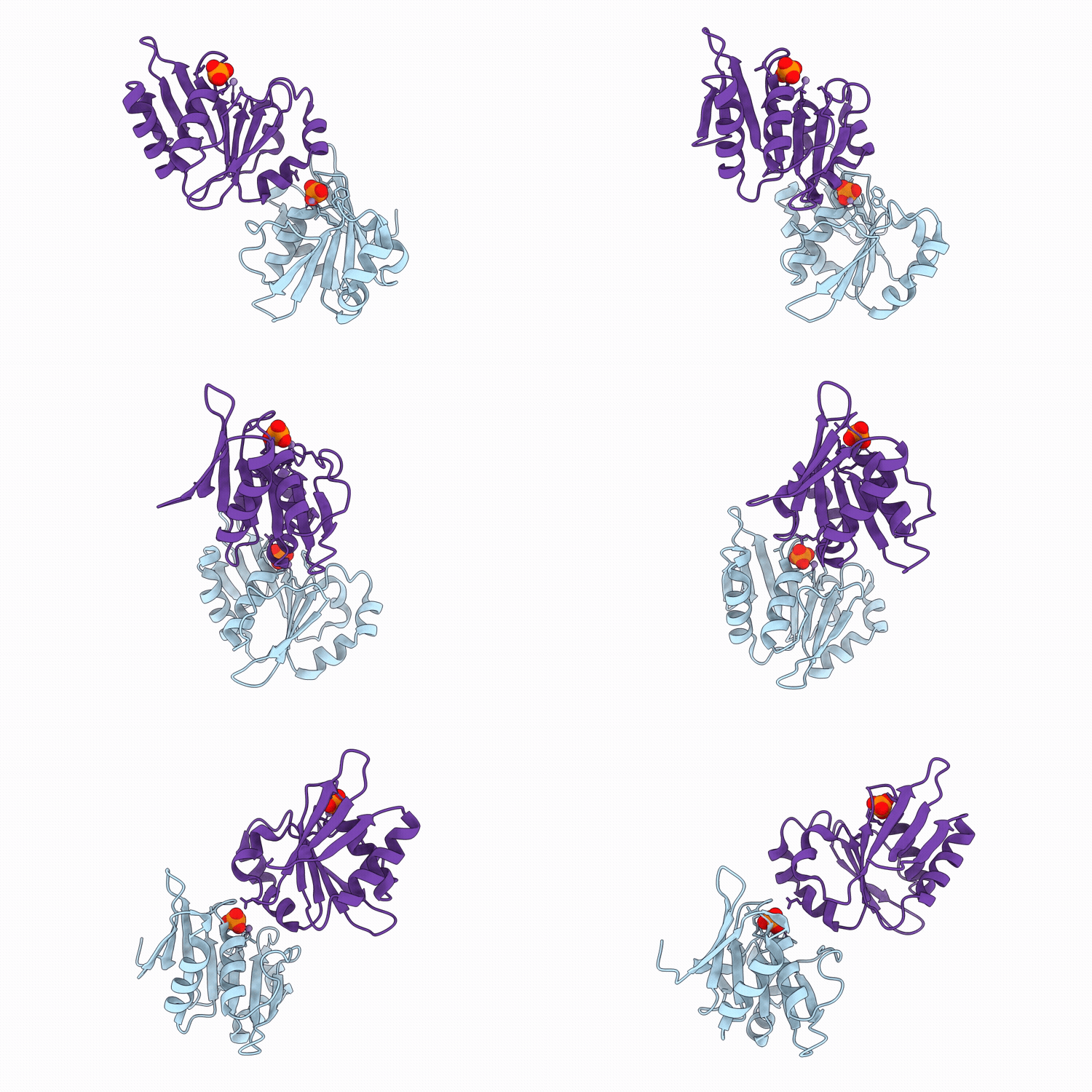
Protein phosphorylation enables bacteria to coordinate regulatory networks that govern virulence and environmental adaptation. The ubiquitous bacterial kinase (UbK) family comprises atypical kinases with dual serine/threonine and tyrosine specificity, yet their structural organization, catalytic mechanisms, and physiological roles remain incompletely defined. In the anaerobic oral pathogen Porphyromonas gingivalis, the sole UbK homolog, UbK1, was previously shown to phosphorylate the orphan response regulator RprY, linking UbK1 to virulence-associated pathways. Here, we present the crystal structure of UbK1, revealing the conserved Walker A, HxDxYR, SPT/S, and EW motifs surrounding the ATP-binding site. Structure-guided mutagenesis establishes essential roles for these motifs in ATP hydrolysis and kinase activity. Phosphosite mapping identifies multiple autophosphorylation sites, with the flexible SPT/S loop showing the highest occupancy, supporting a model in which loop-centered autophosphorylation is a major feature of UbK1 cycling, while additional sites arise through intermolecular phosphotransfer in trans. Consistent with this model, biochemical assays demonstrate that UbK1 undergoes autophosphorylation both in cis and in trans, arguing against a strictly intramolecular mechanism. Using conserved gene neighborhood analysis, we further identified the orphan response regulator PorX as a previously unrecognized UbK1 substrate. UbK1 phosphorylates PorX at a tyrosine residue within the receiver domain, independently of PorX oligomeric state, and mutation of this phosphosite does not affect Type-IX Secretion System-mediated virulence factor export. Together, these findings establish a structural and mechanistic framework for UbK1 function, expand the known UbK substrates repertoire, and support a model in which UbK1 contributes to regulatory pathways in P. gingivalis beyond canonical secretion-associated outputs.