

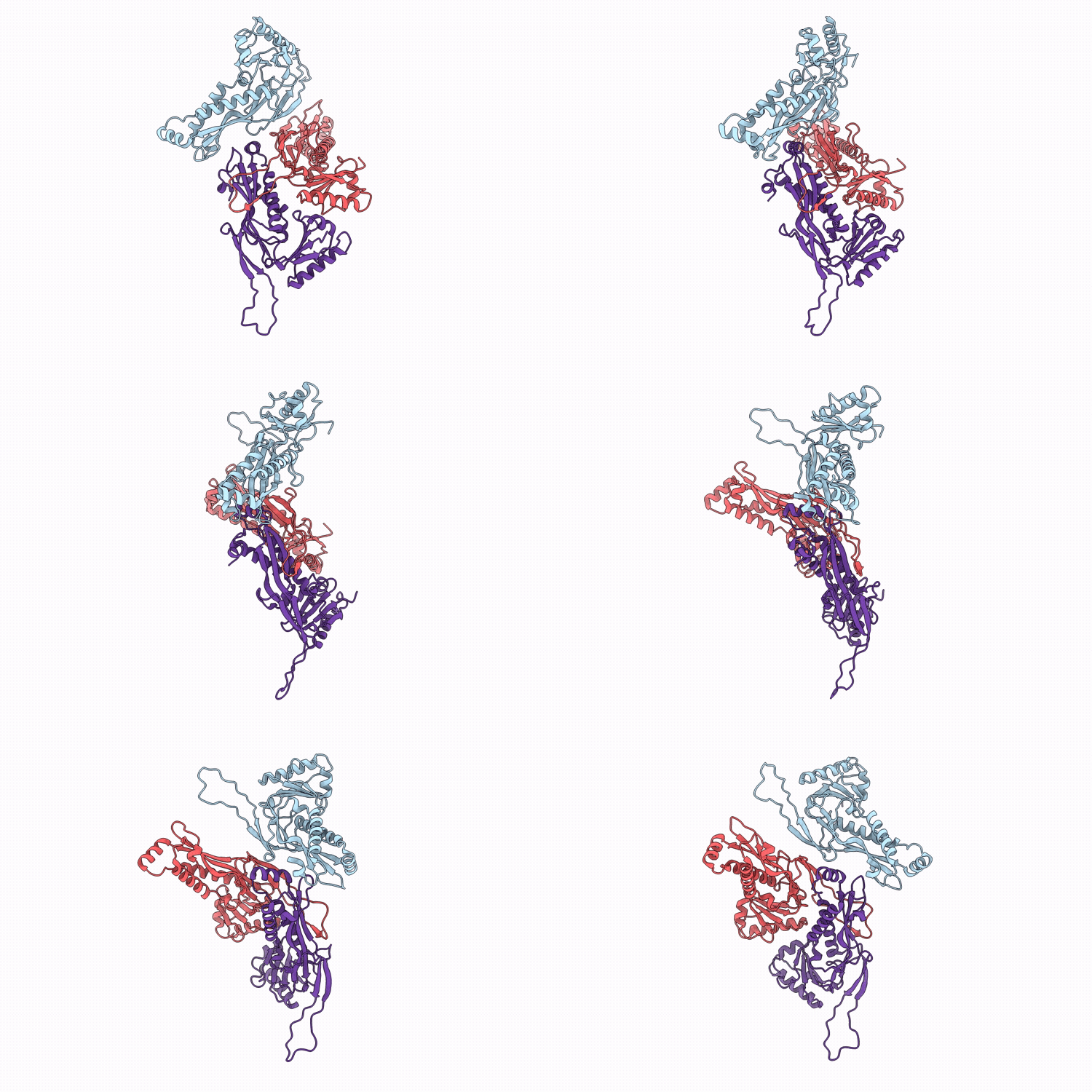
9ZW4 image
Deposition Date 2025-12-31
Release Date 2026-07-01
Last Version Date 2026-07-01
Entry Detail
PDB ID:
9ZW4
Title:
Quasibacillus thermotolerans T=3 encapsulin pore mutant variant Letter11
Biological Source:
Source Organism(s):
Expression System(s):
Method Details:
Experimental Method:
Resolution:
2.42 Å
Aggregation State:
PARTICLE
Reconstruction Method:
SINGLE PARTICLE
Macromolecular Entities
Structures with similar UniProt ID
Protein Blast
Polymer Type:polypeptide(L)
Molecule:Type 1 encapsulin shell prote
Gene (Uniprot):enc
Chain IDs:A, B, C
Chain Length:271
Number of Molecules:3
Biological Source:Bacillus thermotolerans
Ligand Molecules
Primary Citation
Directed evolution of multimeric proteins is enabled by dual-compensatory gene duplication.
Biorxiv ? ? ? (2026)
PMID: 41648261 DOI: 10.64898/2026.01.12.698938

Abstact

Gene duplication has played a critical role in the evolutionary history of proteins, enabling complex multimers to emerge from simpler precursors. Yet in protein engineering, current methods for directed evolution do not exploit gene duplication, hampering access to the vast array of diverse variants that are only enriched in the presence of a wild-type copy. We establish a directed evolution strategy for multimeric proteins that harnesses gene duplication to compensate for metabolic burden and self-assembly fitness, allowing previously inaccessible variants to be enriched. Starting from a homomeric 240-mer capsid, gene duplication enables selection of both extreme homomeric variants and obligate heteromers. This strategy significantly expands engineering access to diverse high-performing variants, while also supporting a plausible model for evolutionary diversification of higher-order multimers in nature.

Legend

Protein

Chemical

Disease

Primary Citation of related structures
Feedback Form
Name
Email
Institute
Feedback