

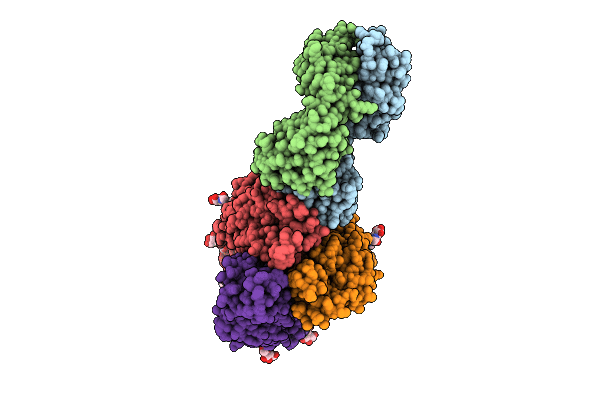
9ZT7 image
Deposition Date 2025-12-23
Release Date 2026-03-11
Last Version Date 2026-03-11
Entry Detail
PDB ID:
9ZT7
Title:
SARS-CoV-2 S2 in complex with COV2-2509
Biological Source:
Source Organism(s):
Homo sapiens (Taxon ID: 9606)
Expression System(s):
Method Details:
Experimental Method:
Resolution:
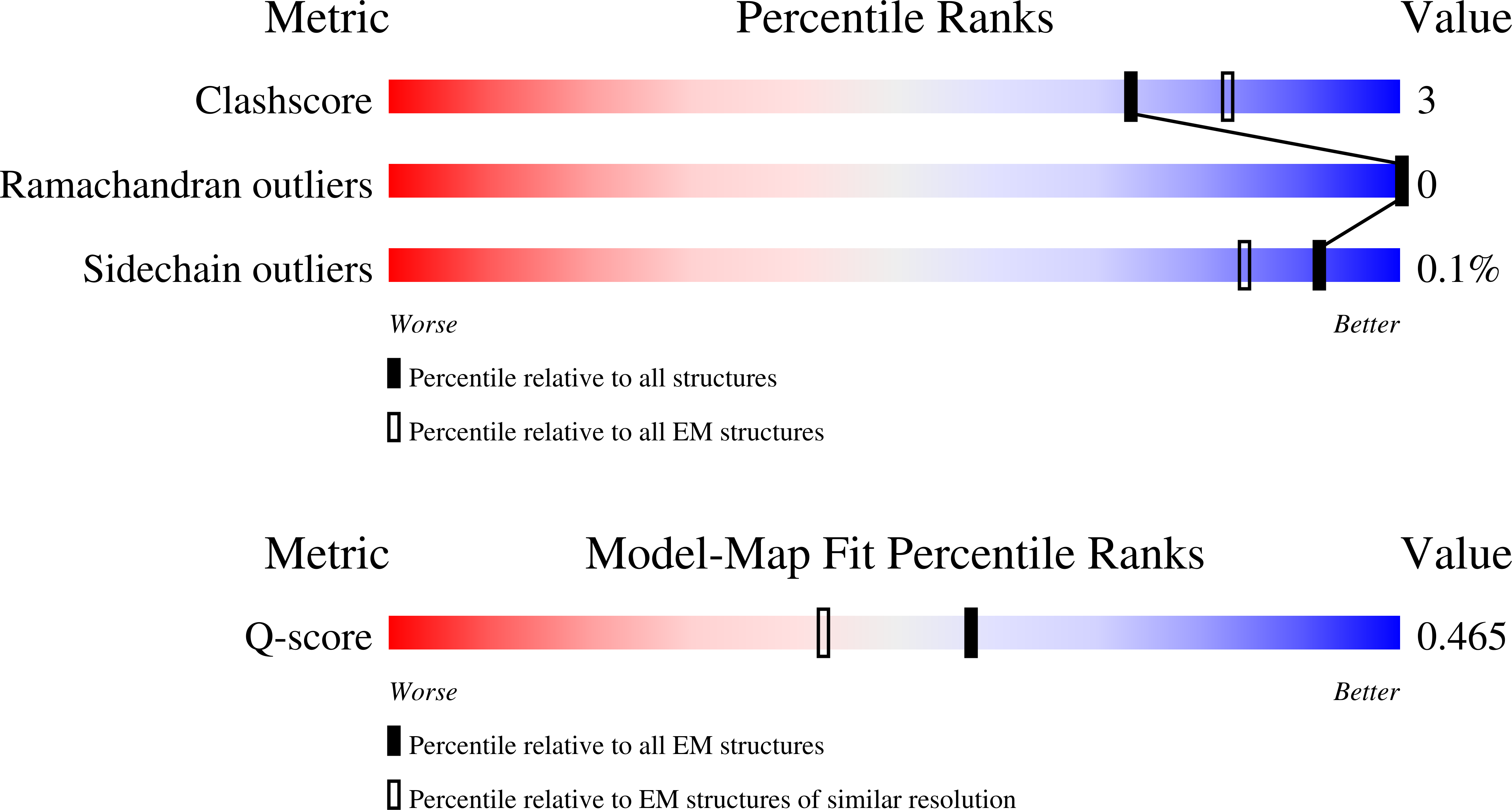
3.11 Å
Aggregation State:
PARTICLE
Reconstruction Method:
SINGLE PARTICLE
Macromolecular Entities
Protein Blast
Polymer Type:polypeptide(L)
Molecule:COV2-2509 Fab-Heavy chain
Chain IDs:A
Chain Length:224
Number of Molecules:1
Biological Source:Homo sapiens
Protein Blast
Polymer Type:polypeptide(L)
Molecule:COV2-2509 Fab-Light chain
Chain IDs:B
Chain Length:214
Number of Molecules:1
Biological Source:Homo sapiens
Structures with similar UniProt ID
Protein Blast
Polymer Type:polypeptide(L)
Molecule:Spike protein S2
Gene (Uniprot):S
Mutagens:S704C, K790C, G880C, F888C, A892P, A899P, A942P, K986P, V987P, T961F, V991W, T998W
Chain IDs:C, D, E
Chain Length:474
Number of Molecules:3
Biological Source:Homo sapiens
Ligand Molecules
Primary Citation
The buried S2 apex of SARS-CoV-2 spike elicits an immunodominant germline-restricted public antibody response.
Biorxiv ? ? ? (2026)
PMID: 41756886 DOI: 10.64898/2026.02.18.706653

Abstact

The continued mutational pressure on the SARS-CoV-2 S1 subunit underscores the need to target the conserved S2 region for pan-coronavirus vaccine development. A detailed molecular understanding of S2-directed immune responses is therefore essential. In this study, we identified the S2 apex as the most immunodominant epitope within the S2 subunit, eliciting robust antibody responses despite occlusion by S1, using electron-microscopy-based polyclonal epitope mapping (EMPEM) of plasma from infected and vaccinated individuals. Structure-guided sequence analysis with antibody databases revealed that antibodies targeting a poorly characterized S2 Apex-B site form a convergent public clonotype, which is predominantly derived from the IGHV3-30 germline with a 14-residue CDRH3 containing a G/S-G-S/N-Y motif. This clonotype is extensively expanded, accounting for up to 40% of total spike-reactive antibody sequence counts in individual vaccinated donors. This study elucidates the molecular basis the high-frequency elicitation of this non-neutralizing clonotype emphasizing that its immunodominance acts as a primary hurdle for universal coronavirus vaccines and underscore the need for precision antigen design to redirect immunity toward more potent neutralizing targets.

Legend

Protein

Chemical

Disease

Primary Citation of related structures
Feedback Form
Name
Email
Institute
Feedback