

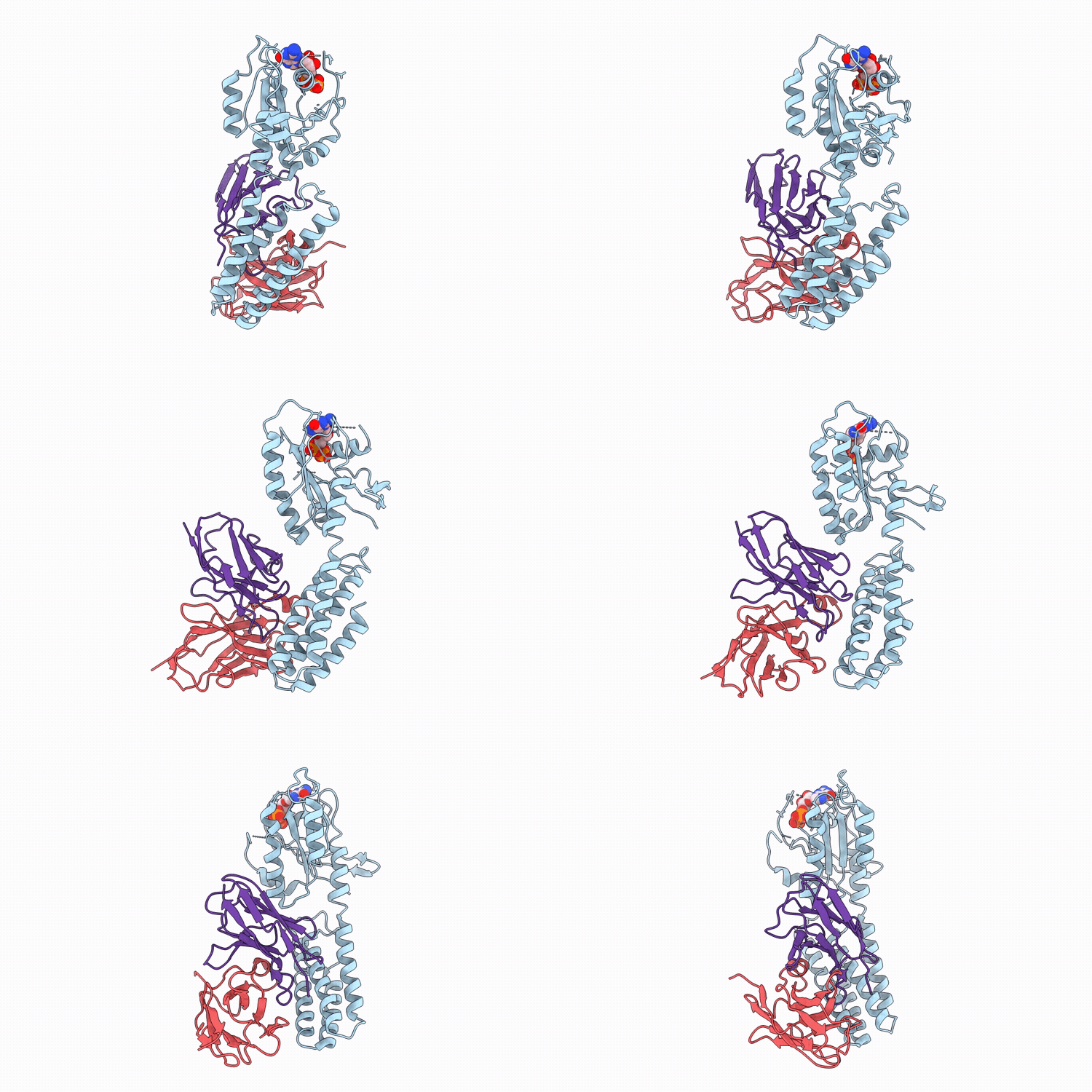
9ZR7 image
Deposition Date 2025-12-19
Release Date 2026-06-10
Last Version Date 2026-06-10
Entry Detail
PDB ID:
9ZR7
Title:
Cryo-EM structure of NRAS(Q61K)-BRIL fusion in complex with Fab(BAG2) and Monobody(Mb24)
Biological Source:
Source Organism(s):
Homo sapiens (Taxon ID: 9606)
Expression System(s):
Method Details:
Experimental Method:
Resolution:
3.28 Å
Aggregation State:
PARTICLE
Reconstruction Method:
SINGLE PARTICLE
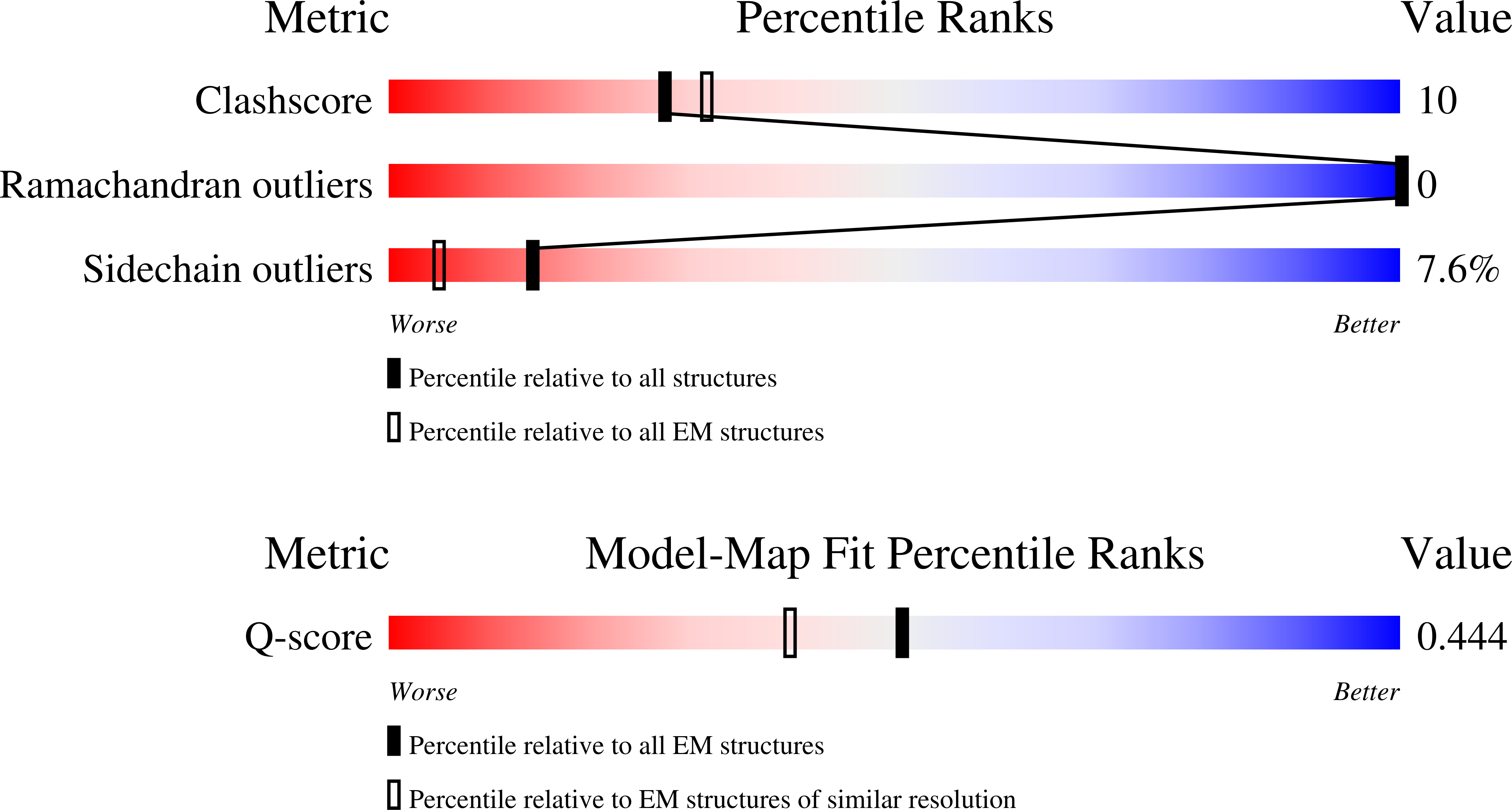
Macromolecular Entities
Structural Superimposition Protein Blast
Polymer Type:polypeptide(L)
Molecule:GTPase NRas,Soluble cytochrom
Gene (Uniprot):cybC, NRAS
Chain IDs:A
Chain Length:304
Number of Molecules:1
Biological Source:Homo sapiens
Structural Superimposition Protein Blast
Polymer Type:polypeptide(L)
Molecule:anti-BRIL Fab, BAG2, heavy ch
Chain IDs:B (auth: H)
Chain Length:228
Number of Molecules:1
Biological Source:Homo sapiens
Structural Superimposition Protein Blast
Polymer Type:polypeptide(L)
Molecule:anti-BRIL Fab, BAG2, light ch
Chain IDs:C (auth: L)
Chain Length:213
Number of Molecules:1
Biological Source:Homo sapiens
Ligand Molecules
Primary Citation
Protein Engineering-Enabled Cryo-EM Investigation of Small GTPases.
J.Mol.Biol. 438 169860 169860 (2026)
PMID: 42134495 DOI: 10.1016/j.jmb.2026.169860

Abstact

Small GTPases play important roles in cellular signaling. Due to their small sizes ( approximately 21 kDa), structural studies of small GTPases have been predominantly performed using x-ray crystallography in which crystal lattice contacts made it challenging to define unperturbed conformations of the key switch regions. Here, we developed a protein-engineering strategy that enables cryo-EM analysis of small soluble proteins and applied to RAS. We fused the C-terminal alpha5 helix of the RAS globular domain to a small protein BRIL by forming a continuous helix, which leaves most RAS surfaces exposed to the solvent and unperturbed, followed by the complex formation with an anti-BRIL Fab. This engineered complex with an increased molecular weight, termed "RAS-lollipop", enabled single-particle cryo-EM of RAS. Using this approach, we determined the cryo-EM structure of NRAS, whose structural studies using crystallography have been the least successful among the RAS isoforms. We revealed the conformations of the switch region and alpha 5 helix that differ from those observed in published crystal structures, and also defined the binding site of an NRAS-specific monobody. We uncovered an unexpected surfactant-like property of this monobody, which reduces orientation biases of particles on cryo-EM grids. Together, this work establishes a platform for visualizing small GTPases and potentially other small proteins with minimal perturbation of their surfaces.

Legend

Protein

Chemical

Disease

Primary Citation of related structures
Feedback Form
Name
Email
Institute
Feedback