

9ZLI image
Deposition Date 2025-12-08
Release Date 2026-06-10
Last Version Date 2026-06-10
Entry Detail
PDB ID:
9ZLI
Keywords:
Title:
Crystal structure of DCAF1 in complex with SDIPTAC C11
Biological Source:
Source Organism(s):
Homo sapiens (Taxon ID: 9606)
Expression System(s):
Method Details:
Experimental Method:
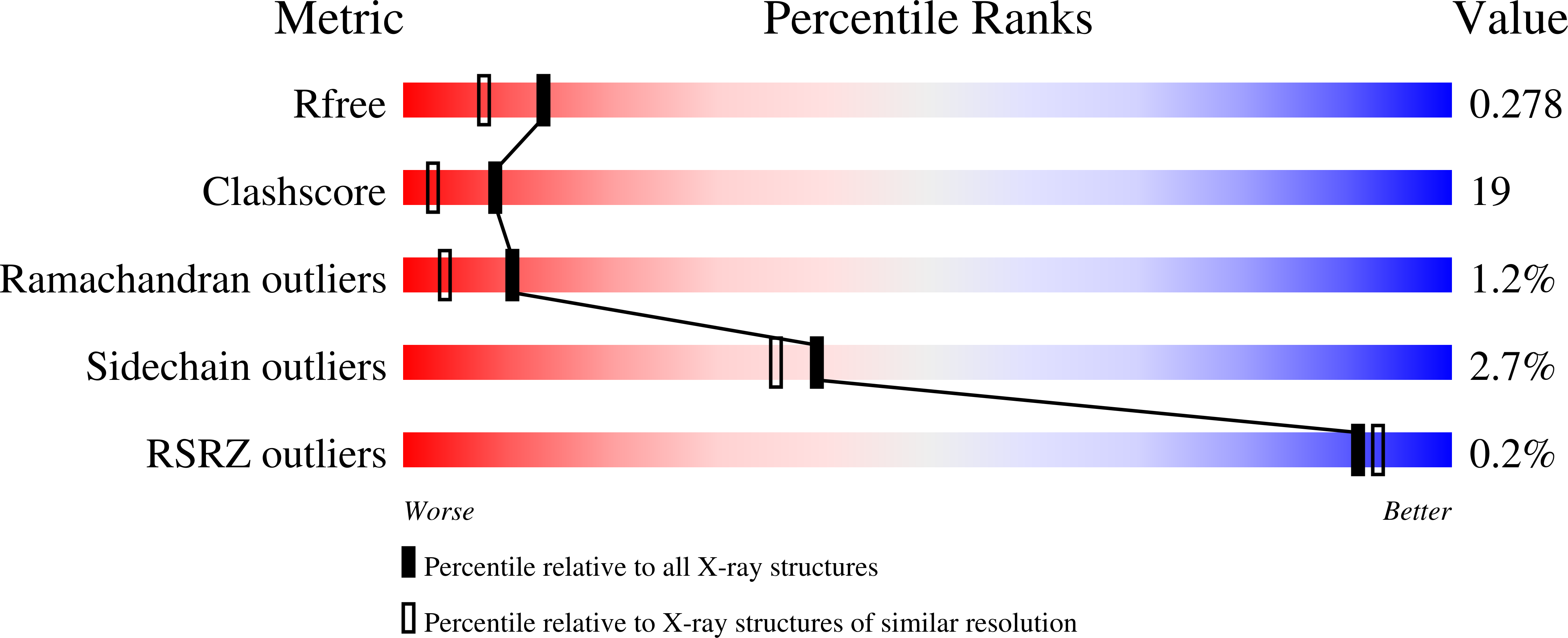
Resolution:
2.07 Å
R-Value Free:
0.27
R-Value Work:
0.24
R-Value Observed:
0.24
Space Group:
C 1 2 1
Macromolecular Entities
Structures with similar UniProt ID
Protein Blast
Polymer Type:polypeptide(L)
Molecule:DDB1- and CUL4-associated fac
Gene (Uniprot):DCAF1
Mutagens:F1077A, R1079A
Chain IDs:A, B, C, D, E, F
Chain Length:314
Number of Molecules:6
Biological Source:Homo sapiens
Ligand Molecules
Primary Citation
Self-Dimerization Induced Proximity Targeting Chimeras (SDIPTAC) Lead to DCAF1 Loss of Function and Inhibition of HIV Replication.
J.Med.Chem. 69 12240 12259 (2026)
PMID: 42150007 DOI: 10.1021/acs.jmedchem.6c00126

Abstact

DCAF1 is a donut shaped WD40 repeat protein and a substrate receptor of two distinct E3 ligases. In HIV-1 infection, the viral protein Vpr binds to the top surface of DCAF1, changes its substrate specificity to degrade human proteins involved in antiviral activities, enabling HIV-1 to replicate. We hypothesized that artificial top-to-top self-dimerization of DCAF1 could result in DCAF1 loss-of-function and blocking of the Vpr-DCAF1 interaction. We designed and synthesized seven compounds we call SDIPTACs (Self-dimerization Induced Proximity Targeting Chimeras) which artificially induce DCAF1 self-dimerization through the Vpr interaction surface. Interestingly, SDIPTACs C8 and C9, inhibited Vpr-dependent HIV replication in CD4(+) T cells. Biophysical data and crystal structures of four DCAF1-SDIPTAC-DCAF1 ternary complexes revealed more details on DCAF1-DCAF1 complex stability, conformation, and their contribution to compound efficacy. Using SDIPTACs with unique mechanism may therefore be an efficient strategy in the development of future therapeutics for HIV infection and other diseases.

Legend

Protein

Chemical

Disease

Primary Citation of related structures
Feedback Form
Name
Email
Institute
Feedback