

9ZKP image
Deposition Date 2025-12-07
Release Date 2026-04-29
Last Version Date 2026-06-24
Entry Detail
PDB ID:
9ZKP
Title:
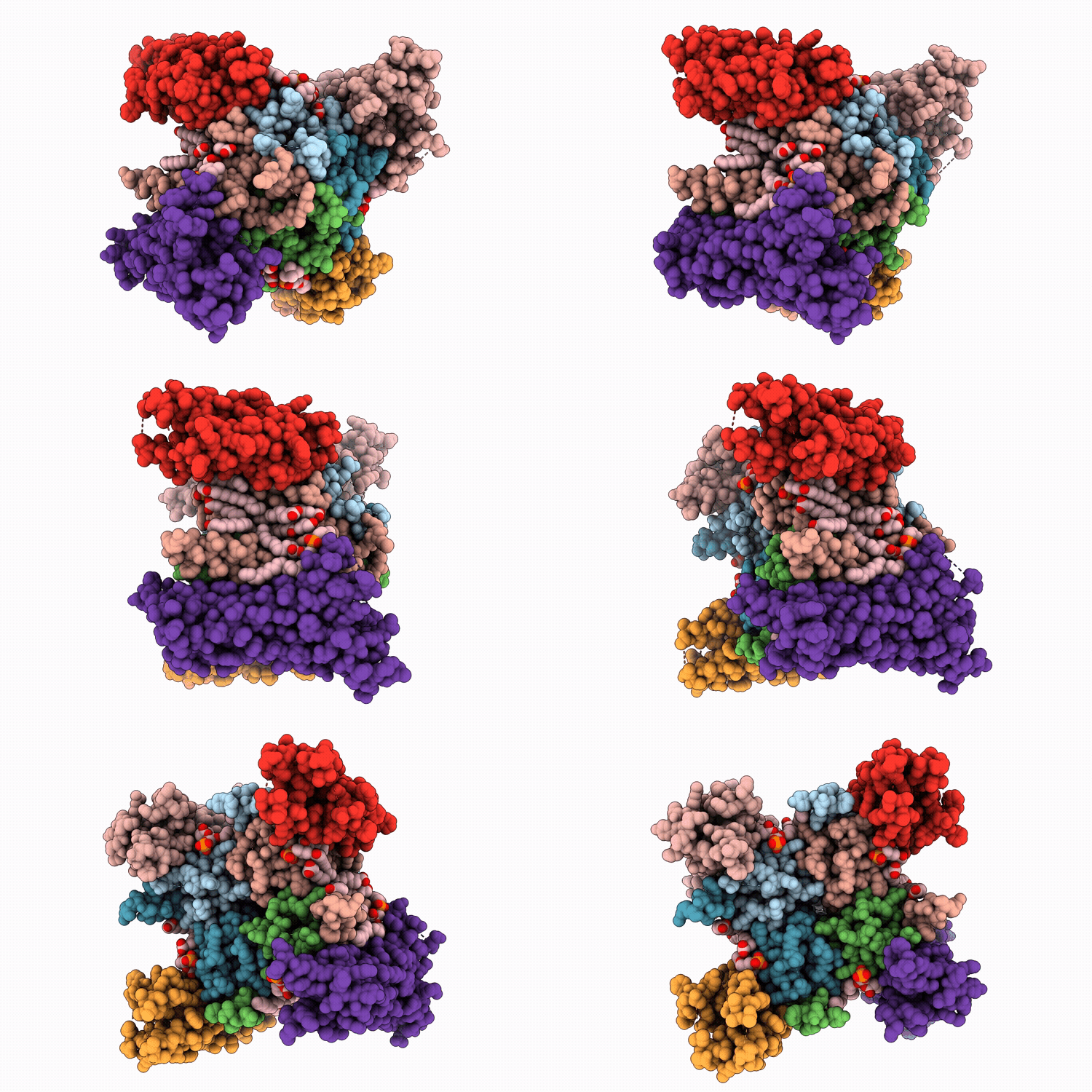
The TMD structure of native mouse AMPAR with 2 TARPs 2 CNIHs
Biological Source:
Source Organism(s):
Mus musculus (Taxon ID: 10090)
Method Details:
Experimental Method:
Resolution:
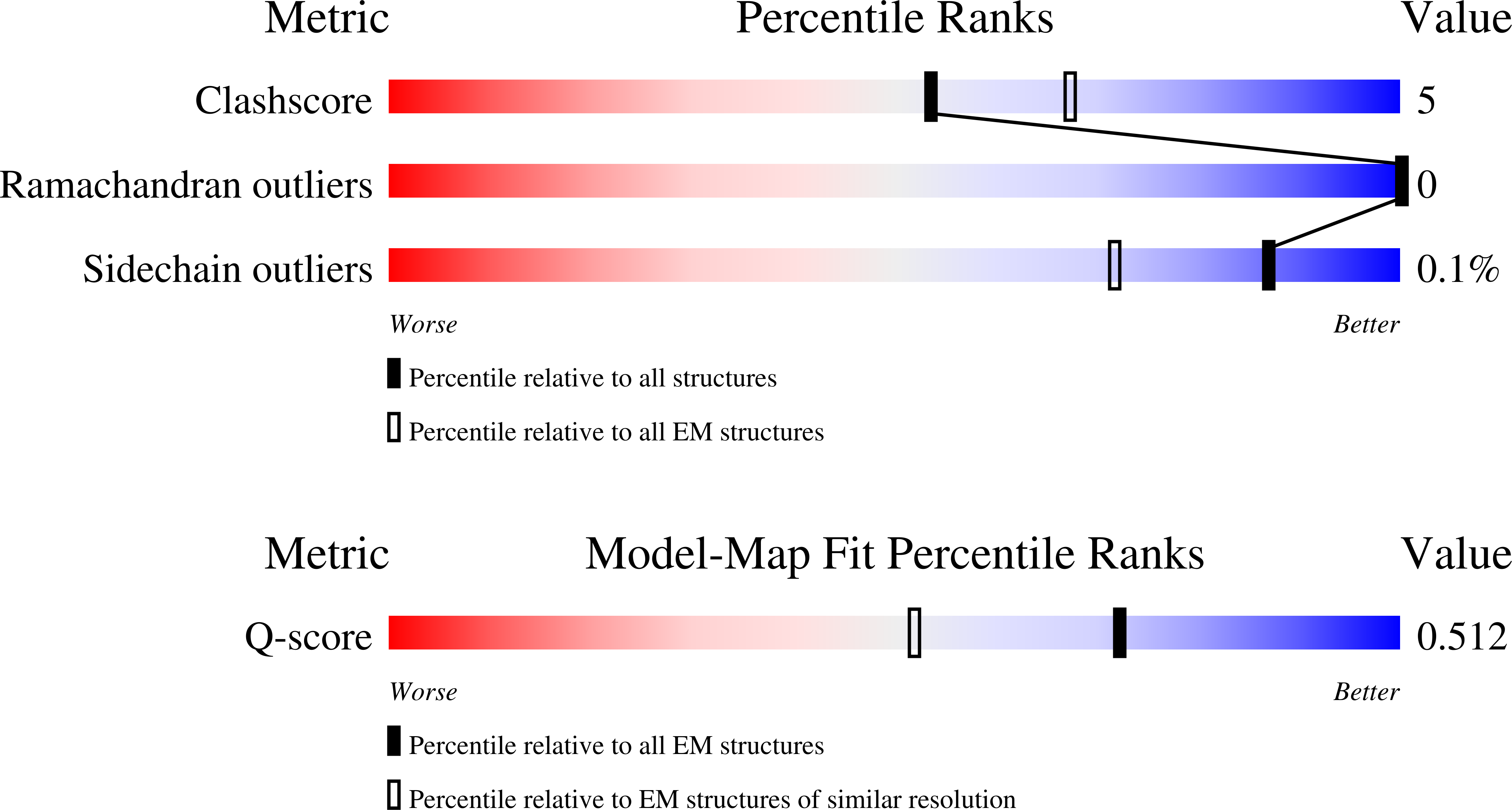
2.87 Å
Aggregation State:
PARTICLE
Reconstruction Method:
SINGLE PARTICLE
Macromolecular Entities
Polymer Type:polypeptide(L)
Molecule:Glutamate receptor 1
Gene (Uniprot):Gria1
Chain IDs:A, C
Chain Length:500
Number of Molecules:2
Biological Source:Mus musculus
Polymer Type:polypeptide(L)
Molecule:Glutamate receptor 2
Gene (Uniprot):Gria2
Chain IDs:B, D
Chain Length:467
Number of Molecules:2
Biological Source:Mus musculus
Polymer Type:polypeptide(L)
Molecule:Protein cornichon homolog 2
Gene (Uniprot):Cnih2
Chain IDs:E, F
Chain Length:160
Number of Molecules:2
Biological Source:Mus musculus
Polymer Type:polypeptide(L)
Molecule:Voltage-dependent calcium cha
Gene (Uniprot):Cacng8
Chain IDs:G, H
Chain Length:423
Number of Molecules:2
Biological Source:Mus musculus
Primary Citation
Native AMPA receptor architecture reveals SynDIG4 engagement and auxiliary subunit heterogeneity.
Sci Adv 12 eaee7973 eaee7973 (2026)
PMID: 42284406 DOI: 10.1126/sciadv.aee7973

Abstact

AMPA-type glutamate receptors (AMPARs) are complex assemblies whose compositional heterogeneity underlies diverse excitatory signaling in the mammalian brain. Here, we determine high-resolution cryo-electron microscopy (cryo-EM) structures of native AMPAR complexes rapidly purified from mouse brain. These structures capture receptors in physiologically relevant assemblies containing distinct combinations of transmembrane AMPA receptor regulatory protein (TARP) and cornichon homolog (CNIH) auxiliary subunits and reveal unambiguous density for the brain-specific protein SynDIG4. The resolved topology and interaction network of SynDIG4 show that it engages the receptor through a CNIH-dependent interface and occupies a position adjacent to structural elements of GluA1 implicated in trafficking and synaptic plasticity. The diversity of auxiliary stoichiometries observed across native complexes highlights a flexible organizational scheme through which AMPARs incorporate distinct regulatory partners. These findings illuminate the organization of native AMPAR assemblies and define the structural context for SynDIG4 function in the mammalian brain.

Legend

Protein

Chemical

Disease

Primary Citation of related structures
Feedback Form
Name
Email
Institute
Feedback