

9ZGF image
Deposition Date 2025-12-02
Release Date 2026-06-10
Last Version Date 2026-06-24
Entry Detail
PDB ID:
9ZGF
Keywords:
Title:
The complex of HSV-1 proteins UL9 and ICP8 with forked DNA
Biological Source:
Source Organism(s):
Expression System(s):
Method Details:
Experimental Method:
Resolution:
3.10 Å
Aggregation State:
PARTICLE
Reconstruction Method:
SINGLE PARTICLE
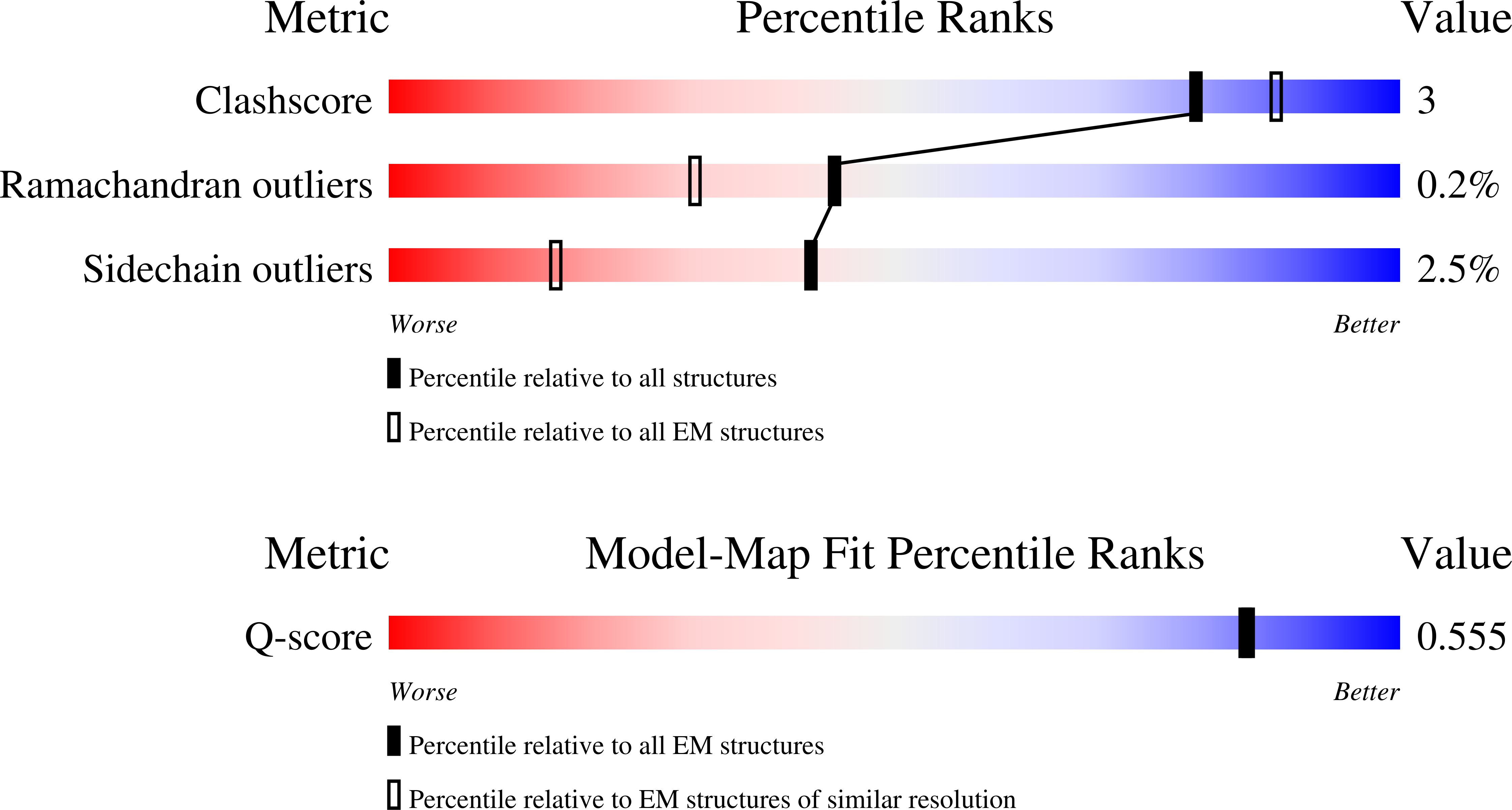
Macromolecular Entities
Structures with similar UniProt ID
Protein Blast
Polymer Type:polypeptide(L)
Molecule:Major DNA-binding protein
Gene (Uniprot):DBP
Chain IDs:A
Chain Length:1196
Number of Molecules:1
Biological Source:Human alphaherpesvirus 1 strain 17
Structures with similar UniProt ID
Protein Blast
Polymer Type:polypeptide(L)
Molecule:Replication origin-binding pr
Gene (Uniprot):UL9
Chain IDs:B (auth: C)
Chain Length:851
Number of Molecules:1
Biological Source:Human alphaherpesvirus 1 strain 17
Polymer Type:polydeoxyribonucleotide
Molecule:DNA (40-MER)
Chain IDs:C (auth: D)
Chain Length:40
Number of Molecules:1
Biological Source:Human alphaherpesvirus 1 strain 17
Polymer Type:polydeoxyribonucleotide
Molecule:DNA (31-MER)
Chain IDs:D (auth: E)
Chain Length:31
Number of Molecules:1
Biological Source:Human alphaherpesvirus 1 strain 17
Primary Citation
Structural insights into HSV-1 origin unwinding by the viral proteins UL9 and ICP8.
Nucleic Acids Res. 54 ? ? (2026)
PMID: 42283126 DOI: 10.1093/nar/gkag580

Abstact

Herpes simplex virus type 1 (HSV-1) causes lifelong infections in human cells and is associated with a range of diseases. HSV-1 DNA replication requires seven viral proteins, including the major DNA-binding protein ICP8, the origin-binding protein UL9, and proteins that comprise the helicase-primase and DNA polymerase complexes. UL9 functions as a DNA helicase that specifically recognizes and binds to the viral origins of replication, OriS and OriL. Here we report the cryo-EM structure of the UL9/ICP8/DNA/ATPgammaS complex at an overall resolution of 3.18 A. This structure revealed that UL9 employs an alpha-helix to separate the DNA strands and captures the initial step of OriS unwinding, in which the C-terminal domain of UL9 specifically binds to the major groove of a DNA double helix, while the N-terminal helicase domain engages the unwound leading and lagging strands. ICP8 interacts with the extreme C-terminal region of UL9, preventing UL9 dimerization. Simultaneously, it binds and stabilizes the leading-strand DNA adjacent to UL9. Together, these findings provide mechanistic insight into UL9-driven DNA unwinding and the cooperative action of UL9 and ICP8 at HSV-1 replication origins, establishing a structural framework for the rational interpretation of prior biochemical data and for the design of new antiviral drugs.

Legend

Protein

Chemical

Disease

Primary Citation of related structures
Feedback Form
Name
Email
Institute
Feedback