

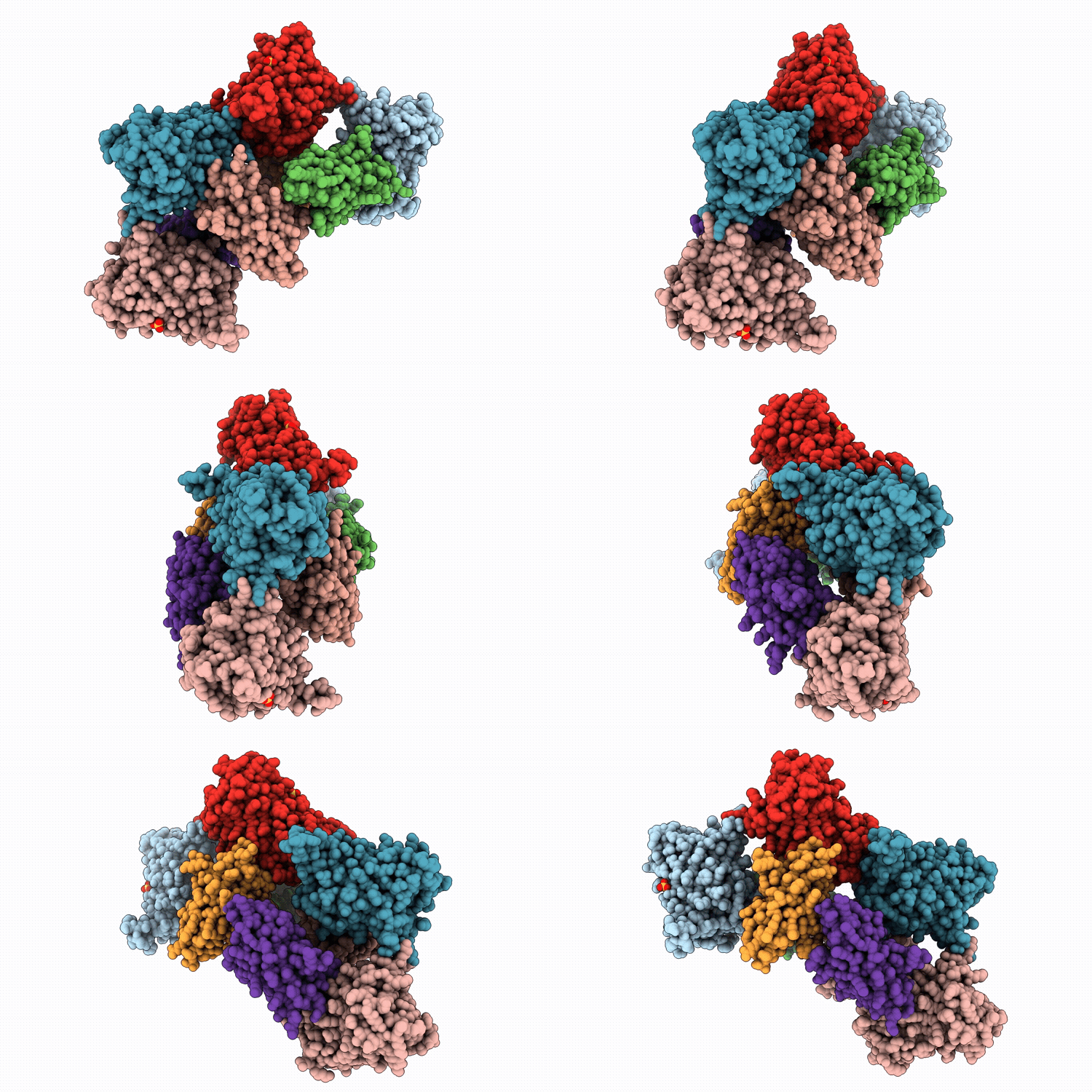
9ZG5 image
Deposition Date 2025-12-02
Release Date 2026-06-03
Last Version Date 2026-06-03
Entry Detail
PDB ID:
9ZG5
Title:
Structure of superfolder GFP bound to nanobody 15
Biological Source:
Source Organism(s):
Aequorea victoria (Taxon ID: 6100)
Lama glama (Taxon ID: 9844)
Method Details:
Experimental Method:
Resolution:
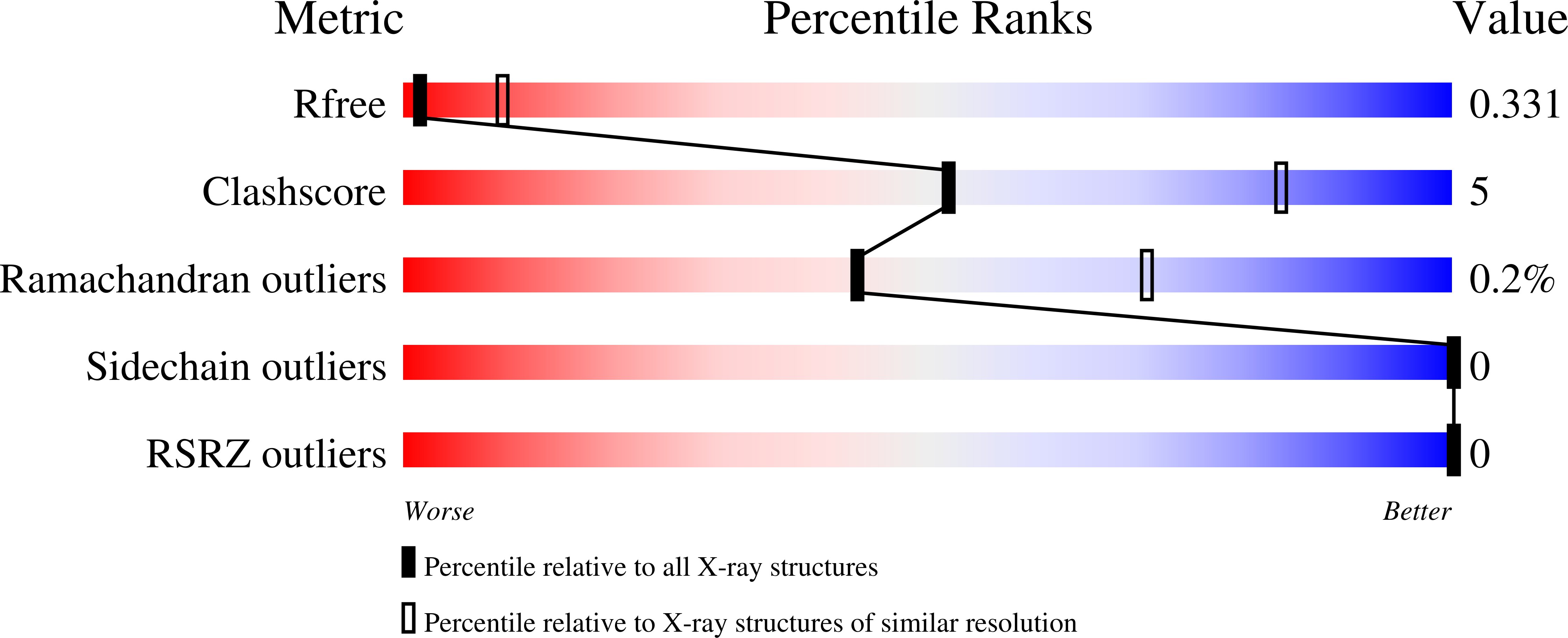
3.40 Å
R-Value Free:
0.33
R-Value Work:
0.29
R-Value Observed:
0.29
Space Group:
P 32
Macromolecular Entities
Structures with similar UniProt ID
Protein Blast
Polymer Type:polypeptide(L)
Molecule:Green fluorescent protein
Gene (Uniprot):gfp
Chain IDs:A, C (auth: B), E, G
Chain Length:239
Number of Molecules:4
Biological Source:Aequorea victoria
Protein Blast
Polymer Type:polypeptide(L)
Molecule:Nanobody 15
Chain IDs:B (auth: C), D, F, H
Chain Length:130
Number of Molecules:4
Biological Source:Lama glama
Modified Residue
Compound ID Chain ID Parent Comp ID Details 2D Image
CRO A THR chromophore
Ligand Molecules
Primary Citation
Time-Resolved Native Mass Spectrometry for Direct Measurement of Biomolecular Kinetics.
J.Am.Chem.Soc. 148 19567 19577 (2026)
PMID: 42104933 DOI: 10.1021/jacs.5c21842

Abstact

The functional outcomes of biomolecular interactions depend on the kinetics of association and dissociation between proteins and their binding partners, ranging from small molecules to other proteins, and are fundamental to understanding cooperativity, allostery, and drug action. However, existing kinetic methods, such as surface plasmon resonance and biolayer interferometry (BLI), require immobilization or labeling of one binding partner and are often indirect measurements. Here, we introduce a transformative time-resolved native mass spectrometry (MS) approach that enables direct, label-free, and immobilization-free quantification of biomolecular kinetics across diverse interactions within minutes using only picomolar sample amounts. We benchmarked the approach using well-characterized systems and obtained kinetic parameters that agreed with those measured by BLI. We further demonstrate the utility of time-resolved native MS in quantifying the kinetics of protein-small-molecule interactions, including those involving an irreversible inhibitor. By capturing the association and dissociation of biomolecular interactions in real time, time-resolved native MS overcomes longstanding limitations of conventional kinetic assays and transforms native MS from a static technique to a dynamic, quantitative tool for probing biomolecular kinetics and mechanisms that underpin therapeutic discovery.

Legend

Protein

Chemical

Disease

Primary Citation of related structures
Feedback Form
Name
Email
Institute
Feedback