

9ZDI image
Deposition Date 2025-11-25
Release Date 2026-05-06
Last Version Date 2026-06-10
Entry Detail
PDB ID:
9ZDI
Title:
Crystal structure of Zn-substituted Rubredoxin from hyperthermophilic bacterium Thermotoga maritima MSB8
Biological Source:
Source Organism(s):
Method Details:
Experimental Method:
Resolution:
1.02 Å
R-Value Free:
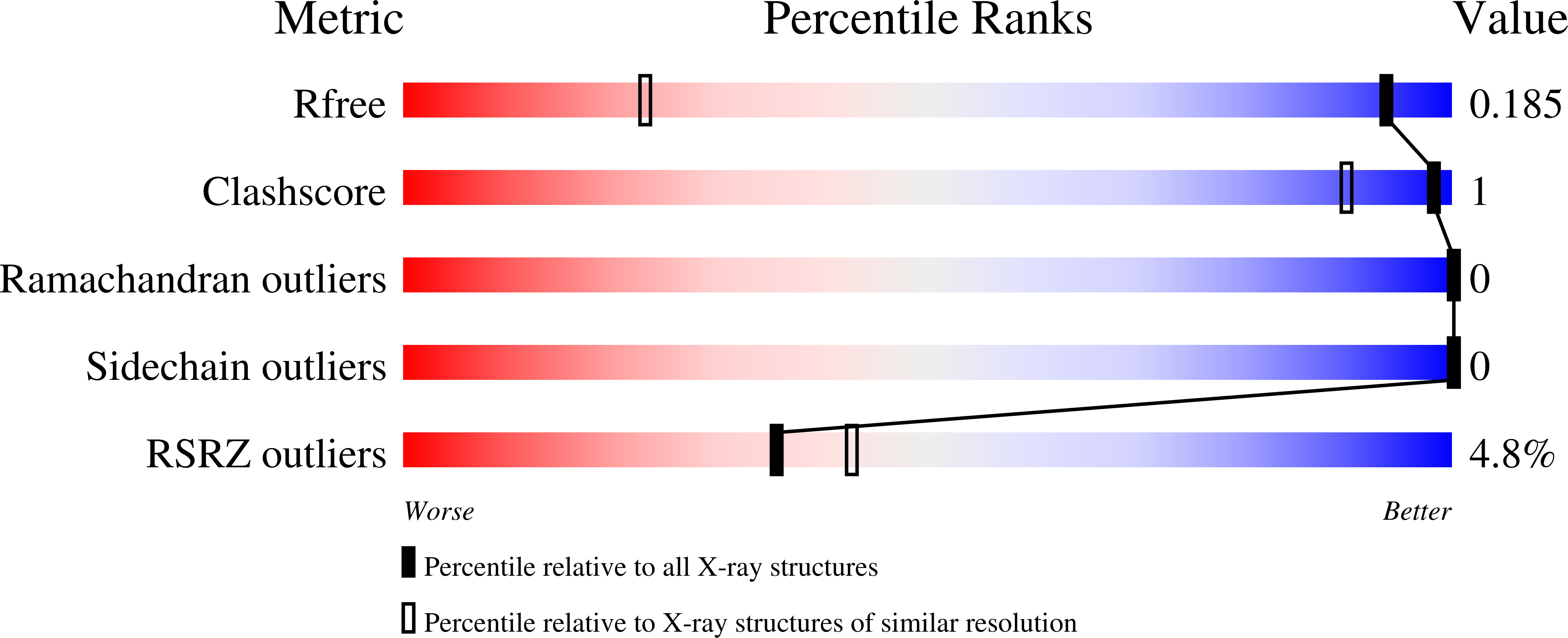
0.18
R-Value Work:
0.15
R-Value Observed:
0.15
Space Group:
P 1 21 1
Macromolecular Entities
Structures with similar UniProt ID
Protein Blast
Polymer Type:polypeptide(L)
Molecule:Rubredoxin
Gene (Uniprot):TM_0659
Chain IDs:A, B
Chain Length:53
Number of Molecules:2
Biological Source:Thermotoga maritima MSB8
Ligand Molecules
Primary Citation
Crystallography of Extremophile Proteins-Structural Comparisons of Psychrophilic and Hyperthermophilic Rubredoxins.
Biomolecules 16 ? ? (2026)
PMID: 42193974 DOI: 10.3390/biom16050623

Abstact

Psychrophilic organisms are able to grow at temperatures down to -15 degrees C, while hyperthermophiles can multiply at temperatures up to 122 degrees C. What structural changes in extremophile proteins are needed to maintain stable and biochemically active structures under such conditions? Understanding how such extremophiles accomplish this is relevant for human health, biotechnology, and our search for life elsewhere in the universe. The purpose of the current study is to report and compare the structures of four rubredoxins (Rds), the first ever two experimental psychrophile bacteria structures (from Gram-positive Clostridium psychrophilum and Gram-negative Polaromonas glacialis) and two hyperthermophiles from the Gram-negative Thermotoga maritima bacterium and the archaeon Pyrococcus yayanosii, also a piezophile, as part of a program to understand structural variations that support both stability and function under extreme conditions. These structures were obtained using synchrotron radiation X-ray diffraction at 100 K. All four structures had the expected overall rubredoxin fold. Rubredoxin from the only aerobic psychrophilic bacterium Polaromonas glacialis had larger variations in sequence and structure, whereas the other psychrophilic bacterium showed properties closely related to hyperthermophile rubredoxins. Multi-subunit structures showed similar RMSD variability independent from their thermal adaptation status. We propose including functional information in the analysis since temperature optimization may not be the only determinant for a specific protein adaptation.

Legend

Protein

Chemical

Disease

Primary Citation of related structures
Feedback Form
Name
Email
Institute
Feedback