

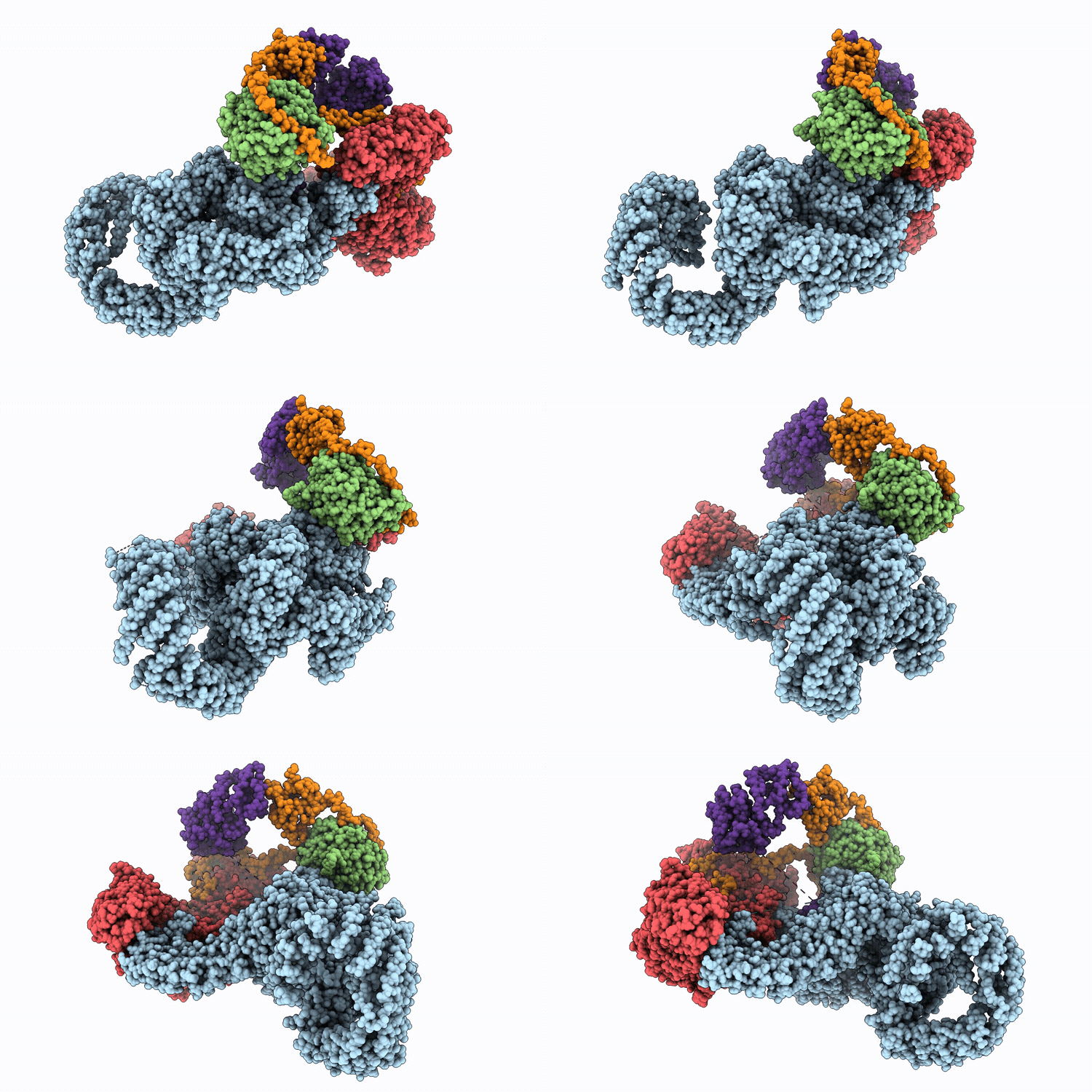
9ZBK image
Deposition Date 2025-11-20
Release Date 2026-04-15
Last Version Date 2026-04-15
Entry Detail
PDB ID:
9ZBK
Keywords:
Title:
mTORC2 in complex with Akt1
Biological Source:
Source Organism(s):
Homo sapiens (Taxon ID: 9606)
Expression System(s):
Method Details:
Experimental Method:
Resolution:
2.60 Å
Aggregation State:
PARTICLE
Reconstruction Method:
SINGLE PARTICLE
Macromolecular Entities
Structures with similar UniProt ID
Protein Blast
Polymer Type:polypeptide(L)
Molecule:Serine/threonine-protein kina
Gene (Uniprot):MTOR
Chain IDs:A
Chain Length:2470
Number of Molecules:1
Biological Source:Homo sapiens
Structures with similar UniProt ID
Protein Blast
Polymer Type:polypeptide(L)
Molecule:Target of rapamycin complex s
Gene (Uniprot):MLST8
Chain IDs:B
Chain Length:318
Number of Molecules:1
Biological Source:Homo sapiens
Structures with similar UniProt ID
Protein Blast
Polymer Type:polypeptide(L)
Molecule:Rapamycin-insensitive compani
Gene (Uniprot):RICTOR
Chain IDs:C
Chain Length:1670
Number of Molecules:1
Biological Source:Homo sapiens
Structures with similar UniProt ID
Protein Blast
Polymer Type:polypeptide(L)
Molecule:Target of rapamycin complex 2
Gene (Uniprot):MAPKAP1
Chain IDs:D
Chain Length:269
Number of Molecules:1
Biological Source:Homo sapiens
Structures with similar UniProt ID
Protein Blast
Polymer Type:polypeptide(L)
Molecule:RAC-alpha serine/threonine-pr
Gene (Uniprot):AKT1
Chain IDs:E
Chain Length:338
Number of Molecules:1
Biological Source:Homo sapiens
Primary Citation

Abstact

The mechanistic target of rapamycin (mTOR) protein kinase forms two multiprotein complexes, mTORC1 and mTORC2, that function in distinct signaling pathways. mTORC1 is regulated by nutrients, and mTORC2 is a central node in phosphoinositide-3 kinase (PI3K) and small guanosine triphosphate Ras signaling networks commonly deregulated in cancer and diabetes. Although mTOR phosphorylates many substrates in vitro, in cells, mTORC1 and mTORC2 have high specificity: mTORC2 phosphorylates the protein kinases Akt and PKC, but not closely related kinases that are mTORC1 substrates. To understand how mTORC2 recognizes substrates, we created semisynthetic probes to trap the mTORC2 :: Akt complex and determine its structure. Whereas most protein kinases recognize amino acids adjacent to the phosphorylation site, local sequence contributes little to substrate recognition by mTORC2. Instead, the specificity determinants were secondary and tertiary structural elements of Akt that bound the mTORC2 component mSin1 distal to the mTOR active site and were conserved among at least 18 related substrates. These results reveal how mTORC2 recognizes its canonical substrates and may enable the design of mTORC2-specific inhibitors.

Legend

Protein

Chemical

Disease

Primary Citation of related structures
Feedback Form
Name
Email
Institute
Feedback