

9Z9E image
Deposition Date 2025-11-18
Release Date 2026-06-03
Last Version Date 2026-06-03
Entry Detail
PDB ID:
9Z9E
Title:
Structure of FabS1CE2_ER-3c in complex with the extracellular region of EGFR
Biological Source:
Source Organism(s):
Homo sapiens (Taxon ID: 9606)
Expression System(s):
Method Details:
Experimental Method:
Resolution:
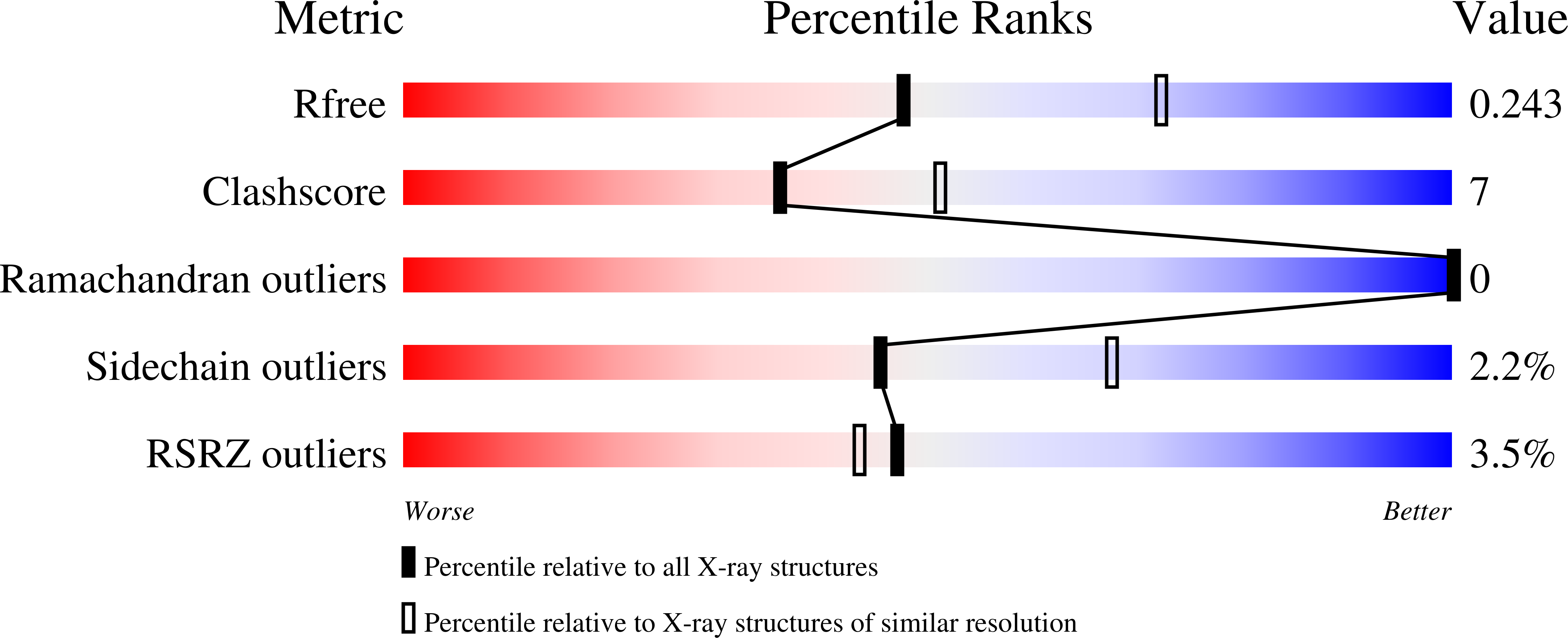
2.40 Å
R-Value Free:
0.24
R-Value Work:
0.19
R-Value Observed:
0.19
Space Group:
P 1 21 1
Macromolecular Entities
Structures with similar UniProt ID
Protein Blast
Polymer Type:polypeptide(L)
Molecule:Epidermal growth factor recep
Gene (Uniprot):EGFR
Mutagens:residues 25-645
Chain IDs:A
Chain Length:625
Number of Molecules:1
Biological Source:Homo sapiens
Protein Blast
Polymer Type:polypeptide(L)
Molecule:heavy chain
Mutagens:K127Q and E158G
Chain IDs:B (auth: D)
Chain Length:231
Number of Molecules:1
Biological Source:Homo sapiens
Protein Blast
Polymer Type:polypeptide(L)
Molecule:light chain
Chain IDs:C (auth: E)
Chain Length:212
Number of Molecules:1
Biological Source:Homo sapiens
Primary Citation
Dual targeting of inhibitory EGFR epitopes with synthetic antibodies in therapeutic-resistant cancers.
Protein Sci. 35 e70645 e70645 (2026)
PMID: 42178617 DOI: 10.1002/pro.70645

Abstact

Therapeutic antibodies that inhibit the epidermal growth factor receptor (EGFR) are limited to a subset of EGFR-driven cancers. This is in part due to resistance mechanisms that attenuate efficacy. All approved therapeutic antibodies target the closed form of EGFR and compete with the ligand. However, tumors can be desensitized to these antibodies by upregulation of EGFR ligands or through EGFR mutations that uncouple kinase activity from ligand binding. We sought to overcome these resistance mechanisms by developing antibodies targeting alternative epitopes of EGFR. Using phage-displayed libraries, we developed two distinct antibodies, one that competed with EGF and another that did not. Crystal structures revealed that the competitive antibody bound to a site that overlapped the EGF-binding site, whereas the other antibody bound to the arm that induces receptor dimerization. Because the libraries used a common light chain, we were able to assemble a biparatopic antibody that incorporated both antigen-binding sites and thus targeted both epitopes on EGFR. We showed that the antibody that targeted the dimerization arm inhibited the growth of cancer cell lines that were resistant to the antibody that targeted the EGF-binding site. Moreover, the biparatopic antibody was more potent than the monoparatopic antibodies. Our results suggest that antibodies that target the dimerization arm of EGFR may be effective across a broader range of cancers than antibodies that target the EGF-binding site, and that a biparatopic antibody targeting both epitopes may be the most effective therapeutic for inhibiting aberrant EGFR signaling in cancer.

Legend

Protein

Chemical

Disease

Primary Citation of related structures
Feedback Form
Name
Email
Institute
Feedback