

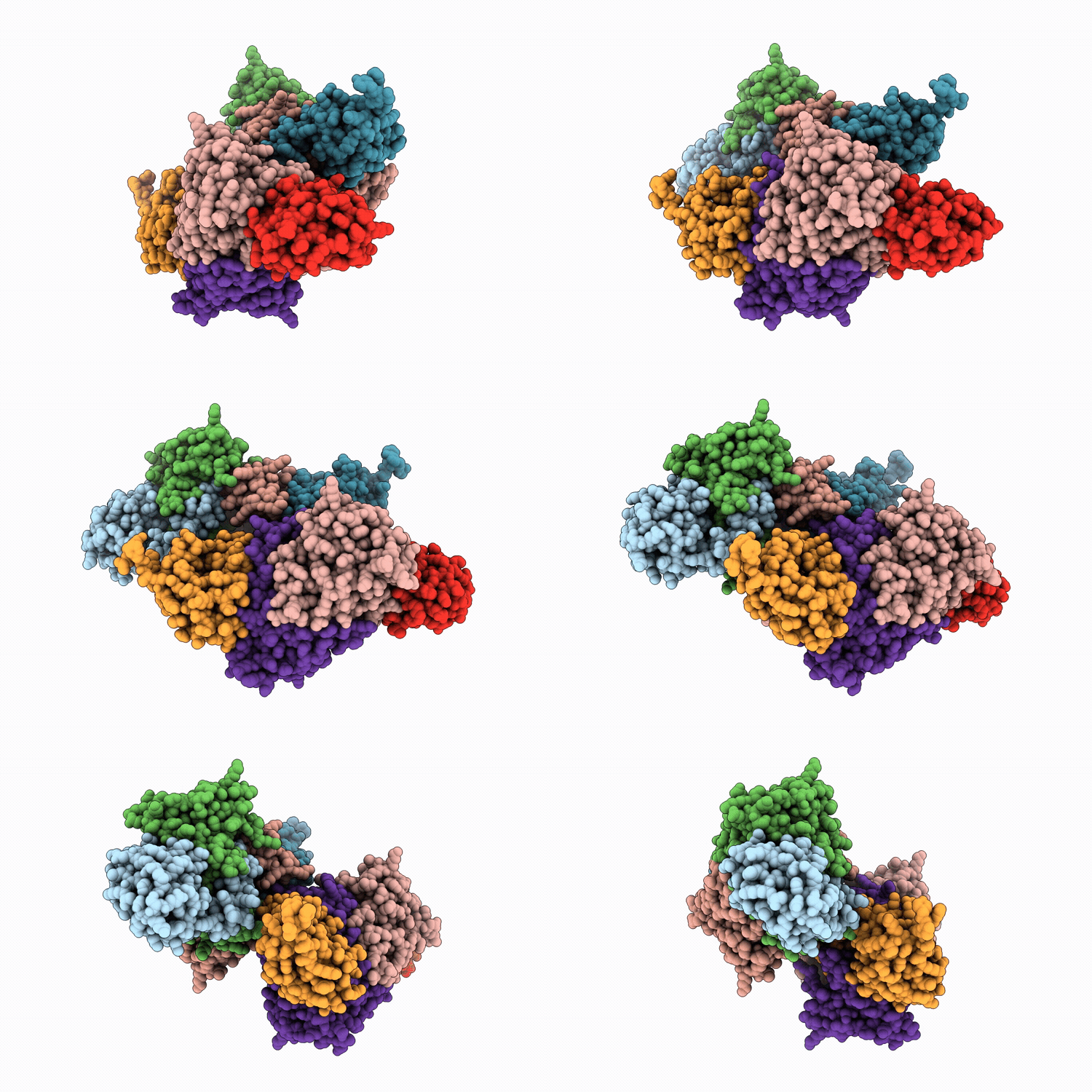
9Z7O image
Deposition Date 2025-11-17
Release Date 2026-06-03
Last Version Date 2026-06-24
Entry Detail
PDB ID:
9Z7O
Keywords:
Title:
Structure of Escherichia VapS-VapC complex
Biological Source:
Source Organism(s):
Escherichia (Taxon ID: 561)
Expression System(s):
Method Details:
Experimental Method:
Resolution:
3.40 Å
R-Value Free:
0.26
R-Value Work:
0.23
R-Value Observed:
0.24
Space Group:
H 3
Macromolecular Entities
Structural Superimposition Protein Blast
Polymer Type:polypeptide(L)
Molecule:Escherichia VapS
Mutagens:N-terminal His6-TEV tag
Chain IDs:A, B, E, F
Chain Length:134
Number of Molecules:4
Biological Source:Escherichia
Structural Superimposition Protein Blast
Polymer Type:polypeptide(L)
Molecule:Escherichia VapC
Chain IDs:C, D, G, H
Chain Length:203
Number of Molecules:4
Biological Source:Escherichia
Ligand Molecules
Primary Citation
A DNA damage-activated kinase phosphorylates a transcriptional repressor to control bacterial immune pathway expression.
Embo J. ? ? ? (2026)
PMID: 42265283 DOI: 10.1038/s44318-026-00831-y

Abstact

Bacteria encode numerous stress-response pathways that protect their hosts against both internal and external threats. A key question is how these pathways are regulated, especially anti-phage immune pathways that mediate host-cell killing. Here, we identify two proteins termed CapK and CapS that are encoded upstream of diverse immune operons, and regulate these operons' expression in response to DNA damage. CapK resembles bacterial anti-sigma factor kinases, and CapS resembles STAS-domain antagonists of these proteins. CapS is a DNA-binding transcriptional repressor, and phosphorylation of CapS by CapK results in dissociation of a CapS homodimer and de-repression of transcription. The CapK kinase is directly activated by single-stranded DNA generated as a byproduct of DNA repair. Finally, we show that CapK and CapS-like proteins have been co-opted into an anti-phage toxin-antitoxin system with a VapC-like protein, where they similarly respond to DNA damage to activate VapC nuclease activity. Overall, our results reveal how a kinase-substrate pair can regulate expression of an adjacent operon in response to DNA damage, and highlight the modularity of immune and other stress-response pathways.

Legend

Protein

Chemical

Disease

Primary Citation of related structures
Feedback Form
Name
Email
Institute
Feedback