

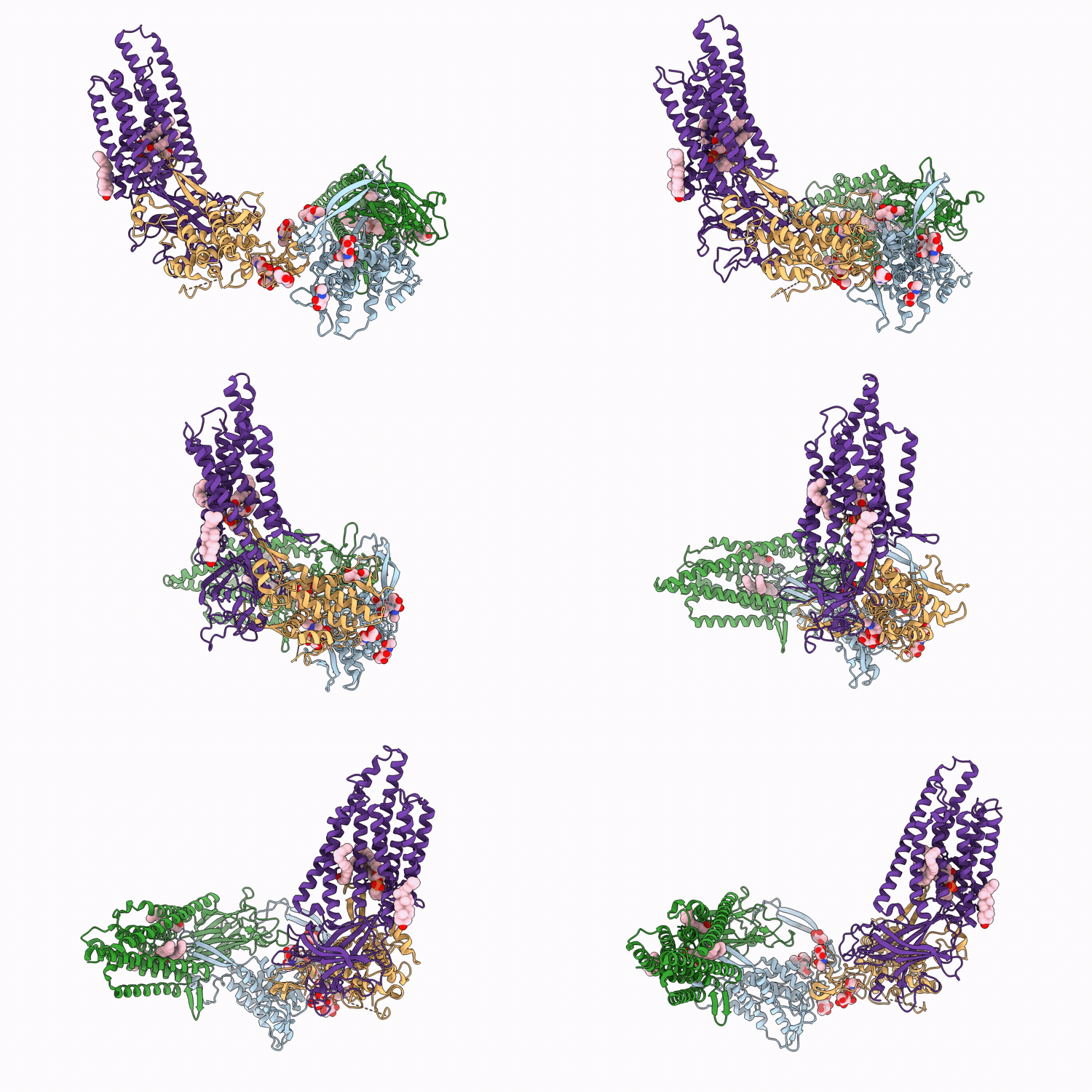
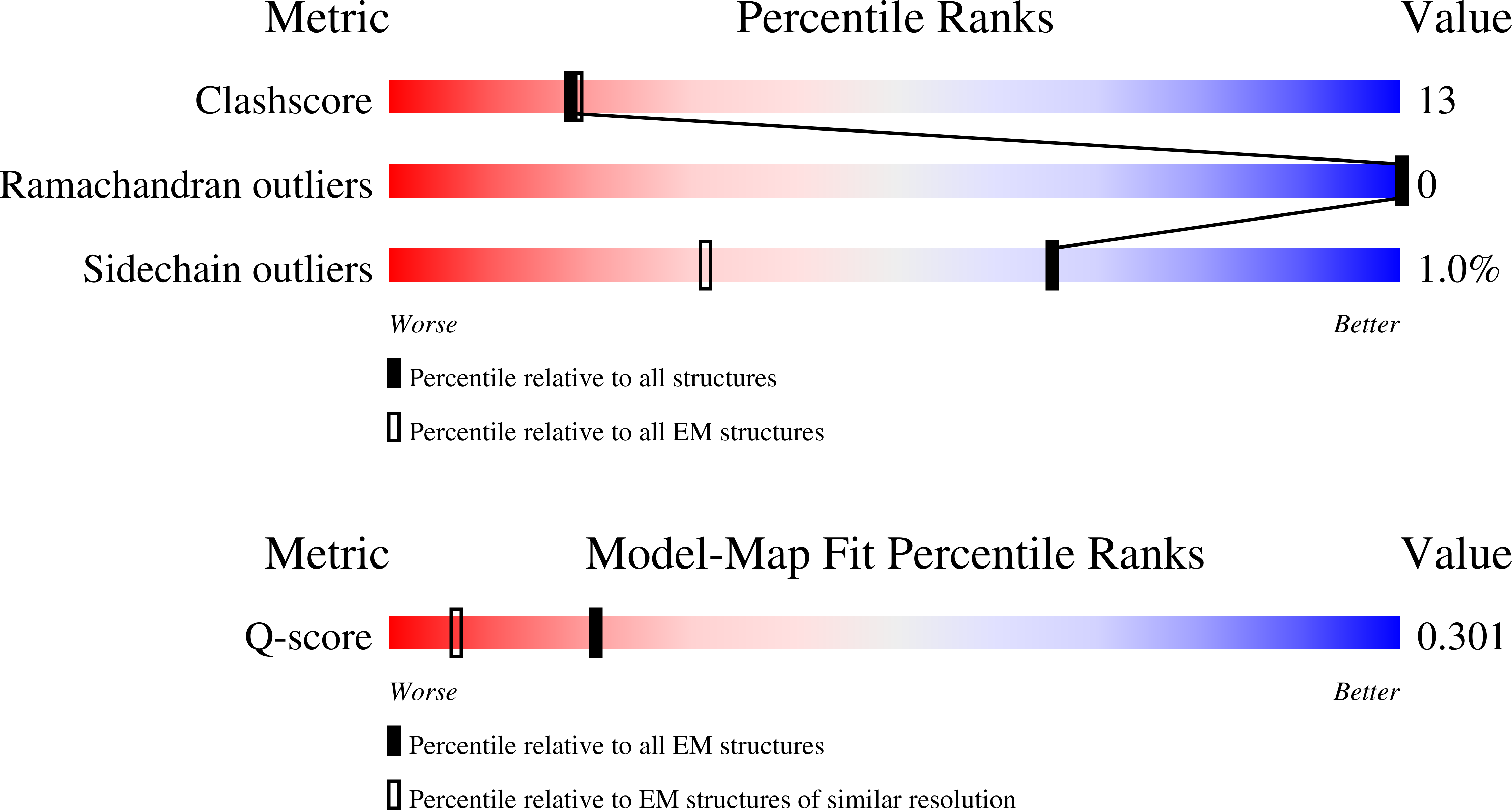
9Z67 image
Deposition Date 2025-11-13
Release Date 2026-06-10
Last Version Date 2026-07-01
Entry Detail
PDB ID:
9Z67
Title:
Cryo-EM structure of human Wntless-Wnt5a 2:2 complex - Composite map
Biological Source:
Source Organism(s):
Homo sapiens (Taxon ID: 9606)
Expression System(s):
Method Details:
Experimental Method:
Resolution:
3.32 Å
Aggregation State:
PARTICLE
Reconstruction Method:
SINGLE PARTICLE
Macromolecular Entities
Structures with similar UniProt ID
Protein Blast
Polymer Type:polypeptide(L)
Molecule:Protein Wnt-5a
Gene (Uniprot):WNT5A
Chain IDs:A, C
Chain Length:345
Number of Molecules:2
Biological Source:Homo sapiens
Structures with similar UniProt ID
Protein Blast
Polymer Type:polypeptide(L)
Molecule:Protein wntless homolog
Gene (Uniprot):WLS
Chain IDs:B, D
Chain Length:575
Number of Molecules:2
Biological Source:Homo sapiens
Primary Citation
Conformational cycling of the Wntless transporter drives trafficking and secretion of Wnt morphogens.
Nat Commun ? ? ? (2026)
PMID: 42321207 DOI: 10.1038/s41467-026-74521-y

Abstact

Wnt proteins are lipid-modified morphogens fundamental in development and disease. During Wnt biogenesis, the G-protein-coupled receptor (GPCR)-like transporter Wntless (WLS) escorts lipidated Wnts from the endoplasmic reticulum to the plasma membrane, then transfers them to extracellular carriers, forming active and soluble morphogen-carrier complexes. To dissect the mechanisms involved, we solve cryo-EM structures of Wnt-bound WLS and unliganded WLS, and perform structure-guided functional experiments. Wnts engage WLS via three conserved hairpins, which are all required for Wnt trafficking to the cell surface and carrier-mediated secretion. Wnt release from cells is driven by dramatic conformational changes in the WLS transmembrane domain, reminiscent of GPCR activation, together with WLS extracellular rearrangements. Unexpectedly, we find that Wnt5a bound to WLS forms dimers, with implications for Wnt signaling. These findings define the mechanism of WLS conformational cycling that governs the intracellular transport and extracellular release of Wnt morphogens, essential steps in the Wnt pathway.

Legend

Protein

Chemical

Disease

Primary Citation of related structures
Feedback Form
Name
Email
Institute
Feedback