

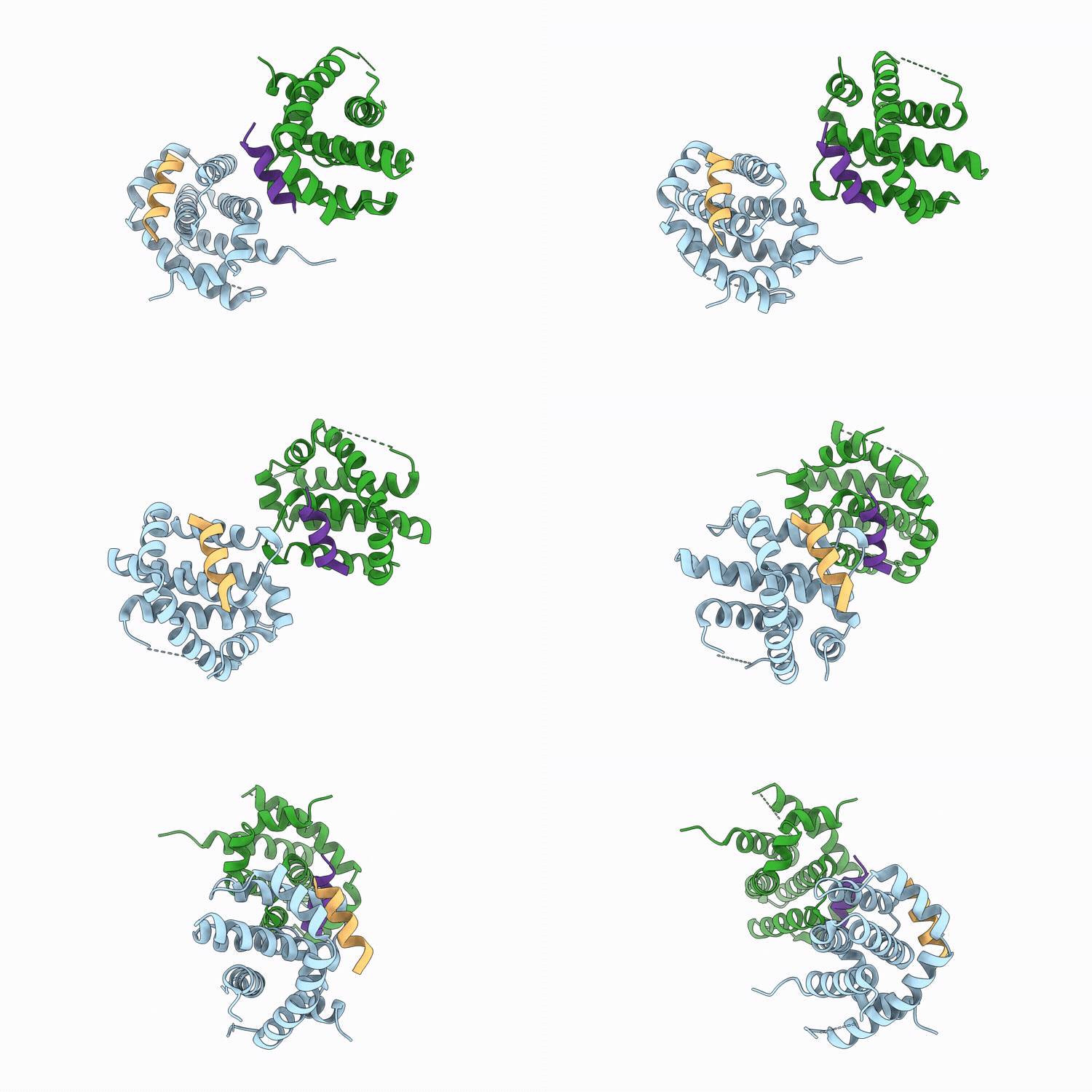
9Z3V image
Deposition Date 2025-11-07
Release Date 2026-05-13
Last Version Date 2026-05-27
Entry Detail
PDB ID:
9Z3V
Keywords:
Title:
Histidine-covalent 165G1 targeting hMcl-1
Biological Source:
Source Organism(s):
Expression System(s):
Method Details:
Experimental Method:
Resolution:
1.60 Å
R-Value Free:
0.25
R-Value Work:
0.22
R-Value Observed:
0.22
Space Group:
P 1 21 1

Macromolecular Entities
Polymer Type:polypeptide(L)
Molecule:Induced myeloid leukemia cell
Gene (Uniprot):MCL1
Chain IDs:A, C (auth: B)
Chain Length:155
Number of Molecules:2
Biological Source:Homo sapiens
Structural Superimposition Protein Blast
Polymer Type:polypeptide(L)
Molecule:165G1
Chain IDs:B (auth: C), D
Chain Length:14
Number of Molecules:2
Biological Source:synthetic construct
Primary Citation
Covalent Targeting of Histidine Residues: A Ligand-First Approach.
J.Med.Chem. 69 10201 10212 (2026)
PMID: 42054250 DOI: 10.1021/acs.jmedchem.5c03255

Abstact

The design of irreversible drugs has resulted, over the past decade, in several new therapeutics in oncology that present improved pharmacodynamic and pharmacoK(I)netic properties compared to reversible ligands. Nevertheless, most ligands to date are designed to target a cysteine (Cys) residue, which is not a very common amino acid and only rarely occurs in protein target binding sites, thereby limiting the applicability of this covalent targeting approach. Recent work from our laboratory and others suggests that, after Cys, histidine (His) residues can be particularly suitable for covalent substitution with proper electrophiles. Using a ligand-first, structure-based approach, we assessed the possibility of using different electrophiles including acrylamides, chloroacetamides, or aryl fluorosulfates to target His residues covalently. Targeting His224 of hMcl-1 with model peptides, we demonstrate that both aryl fluorosulfates and chloroacetamides can be used to target His residues efficiently. Our studies also report strategies and biophysical approaches useful for the design and characterization of such His-covalent agents.

Legend

Protein

Chemical

Disease

Primary Citation of related structures
Feedback Form
Name
Email
Institute
Feedback