

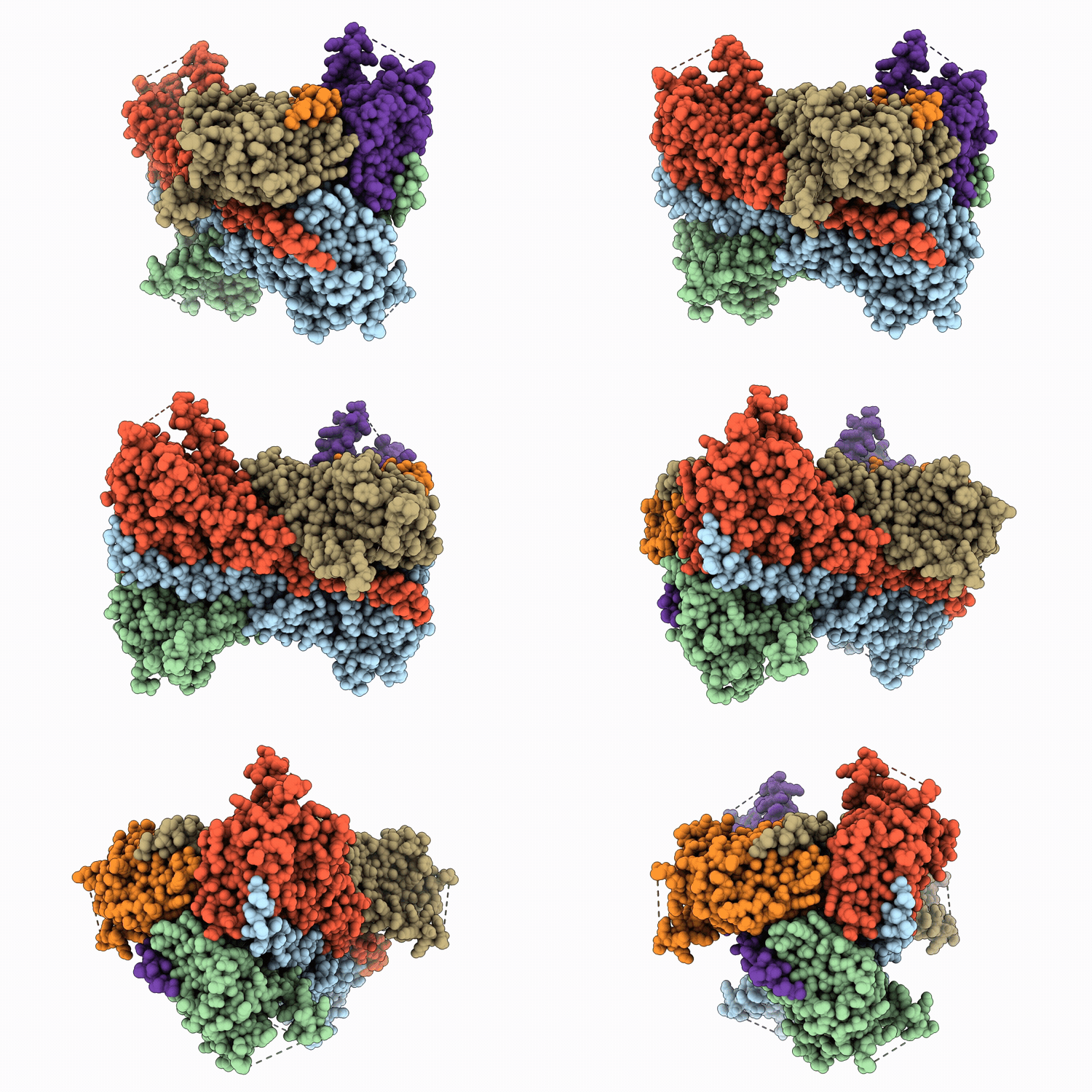
9Z04 image
Deposition Date 2025-10-31
Release Date 2026-04-29
Last Version Date 2026-04-29
Entry Detail
PDB ID:
9Z04
Title:
Structure of human lymphoid-specific helicase HELLS in its auto-inhibitory state
Biological Source:
Source Organism(s):
Homo sapiens (Taxon ID: 9606)
Expression System(s):
Method Details:
Experimental Method:
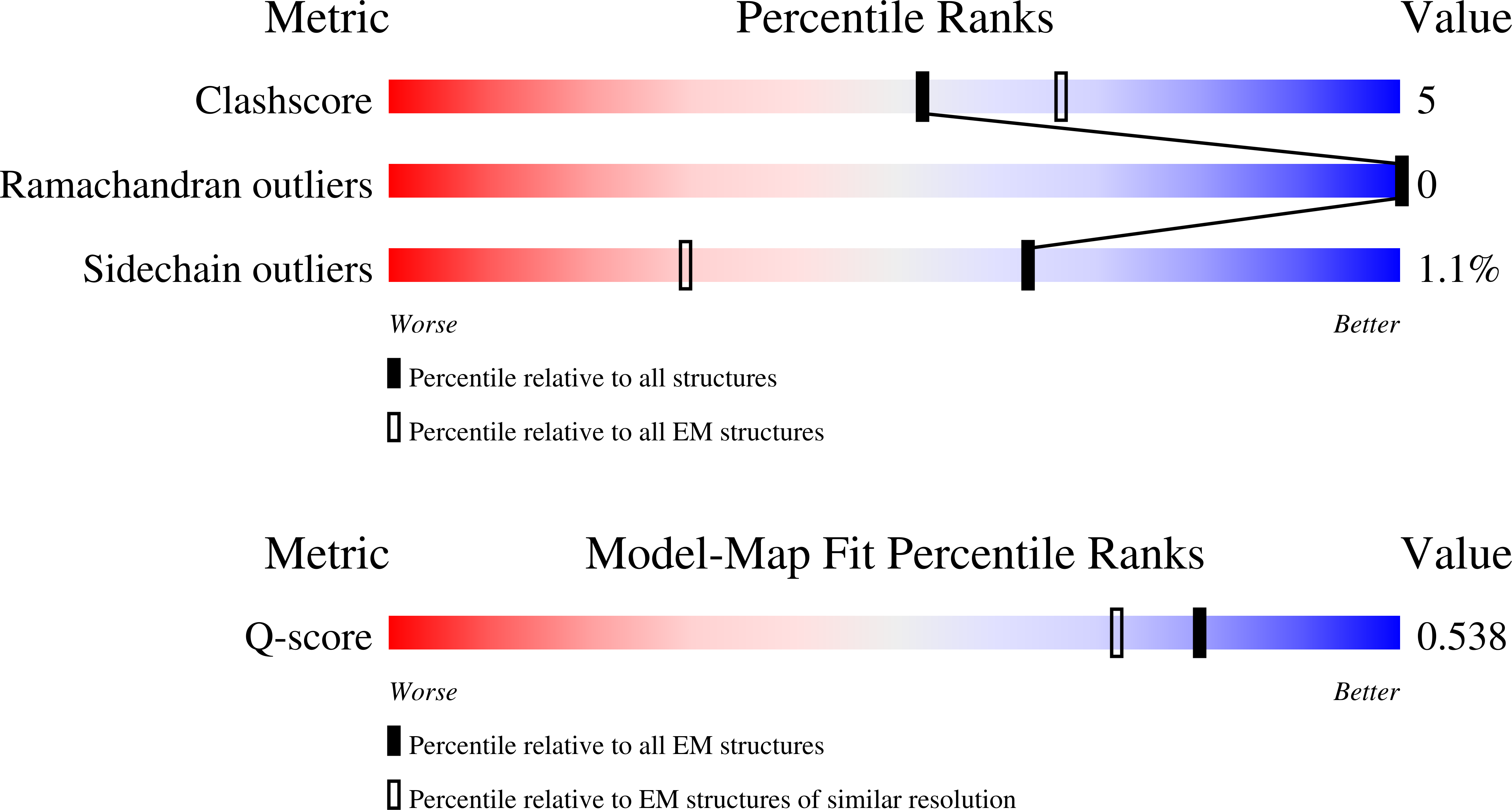
Resolution:
2.99 Å
Aggregation State:
PARTICLE
Reconstruction Method:
SINGLE PARTICLE
Macromolecular Entities
Structures with similar UniProt ID
Protein Blast
Polymer Type:polypeptide(L)
Molecule:Lymphoid-specific helicase
Gene (Uniprot):HELLS
Chain IDs:A, B, C, D, E, F
Chain Length:838
Number of Molecules:6
Biological Source:Homo sapiens
Ligand Molecules
Primary Citation
Structure of human lymphoid-specific helicase HELLS in its autoinhibited state.
Nucleic Acids Res. 54 ? ? (2026)
PMID: 41954988 DOI: 10.1093/nar/gkag326

Abstact

Helicase, Lymphoid Specific (HELLS), also known as Lymphoid-Specific Helicase (LSH), is a member of the SNF2 chromatin-remodeling family that regulates DNA methylation and heterochromatin organization. Unlike most chromatin remodelers, HELLS is catalytically inactive in its apo form and requires the DNA-binding protein CDCA7 for activation, though the underlying mechanism has remained unclear. Here, we combine biochemical, biophysical, and cryo-electron microscopy analyses to define the structural basis of HELLS autoinhibition. HELLS alone assembles into a hexameric (trimer of dimers) architecture stabilized by interactions between its N-terminal coiled-coil (CC) domain and ATPase Lobe-1, while ATPase Lobe-2 remains flexible and disengaged. The CC domain functions both as an oligomerization scaffold and as an autoinhibitory module that restricts catalytic activity. Binding of CDCA7 and DNA promotes formation of an active HELLS-CDCA7-DNA ternary complex. CDCA7 recognizes hemimethylated CpG dinucleotides in both B-form and non-B-form DNA and stimulates HELLS ATPase activity. Together, these findings reveal the mechanism of HELLS autoinhibition and its activation by CDCA7 and DNA, providing new insight into how the HELLS-CDCA7-DNA ternary complex maintains DNA methylation and heterochromatin integrity.

Legend

Protein

Chemical

Disease

Primary Citation of related structures
Feedback Form
Name
Email
Institute
Feedback